Sleeping in a Mafate gîte: what a night in the cirque actually involves
Arriving is only half the story
Getting into Mafate on foot is one thing. What happens once you’re standing in the ilet, boots off, with the light already starting to drop behind the ramparts, is a different question, and it’s the one nobody quite prepares you for. I’d read the practicalities of the access routes a dozen times before I went, but nothing about walking down into La Nouvelle told me what the actual evening would feel like: which door to knock on, whether there’d be a bed, and what I was supposed to eat.
This is about that part. Not which trail to take — that’s covered in the Mafate planning guide and the access piece — but what sleeping in a gîte in the cirque actually means once you’ve arrived.
Book ahead. Not “book ahead if you can” — book ahead, full stop
Mafate has no road. Everything that reaches the ilets — La Nouvelle, Marla, Roche Plate, Grand Place, Aurère — comes in by foot or by helicopter. There’s no petrol station, no late-opening épicerie, no taxi you can call if a gîte turns out to be full. If you walk into an ilet at 5pm without a reservation and every bed is taken, your options are limited to whatever daylight you have left and whichever direction you can still walk in.
I booked my gîte in Marla about six weeks out, by phone, in French, because most gîte keepers don’t run an online booking system and don’t always answer messages quickly. Some do take reservations through third-party hiking platforms, but plenty are still a phone call and a deposit. During French school holidays and the southern winter hiking season — broadly May to October — beds in the more accessible ilets like La Nouvelle can be booked out weeks in advance. Marla and Roche Plate fill up more slowly but still fill up. Treat “I’ll find something when I get there” as a plan that fails a meaningful percentage of the time, with real consequences if it does.
What a gîte actually is
A Mafate gîte isn’t a hotel. It’s usually a family-run house with a handful of dormitory rooms, bunk-style beds, shared bathrooms, and a communal dinner table. You’re paying for half-board almost everywhere: a bed, dinner, and breakfast, sometimes with a picnic lunch added for the next day’s walk. Expect somewhere in the range of €45 to €65 per person for that half-board package, though it varies by ilet and by season, and I’d treat any figure here as a starting point rather than a quote — check with the gîte or a tour operator running guided Mafate hikes for the current price before you commit.
Dinner is usually a set menu, no choice, and it’s built around what can realistically be stocked or carried in: cari (a Creole stew, often chicken or pork), rice, lentils, sometimes local charcuterie. It’s simple, filling, and after six or eight hours of walking with a pack, genuinely one of the better meals I’ve had on the island. Don’t expect a menu with options. Don’t expect it to be quick, either — dinner in a gîte is a shared table, and it runs on its own schedule.
Everything is carried, or it flies in
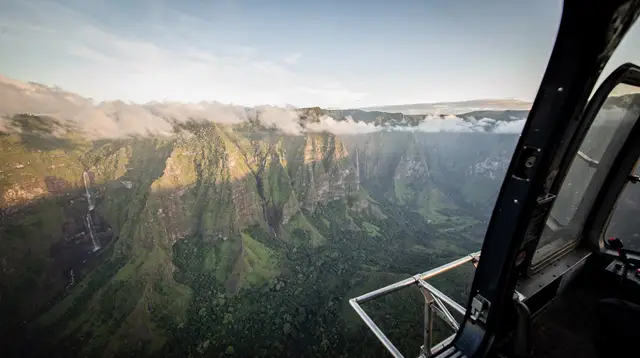
This is the detail that changes how you should think about a Mafate stay. There’s no delivery truck. Food, drinks, gas, building materials, everything a gîte needs, arrives one of two ways: carried in on someone’s back or a mule’s, over the same trails you walked in on, or brought in by helicopter. You’ll hear helicopters passing overhead through the day in Mafate more than almost anywhere else on the island — that’s resupply, not sightseeing, though from up there the view over the cirque’s ramparts is genuinely spectacular. If you want to see the shape of Mafate from above without walking every metre of it, a microlight flight from Saint-Paul that routes over the Cirque of Mafate and Piton Maïdo gives you exactly that perspective, and a wider microlight flight over the island covers more ground if you want the volcano and coastline in the same trip.
What this means practically: a beer at a Mafate gîte costs more than a beer in Saint-Gilles, and that’s fair, given what it took to get there. Cash is close to essential — card readers are rare to nonexistent this deep in, so bring enough euros for your stay plus a margin, something covered in more detail in the money and payments guide. Phone signal is patchy at best in most ilets; don’t count on data, and tell someone outside the cirque your rough plan before you go, since phone and internet coverage inside Mafate is not something to rely on.
Planning a one, two or three-night stay is a different exercise than a day hike
A day hike into the Hauts is forgiving: if the weather turns or you’re slower than expected, you turn around and you’re back at the car within hours. A multi-night Mafate stay doesn’t work that way. Once you’ve committed to a route through two or three ilets, your gîte bookings are fixed points on specific nights, and a delay on day one — a closed section of trail, a slower pace than planned, an afternoon storm that pins you down — has knock-on effects on where you sleep the next night too.
I’d build in slack rather than a tight schedule: a two-night stay covering one ilet each way is far more forgiving than trying to string together three ilets and a summit side-trip in the same window, something the three-day Mafate itinerary lays out with more margin than I initially planned for myself. Check trail conditions with the ONF before you leave — closures after heavy rain are common, and a route that was open last week isn’t guaranteed to be open this week. And build your pack around genuinely carrying everything for two or three days: warm layers for evenings that get cool even outside the cyclone season, a headtorch, and whatever the packing guide recommends for multi-day terrain, not a day-hike list.
What surprised me most
It wasn’t the walking. It was how self-contained each ilet feels once the last group of day-walkers has left and it’s just the handful of people staying the night. There’s no wifi to retreat into, no bar to wander to instead of the communal table, and by 9pm most gîtes are quiet because everyone’s up again before six. It’s closer to staying with a family than checking into accommodation, and the gîte keepers I met were more interested in where I’d walked from than in processing a transaction. If you’d rather book that same feeling with a lighter itinerary elsewhere on the coast afterwards, a boat trip like a dolphin and whale watching outing from Saint-Gilles-les-Bains is a good way to decompress once you’re back on the coast.
If you’re weighing whether Mafate deserves the logistics — the phone call weeks ahead, the cash, the fixed schedule — I’d say yes, but go in knowing it’s not a spontaneous overnight. It’s a booked one, and the booking is what makes the rest of it work. For a wider sense of what else is worth the effort in the cirque, the best hikes guide, the Mafate and Maïdo activities page, and the common mistakes piece are all worth reading before you commit dates, alongside the Piton des Neiges summit guide if a summit push is part of your plan and the Mafate destination overview if you’re still mapping out which ilets to include.
Mafate gîtes: questions travellers ask
How far ahead do I need to book a Mafate gîte?
For popular ilets like La Nouvelle during the May-to-October hiking season, book several weeks ahead if possible. Less-visited ilets like Marla or Roche Plate can sometimes be booked closer to the date, but there’s no guarantee, and there’s no walk-in alternative if a gîte is full.
What does a night in a Mafate gîte cost?
Most gîtes charge for half-board — a bed, dinner, and breakfast — typically in the range of €45 to €65 per person, though this varies by ilet and gîte. Confirm the current price directly with the gîte or a tour operator, since prices change and vary between houses.
Can I pay by card in Mafate?
Rarely. Card readers are uncommon this deep in the cirque, and connectivity to process them is unreliable. Bring enough cash in euros for your stay, plus a margin for drinks or extras.
Is there phone signal in Mafate?
Signal is patchy to nonexistent in most ilets. Don’t plan around having data or being reachable, and let someone outside the cirque know your route and expected return before you leave.
What do gîtes serve for dinner?
A set Creole menu, usually with no choice of dishes — often a cari (stew) with rice and lentils, built around what can be carried or flown in. It’s simple but substantial after a day of walking.
How does everything get to the gîtes if there’s no road?
On foot or by mule along the same trails hikers use, or by helicopter for heavier or bulkier resupply. This is part of why prices in Mafate run higher than on the coast.
What happens if a gîte is fully booked and I haven’t reserved?
There’s no plan B inside the cirque — no other accommodation to fall back on nearby, and walking out to another ilet late in the day isn’t always realistic. This is the main reason to book ahead rather than arrive without a reservation.
Does a multi-night Mafate stay need more planning than a day hike?
Yes. A day hike is forgiving if you’re slower than expected — you simply turn back. A multi-night stay has fixed gîte bookings on specific nights, so a delay on one day affects where you sleep the next, which is why building slack into the schedule matters.
Budget-friendly Réunion excursions on GetYourGuide
Verified deep-linked GetYourGuide tours. Book through these links and we earn a small commission at no cost to you.
GetYourGuide does not provide a product photo for this activity — the image shows the meeting point, photographed by us.