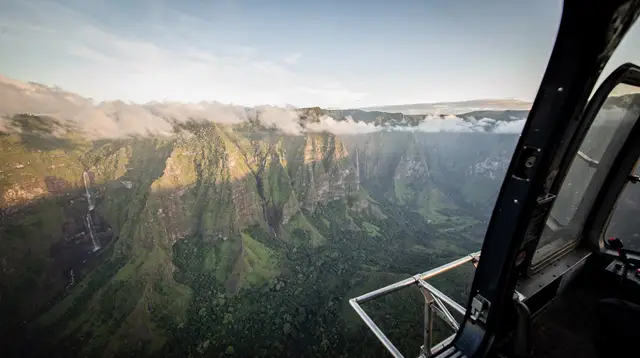
Explore Reunion Island by region
Regions worth building a Reunion Island trip around, from Saint-Denis and the west coast lagon to the cirques of Cilaos, Salazie and Mafate, the volcano, the wild south and the east coast.
Must-visit areas
The regions every first-time visitor should build a trip around — Saint-Denis in the north, and the west coast lagon a little further on.

Cilaos: the road, the canyons and the climb to Piton des Neiges
Cilaos guide: the 400-bend road from Saint-Louis, canyoning, thermal springs and the climb to Piton des Neiges, the Indian Ocean's highest point.

Piton de la Fournaise: hiking Réunion's active volcano
Piton de la Fournaise: the active volcano hike, Pas de Bellecombe views and when the enclos is actually open.

Saint-Gilles-les-Bains: Réunion Island's beach town and lagoon
Saint-Gilles-les-Bains guide: the lagoon, sand, boat trips and where you can actually swim on Réunion Island's west coast.

Saint-Leu and L'Étang-Salé: paragliding coast and black-sand beaches
Saint-Leu's paragliding cliffs and turtle centre, then L'Étang-Salé's black volcanic sand — the west coast's quieter, more active side.

Saint-Pierre: the South's capital, markets and seafront
Saint-Pierre is Réunion's southern capital: covered and Saturday markets, a lively seafront, the busiest nightlife on the island, and Pierrefonds airport.

Salazie and Hell-Bourg: Réunion's green cirque
Salazie is the green, drivable cirque, with Hell-Bourg village, waterfalls and the Trou de Fer viewpoint. Distances, timing and how it differs from Cilaos.
More to explore
Areas for a second trip or a longer first one — Cilaos and Salazie for the cirques, and Saint-Pierre for a day out by the water.

The cirques: Cilaos, Salazie and Mafate explained
Cilaos, Salazie and Mafate compared: what's reachable by car, what's on foot only, and how much time each cirque really needs.

Réunion Island's east coast: Saint-André, Saint-Benoît and Sainte-Rose
The wet, green windward coast of Réunion: vanilla in Saint-André, rafting in Saint-Benoît, and Sainte-Rose's lava-spared church.

Mafate and the Maïdo: the cirque with no road
Mafate has no road in or out. Here's how to reach it on foot, where to see it from the Maïdo, and how gîtes and helicopters actually work.

North and East Réunion: Saint-Denis and the windward coast
Saint-Denis, Sainte-Suzanne, Saint-Benoît and the windward coast of Réunion: how they fit together, and why this side gets far more rain.

Saint-Denis: Réunion's real capital, not a beach stop
Saint-Denis is Réunion's administrative capital: creole streets, the Barachois seafront, mosques and temples. No lagon here — that's the west coast.

The South: Saint-Pierre and Reunion Island's second gateway
Saint-Pierre, Le Tampon and Grand'Anse: the South's market town, seafront and second airport, with the wild south a short drive away.

West coast: the lagoon, Saint-Gilles and Saint-Leu
Réunion's west coast: the lagoon at Saint-Gilles and L'Hermitage, paragliding at Saint-Leu, black sand at L'Étang-Salé, and where swimming is actually.

Wild South: Saint-Joseph, Saint-Philippe and the lava coast
Basalt cliffs, the Grand Brûlé lava flows and Langevin waterfall — a honest guide to Réunion's Wild South, with real travel times from Saint-Pierre.
Good to know about destinations across Réunion Island
Réunion Island is a compact but dramatically varied place, and getting a feel for its geography before you go makes the difference between a scattered week and a trip that actually flows. This guide from Reunion Island Escape breaks the island into ten areas, each shaped by the volcanic ridges and cirques that cut it into distinct micro-regions. The North centers on Saint-Denis, the island's capital, where the seafront Barachois and the creole houses along rue de Paris sit a short drive from Roland-Garros airport at Sainte-Marie.
The West is the island's dry, sunny coast, home to the beach towns of Saint-Gilles-les-Bains, L'Hermitage and La Saline-les-Bains, plus Saint-Leu, known for paragliding and the Kelonia turtle site, with the Maïdo viewpoint rising above it toward Mafate. The South stretches from Saint-Pierre, with its market, nightlife and Pierrefonds airport, past the black sand of L'Étang-Salé and Grand Anse, down into the Sud sauvage — Saint-Joseph, Saint-Philippe and the lava fields of Grand Brûlé.
The East is the island's wetter, greener windward coast, running through Saint-André and Saint-Benoît to Sainte-Rose, with the Anse des Cascades and Notre-Dame-des-Laves, and the vanilla and sugarcane country behind it. Inland, three volcanic cirques each have their own character: Cilaos, reached by a road with some 400 bends and a base for canyoning; Salazie, centred on Hell-Bourg and its waterfalls; and Mafate, which has no roads at all and can only be reached on foot.
Finally, the volcano area around Piton de la Fournaise, one of the most active volcanoes in the world, includes the Pas de Bellecombe viewpoint, the Plaine des Sables and the Plaine des Cafres, along with the Cité du Volcan museum. Because road access varies so much between these areas, this section links each area to what it actually offers, so you can match your time and mobility to the right part of the island rather than trying to see all of it at once.
Frequently asked questions about destinations across Réunion Island
What are the main areas to choose between on Réunion Island?
The island splits into the North around Saint-Denis, the drier West coast, the South down to the wild south, the wetter East coast, three inland cirques, and the volcano area around Piton de la Fournaise. Each has a different character, from beach towns to routes you can only walk into.
Which area has the best weather for a beach stay?
The West coast, around Saint-Gilles-les-Bains, L'Hermitage and La Saline-les-Bains, is the leeward side of the island and is generally drier and sunnier. The East coast faces the prevailing winds and is noticeably wetter and greener.
Can I drive into Mafate?
No. Mafate is the one cirque with no road access at all, so reaching it means walking in on foot. This makes it a different kind of trip from Cilaos or Salazie, which you can drive to.
Where do flights into Réunion Island land?
Most international flights use Roland-Garros airport (RUN) at Sainte-Marie in the North, near Saint-Denis. The South also has Pierrefonds airport, near Saint-Pierre.
What's the difference between the East and West coasts?
The West is the leeward side, drier and sunnier, and home to most of the island's main beach towns. The East faces the wind directly and gets significantly more rain, giving it a greener, more lush landscape around towns like Saint-André, Saint-Benoît and Sainte-Rose.
Helicopter and paragliding flights over Réunion on GetYourGuide
Verified deep-linked GetYourGuide tours. Book through these links and we earn a small commission at no cost to you.
GetYourGuide does not provide a product photo for this activity — the image shows the meeting point, photographed by us.
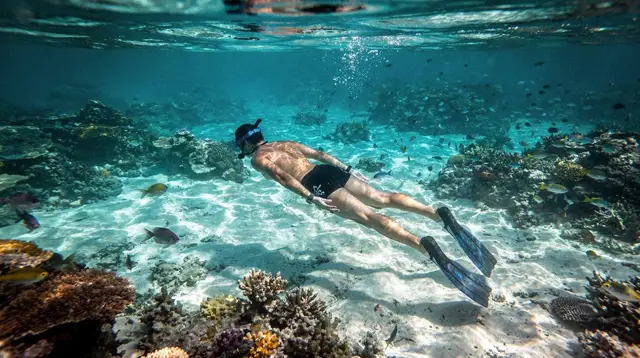
Réunion Island: Guided Water Hiking Tour in the Lagoon of Saline-les-Bains

Discovery of the lava tubes 2004 of Piton de la Fournaise