Réunion Island cyclone season: a booking and safety guide
When is cyclone season in Réunion Island, and does it mean a trip will be ruined?
Cyclone season runs from November to April, with the highest activity in January–March. Most weeks in that window pass with no cyclone at all, but a direct hit or a near-miss can trigger a red alert and a full lockdown (confinement) for 24 to 48 hours. Book flexible flights and accommodation and carry travel insurance that covers weather disruption.
Planning a trip between November and April
If your dates fall between November and April, you are travelling in Réunion’s cyclone season, and the honest way to plan around that is not to guess whether a storm will hit — nobody can, months out — but to book in a way that survives one if it does. This page is a booking and safety briefing, not a weather forecast: for the month-by-month climate picture, see Réunion Island weather by month, and for when to go in general, the best time to visit guide.
Réunion sits in the south-west Indian Ocean cyclone basin, tracked by Météo-France La Réunion and the regional prefecture. The official season runs from 1 November to 30 April, and within that window the highest-activity months are January, February and March. That does not mean every week of those months brings a storm — most don’t — but it does mean the risk is real enough to plan around rather than ignore.
It helps to know what kind of place you’re planning around. Réunion is a French department and a region of the European Union, but it sits outside the Schengen area, so a Schengen visa does not automatically cover it — check entry rules separately, covered in our entry requirements guide. The currency is the euro, the official language is French alongside Réunion Creole, and mobile roaming from the EU applies as it would in mainland France, all of which makes practical logistics — rebooking a flight, calling an insurer, finding an emergency shelter — easier than in a destination where none of that lines up with home. That matters during a red alert: 112 is the general emergency number island-wide (15 for SAMU medical, 17 police, 18 fire), and it works the same way it would in Paris or Marseille.
The alert system, step by step
The prefecture uses a four-stage system. Knowing it in advance means you’re not decoding French weather bulletins mid-trip.
| Stage | What it means | What changes for you |
|---|---|---|
| Vigilance cyclonique | A system is being watched in the region, no immediate threat | Nothing yet — check forecasts daily |
| Alerte orange | The system could affect the island within roughly 24 hours | Outdoor tours, boat trips and hikes typically pause; stock up on water and supplies |
| Alerte rouge | Direct or near-direct impact expected imminently | Confinement obligatoire: stay indoors, all non-essential travel banned, airports close |
| Post-alert (phase de sauvegarde) | The worst has passed but hazards remain | Roads, especially in the Hauts and cirques, can stay closed for days for debris clearance |
During alerte rouge, leaving your accommodation is against prefectoral order except for genuine emergencies. Hotels and gîtes are used to this and will brief guests on shutters, water storage and the nearest solid room. This is not the moment to try to “get a good shot” of the surf on the west coast — coastal areas and the lagoon at Saint-Gilles-les-Bains are among the first places closed off.
What actually happens during an alert, practically
Vigilance rarely changes your day. Orange alert is where you start feeling it: outdoor operators around the lagoon and volcano and helicopter tours out of Piton de la Fournaise or Saint-Pierre suspend activity as a precaution, even if the sky still looks fine where you’re standing. Supermarkets get busy as residents stock up, and it’s worth doing the same rather than waiting.
If red alert is declared, expect:
- Both airports closed. Roland-Garros (RUN) in the north and Pierrefonds (ZSE) in the south stop operations until conditions clear, and airlines generally rebook affected passengers onto the next available flight at no extra cost — but seats fill fast when a whole day’s schedule shifts.
- All tours and transport suspended. Car Jaune buses stop running, car rental agencies advise against driving, and every booked activity — kayaking, snorkelling, boat trips, helicopter flights — is cancelled or rescheduled by the operator, not by you. See driving in Réunion Island and getting around Réunion Island for what normal transport looks like outside an alert.
- A confinement of roughly 24 to 48 hours, sometimes longer if the system stalls near the island or causes heavy rain after passing.
- Damage assessment afterward. Roads into the cirques — the route to Cilaos, the road to Salazie, the Maido above Mafate — are checked for landslides before reopening, which can take longer than the alert itself.
None of this is a reason to avoid the season. It’s a reason to build slack into your itinerary rather than stacking every day back-to-back with non-refundable bookings.
How to book so a cyclone doesn’t wreck your trip
The practical response to unpredictability is flexibility, not superstition about “lucky” dates.
Flights. Look for fare classes with free date changes, or at minimum low change fees, on both the inbound and outbound legs. If your itinerary connects through Paris or another hub, build in a buffer day rather than a same-day connection — a delayed departure from Réunion during a weather backlog can cascade into a missed connection.
Accommodation. Favour gîtes and hotels with free cancellation up to 24–48 hours out over prepaid non-refundable rates, especially for stays timed around January–March. This matters even more for remote lodging: gîtes in Mafate and the Caverne Dufour hut below Piton des Neiges (see the Piton des Neiges summit hike guide) are already booking-essential, and a weather cancellation there means walking distances, not a short drive, to rearrange.
Tours and activities. Choose operators with a clear weather-cancellation policy — full refund or free rescheduling, not a voucher with an expiry date. This applies to lagoon activities in Saint-Gilles as much as to volcano or helicopter tours further afield.
a turtle snorkelling outing in the Saint-Gilles lagoon that operators typically reschedule for free if weather cancels the original slot a guided clear-kayak tour of the lagoon, worth booking with a flexible operator during the November–April windowTravel insurance. Buy a policy that names weather disruption and cyclones explicitly, not one that only mentions generic “trip cancellation.” Read what triggers a payout — some require a named storm warning issued by the official authority (which the prefectoral alert system provides), others only cover cancellation before departure, not interruption once you’re already on the island. Buying early, before a system is already forming, avoids the “known event” exclusion some insurers apply.
Multi-island or mainland extensions. If your trip pairs Réunion with Mauritius — about 200 km to the North and East — or a return to mainland France, keep at least one buffer day at the Réunion end of the itinerary rather than the Mauritius end. A confinement affects Réunion’s airports specifically, and a same-day onward connection from RUN is the riskiest link in the chain. If you’re weighing the two islands for the trip itself rather than as a stopover, our Réunion vs Mauritius comparison covers how the two destinations actually differ beyond the flight time between them.
Where to base yourself. A confinement is easier to sit out somewhere with services within walking distance than in an isolated gîte. Saint-Gilles-les-Bains and the wider west coast concentrate most of the island’s hotels, supermarkets and pharmacies, which is part of why it’s the default base for first-time visitors — see where to stay in Réunion Island for the fuller picture. Lodging inside the cirques — Cilaos, Salazie, and especially unroaded Mafate — is a different calculation during cyclone season: access roads and paths close first and reopen last, so a red alert there can mean being stuck in place rather than simply indoors. If a cirque stay is part of the plan, build extra slack around it specifically; hiking in Mafate: planning guide and Cilaos vs Salazie both flag the access points worth checking before you commit to dates.
What cyclone season is not
It’s worth being clear about what this season does not mean, because overstating the risk is as unhelpful as ignoring it.
- It does not mean daily storms. Most days in November, December, March and April look like any other tropical day, and even January–March sees long calm stretches.
- It does not mean the lagoon and beaches around Saint-Gilles and Saint-Leu are unsafe by default — swimming restrictions in Réunion exist year-round because of shark risk outside protected lagoon zones, not because of cyclone season specifically.
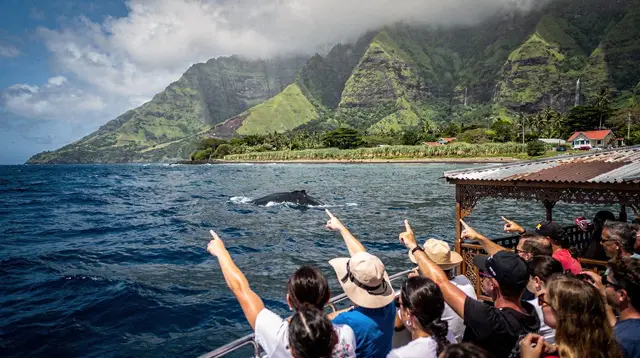
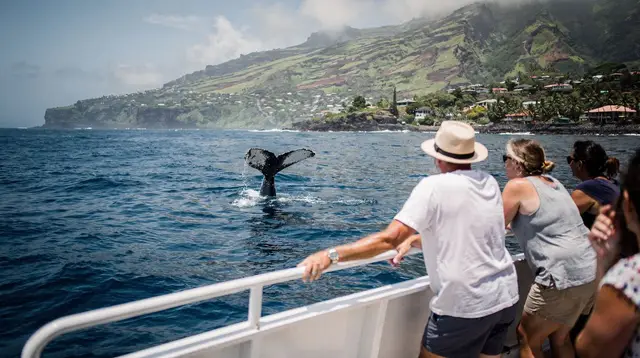
- It does not mean you should avoid booking activities outright. A whale-watching trip in December or a lagoon cruise in February is booked exactly as it would be in July; the only difference is choosing an operator with a sane cancellation policy.
- It does not mean the island shuts down for six months. Cyclone season overlaps with Réunion’s austral summer — warm, humid, lush — which is a genuinely good time to see waterfalls at full flow and the cirques at their greenest, as long as your bookings stay flexible.
If cyclone season doesn’t suit your plans
Réunion’s seasons run opposite to Europe’s: the cyclone season (November–April) is the austral summer, and the calmer, drier austral winter runs roughly May to October — also the better window for high-altitude hiking, since trails to Piton des Neiges and across the volcano’s Plaine des Sables are less likely to be closed by rain or cloud. It’s also whale season: humpbacks pass close to the west coast roughly from June to October, well outside the cyclone window, so the two seasons never overlap — see when to see humpback whales and the dedicated four-day whale season itinerary if that’s the priority. For a full month-by-month comparison of both halves of the year, our best time to visit guide and Réunion Island weather by month lay out the trade-offs in more detail than a booking guide like this one needs to.
For a wider first-timer view of the island beyond this season, our guide for first-time visitors and the how many days in Réunion Island guide are good next stops, and where to stay in Réunion Island covers picking a base that keeps you close to services if an alert does hit. If your dates sit right in January–March and you specifically want to see humpback whales, note that the whale season covers roughly June to October — the two seasons don’t overlap, so a cyclone-season trip is not a whale-watching trip.
Before you book: a short checklist
- Flights: refundable fare or low-fee changes, buffer day for connections.
- Accommodation: free cancellation window of at least 24–48 hours, especially for remote gîtes.
- Tours: written weather-cancellation policy from the operator, not a verbal promise.
- Insurance: policy explicitly names cyclone or named-storm cover, bought before a system is already forming.
- On the ground: know your accommodation’s confinement plan (shutters, water, safe room) on arrival, not after an alert is issued.
- Daily check: Météo-France La Réunion and the prefecture’s own channels for the current vigilance level — not international weather apps, which lag the local alert system.
- Packing: bring what you’d bring for warm, humid weather with occasional heavy rain rather than gear for a storm you may never see — what to pack for Réunion Island covers this for the season generally, cyclone risk included.
- Budget slack: a rescheduled tour or an extra night at a hotel during a confinement is a real cost, so build a small buffer into your overall budget rather than assuming every booking runs exactly as planned — see Réunion Island on a budget for the general numbers this assumes.
Réunion sees plenty of visitors every cyclone season who never experience more than a few rainy afternoons. The point of this briefing isn’t caution for its own sake — it’s booking in a way that makes the rare bad week a rescheduling problem, not a financial one. For trip cost planning that already assumes some flexibility, see Réunion Island trip cost, and for the mistakes that catch most first-time visitors — cyclone season or not — our travel mistakes to avoid guide.
Cyclone season FAQ: alerts, insurance and booking flexibility
When exactly is cyclone season in Réunion Island?
From 1 November to the end of April, by the official Météo-France definition for the south-west Indian Ocean. The highest-risk stretch is January to March, but a system can form earlier or later in that window.
Can you predict whether a cyclone will hit during your specific dates?
No. Tropical systems are tracked days in advance, not months, so no honest source can tell you in June whether your November trip will see a cyclone. Book as if it’s unlikely, plan as if it’s possible.
What do vigilance, orange alert and red alert actually mean?
Vigilance cyclonique is an early watch with no restrictions yet. Alerte orange means a system is approaching and preparations should start. Alerte rouge means confinement is compulsory: stay indoors, all transport and most businesses stop, and tours and outdoor activities are suspended until the all-clear.
How long does a red alert confinement usually last?
Often 24 to 48 hours for a system passing near the island, longer if it stalls or causes flooding and landslides afterward. Roads in the Hauts and the cirques can stay closed for days after the alert is lifted while debris is cleared.
Should I cancel a trip booked for December, January or February?
Not automatically. These are also good months for warm lagoon water and lush landscapes. The sensible move is to book refundable flights and gîtes, not to avoid the season outright.
Does travel insurance actually cover a cyclone?
Many policies cover trip interruption, missed connections and prepaid non-refundable costs caused by a named storm, but terms vary a lot by insurer and by how close to departure you bought the policy. Read the weather and natural-disaster clause before you buy, not after.
What happens to flights during a red alert?
Roland-Garros airport (RUN) and Pierrefonds (ZSE) both close during alerte rouge and sometimes during alerte orange, and airlines typically rebook affected passengers without extra fees. Delays before and after the alert are common as the airport clears a backlog.
Are guided tours and activities cancelled during an alert?
Yes, operators suspend boat trips, helicopter flights, hikes and canyoning from orange alert onward, for safety reasons that also apply to swimming and driving in the Hauts. Confirm your operator’s weather-cancellation and refund policy before booking.
Seasonal Réunion Island activities on GetYourGuide
Verified deep-linked GetYourGuide tours. Book through these links and we earn a small commission at no cost to you.
GetYourGuide does not provide a product photo for this activity — the image shows the meeting point, photographed by us.