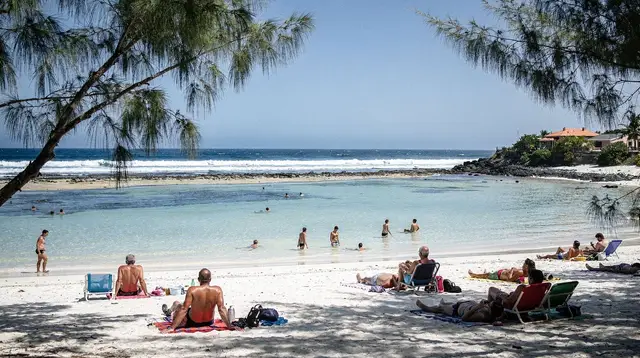
Seven days hiking Réunion: Mafate, Cilaos, Salazie and the volcano
Most visitors pick one cirque and call it a trip. This week is for hikers who want all three, plus the volcano, joined into a single raid rather than three disconnected day trips. The car does the connecting between trailheads; your legs do the rest. It is a demanding week — figure five to six hours of walking on the hardest days, early starts, and gîte nights with no hot showers in Mafate — but it gives a far more complete picture of the island’s interior than any single-cirque trip can.
If a week feels like too much, the shorter version of this route is three cirques in four days, done mostly by car with short walks at each stop. If Mafate alone is the goal, see the Mafate three-day trek. And if the volcano is the only thing on your list, the Piton de la Fournaise volcano weekend covers that alone.
Before you go: the three things that will make or break this week
Mafate has no road. Every kilometre inside the cirque is on foot, on marked trails from the Maïdo, the Col des Bœufs, or the Rivière des Galets. A car gets you to the trailhead and nowhere further. Helicopters resupply the gîtes and fly sightseeing loops overhead, but there is no vehicle track in, out, or across the cirque.
The road to Cilaos has roughly 400 bends. Climbing from Saint-Louis, it takes about an hour of continuous switchbacks with no real straight section. It is not dangerous if driven carefully, but it is tiring, and it rules out doing Cilaos as a quick stop on a day that also involves a long walk.
The volcano hike depends on the enclos being open. Access to the Pas de Bellecombe trail toward the Dolomieu crater is closed by the prefecture during eruptions or elevated alert levels. Piton de la Fournaise is one of the most active volcanoes on Earth, and closures happen with little notice. Build a flexible last two days so a closed enclos doesn’t sink the whole week — the Plaine des Sables and the crater rim viewpoint are still worth the trip even without descending into the enclos.
Check trail status with the ONF (Office National des Forêts) before each day out — this is the actual authority on closures after heavy rain or rockfall, not a blog post or a gîte owner’s guess.
Day 1: Into Mafate via the Maïdo
Start early. Drive up to the Maïdo (around 2,200 m) above Saint-Paul before the clouds roll in — they typically climb the western slopes from mid-morning and can erase the view by 10 am. From the Maïdo viewpoint, the whole of Mafate opens up below: La Nouvelle, Roche Plate and the ridgelines that separate them.
From the Maïdo, or from the Col des Bœufs trailhead a short drive further, the descent into Mafate takes two to three hours depending on which ilet you’re heading for. La Nouvelle is the most straightforward first stop, with several gîtes and a village feel. Book your bed ahead — Mafate has no way to arrive unannounced and hope for a spare room.
If you’d rather have the descent and the local knowledge handled for you, a half-day tour from the Maïdo overlooking Mafate is a gentler way to get oriented before committing to the multi-day walk. For background on logistics before you leave the car behind, read how to get into Mafate without a road and sleeping in a Mafate gîte.
Day 2: Deep into the cirque
A full day inside Mafate, walking between ilets — La Nouvelle to Marla, or La Nouvelle to Grand Place, depending on your first night’s base. Expect four to six hours of walking on uneven terrain, with real elevation gain and loss between each hamlet; distances on the map are short, but the terrain stretches every kilometre.
This is the day to notice why Mafate feels unlike anywhere else on the island: no cars, no road noise, solar panels on gîte roofs, mule trains carrying supplies, and views that only open up to people willing to walk in. A guided small-group hike, such as the small-group scientific hike through the Mafate cirque, adds context on the geology and the cirque’s isolated settlement history that’s easy to miss walking alone.
For planning the route between ilets and realistic timings, see hiking in Mafate: a planning guide.
Day 3: Walk out, drive to Cilaos
Walk out of Mafate — most routes back to a road take three to five hours, so plan the exit as seriously as the entry. Once you’re back at the car, the day’s second half is entirely different: the drive to Cilaos via the road with its roughly 400 bends. Don’t schedule anything else this day; between the walk out and the drive, it’s a full one.
Cilaos itself, once you arrive, is worth the effort: thermal baths, a village built into a bowl of peaks, and a reputation as the island’s canyoning capital. Settle into a gîte or hotel and rest the legs before tomorrow.
Day 4: Cilaos — canyoning or a shorter hike
After three demanding days, Day 4 is deliberately lighter. Cilaos is the base for some of Réunion’s best canyoning, and a day in the water is a genuine change of muscle group after three days of walking. The canyoning route from Bras Rouge down to Cilaos mixes abseiling, jumps and natural waterslides through the gorge — a fun, aquatic, geologically dramatic day rather than another climb.
If you’d rather keep walking, shorter trails around Cilaos — to the thermal springs, or partway up toward the Piton des Neiges trailhead at the Caverne Dufour gîte — are gentler than a full ascent. Climbing the Piton des Neiges itself (3,070 m, the highest point in the Indian Ocean) usually means an overnight at the gîte and a night hike for sunrise; it’s a worthwhile extension if you have an extra day, but it’s not built into this seven-day plan. See the Piton des Neiges summit hike guide if you want to add it.
Day 5: Cilaos to Salazie and Hell-Bourg
Drive out of Cilaos and across to Salazie, the greenest and most accessible of the three cirques by road. Base yourself in or near Hell-Bourg, a village of creole houses ranked among France’s most beautiful, and spend the afternoon at the waterfalls the cirque is known for, including the Voile de la Mariée cascade visible from the road.
For a longer legs day, the viewpoint over the Trou de Fer — a spectacular multi-tiered waterfall gorge — is reached via a trail from Bélouve forest; it’s a serious out-and-back hike in its own right, so weigh it against how your legs feel after four hiking days already. A guided option such as the small-group guided tour of Salazie covers the cascades and villages at a gentler pace if you’d rather save your energy for the volcano days ahead. Background: how to see the Trou de Fer waterfall and Cilaos vs Salazie if you’re deciding how to split time between the two.
Day 6: Up to the volcano
Drive from Salazie toward Bourg-Murat on the Plaine des Cafres, then up the volcano road into the Plaine des Sables, a stark, almost lunar plateau that feels like nothing else on the island. Continue to Pas de Bellecombe (2,311 m) for the belvedere over the enclos and the Formica Léo cone.
Leave as early as you can — fog typically rises over the volcano plateau by late morning, and a clear Plaine des Sables at 7 am can be socked in by 11. If the enclos is open, the walk down to the rim of the Dolomieu crater and back takes around five hours round trip; if it’s closed for eruption activity or an elevated alert, the belvedere and the Formica Léo walk are still a full, worthwhile morning on their own. Never assume the crater trail will be open — check the prefecture’s status the night before and again at the trailhead. Read can you visit Piton de la Fournaise during an eruption and what time to start the Piton de la Fournaise hike before you commit to the full descent.
For a different perspective on the same landscape, a scenic helicopter flight over Piton de la Fournaise shows the crater and the lava fields from above — a good option on the afternoon of this day if the enclos is closed, or as a change of pace after six days of walking.
Day 7: Cité du Volcan or a buffer day
Keep the last day flexible. It’s a reasonable place to add a half-day at the Cité du Volcan museum in Bourg-Murat if the weather turned on Day 6 and you missed the outdoor views, or simply to absorb the slack that a week built around mountain trails and mountain roads always needs — a closed enclos, a socked-in Plaine des Sables, or legs that need one more easy morning before the flight home. If everything ran on schedule, this is also a good day to drive back down toward the coast at an unhurried pace rather than racing to the airport.
For what to pack across such varied terrain and elevations — lagoon heat at sea level, near-freezing mornings on the volcano rim — see what to pack for Réunion Island. If your trip falls in the cyclone season window, read the Réunion Island cyclone season guide before locking in fixed dates for the mountain days.
Planning notes: gîtes, driving and trail checks
| Day | Base | Main effort |
|---|---|---|
| 1 | Mafate (La Nouvelle) | Maïdo descent, 2–3h walk |
| 2 | Mafate (Marla or Grand Place) | Full day walking, 4–6h |
| 3 | Cilaos | Walk out (3–5h) + drive over ~400 bends |
| 4 | Cilaos | Canyoning or short walk |
| 5 | Salazie / Hell-Bourg | Drive + waterfalls, optional Trou de Fer |
| 6 | Bourg-Murat / volcano area | Plaine des Sables, Pas de Bellecombe |
| 7 | Flexible | Cité du Volcan or buffer |
Book Mafate gîtes and the Caverne Dufour (if you extend to the Piton des Neiges) well ahead of arrival; both fill up, especially outside the wettest months. A rental car is close to essential for this route — see driving in Réunion Island for practical notes on mountain roads and fuel stops in the Hauts. This itinerary works best in the austral winter (May to October), when trails are drier and the volcano plateau is less likely to be fogged in all day, though mornings can be close to freezing at altitude even then.
FAQ: hiking a full week across Réunion’s cirques and volcano
Is seven days enough to hike Mafate, Cilaos, Salazie and the volcano?
It’s enough for a solid two to three days in Mafate, a rest-and-canyoning day in Cilaos, an afternoon in Salazie, and a proper morning on the volcano — but it’s tight, not leisurely. Add a day if you want to climb the Piton des Neiges as well.
Do I need to be an experienced hiker for this route?
Yes. This is built for hikers comfortable with multi-hour days on uneven mountain terrain, carrying their own pack, and walking with real elevation change. It’s not a route to attempt as a first hike of your life.
Can I drive into Mafate to save time?
No. Mafate has no road at all; every hamlet is reached on foot from trailheads such as the Maïdo, Col des Bœufs or the Rivière des Galets. Helicopters supply the gîtes, but there’s no vehicle access for visitors.
What happens if the volcano’s enclos is closed when I arrive?
The Pas de Bellecombe belvedere and the Formica Léo walk remain open and worthwhile even when the crater trail itself is closed. Closures happen during eruptions or elevated alert levels and can occur with little notice, so treat the crater descent as a bonus, not a guarantee.
How hard is the drive to Cilaos after a day of hiking?
Tiring. The road climbs through roughly 400 bends from Saint-Louis, taking about an hour of continuous switchbacks. Doing it straight after walking out of Mafate makes for a long day — this itinerary treats Day 3 as a single combined effort rather than adding anything else.
Is this itinerary safe during cyclone season?
The route depends on mountain roads and exposed trails that close quickly after heavy rain, so scheduling it during the cyclone season (November to April) adds real risk of cancelled days. May to October, the austral winter, is the more reliable window.
Do I need to book the Mafate gîtes in advance?
Yes, always. There’s no way to show up in Mafate and expect a free bed; gîtes are small, and popular ilets like La Nouvelle fill up well ahead, especially in the dry season.
Should I add the Piton des Neiges summit to this week?
Only with an extra day. The standard approach is an overnight at the Caverne Dufour gîte near Cilaos followed by a night hike for sunrise at 3,070 m — a rewarding add-on, but not one that fits cleanly into the seven days above without cutting time elsewhere.
tours.7 days
Verified deep-linked GetYourGuide tours. Book through these links and we earn a small commission at no cost to you.
GetYourGuide does not provide a product photo for this activity — the image shows the meeting point, photographed by us.