Cilaos vs Salazie: which Réunion cirque to visit
Should I visit Cilaos or Salazie in Réunion?
Cilaos suits travellers who want canyoning, thermal springs, wine and the trailhead for Piton des Neiges, reached by a demanding 1-hour drive on the RN5's roughly 400 bends. Salazie is greener, easier to reach from Saint-André, and better for waterfalls, the village of Hell-Bourg and shorter walks. With two full days, many visitors do both.
Two cirques, one road-trip decision
Réunion has three cirques carved into the old volcanic massif around Piton des Neiges: Cilaos, Salazie and Mafate. Mafate is out of scope here on purpose — it has no road at all, so getting in means walking, and it deserves its own planning page rather than a side note. This comparison is about the two cirques you actually drive into: Cilaos and Salazie.
Both sit less than two hours from the west coast beaches around Saint-Gilles-les-Bains, and both are reachable on a long day trip if you start early. They are not substitutes for each other, though. Cilaos is the drier, more mineral cirque built around canyoning, thermal water and the approach to the island’s highest peak. Salazie is the green, wet cirque of waterfalls and creole villages. If your schedule only allows one, the choice below should make it obvious which one; if you have two or three days spare, the last section covers combining them.
How to get there and how long it really takes
Kilometre distances are close to meaningless here — mountain roads set the pace, not the map.
| From | To | Route | Drive time |
|---|---|---|---|
| Saint-Louis | Cilaos | RN5, roughly 400 bends | About 1 hour, no stops |
| Saint-Gilles | Cilaos | Coast road, then RN5 | About 1h45–2 hours |
| Saint-André | Salazie / Hell-Bourg | Mountain road via Salazie | About 40–50 minutes |
| Saint-Gilles | Salazie / Hell-Bourg | Coast road via Saint-Denis, then mountain road | About 1.5–2 hours |
The RN5 to Cilaos is the more demanding drive of the two: narrow, tightly curved, with drop-offs on one side for long stretches. It is safe if driven attentively at a slow pace, but it is genuinely tiring, and it is not the place to be running late. The road into Salazie from Saint-André is also winding but shorter and less intense. If you would rather not drive it yourself, both cirques are covered by guided day tours from the west coast, and a scenic flight is the fastest way to see their shape from above — more on that later.
Neither cirque has a road connecting it to the other; you cannot drive from Cilaos to Salazie directly. Each visit means going back down to the coast first. Planning tools for the wider island are on the route planning page and the car rental guide.
Cilaos: canyoning, wine and the roof of the island
Cilaos sits in a dry, sun-exposed bowl, which is part of why it feels so different from Salazie despite being only a few kilometres away as the crow flies. The village itself is small and walkable, with thermal baths, a church square and a handful of restaurants serving Cilaos lentils, local wine and Réunion classics like carri and rougail saucisse.
Canyoning is the headline activity. Cilaos is the island’s main base for it, with routes graded from beginner to committed, including Fleurs Jaunes, Gobert and Bras Rouge. Operators run half-day and full-day trips with wetsuits, harnesses and guides included; booking a day or two ahead in high season is sensible. See canyoning in Réunion for a route-by-route breakdown.
Thermal springs gave the village its name and its original reason for existing as a spa town; the baths are a low-key way to rest legs after a hike or a canyoning trip.
Piton des Neiges, at 3,070 m the highest point in the Indian Ocean, is climbed from Cilaos. The standard plan is to drive up to the Caverne Dufour trailhead area, sleep at the gîte there, and start the final push before dawn to catch sunrise from the summit — a demanding but non-technical hike. Gîte beds sell out, especially around school holidays and the May–October dry season, so reserve well ahead. Full route notes are on the Piton des Neiges summit guide.
Cilaos also anchors the GR R1 trail around the peak and several shorter half-day walks into side valleys, useful if canyoning or the summit hike is too much for your group. See things to do in Cilaos and the broader best hikes in Réunion for options that don’t require a full day.
Salazie: waterfalls, Hell-Bourg and an easier approach
Salazie faces the wet, windward side of the island, and it shows: steep green slopes, cascades after almost every bend, and a noticeably softer light than Cilaos on the same day.
Hell-Bourg is the cirque’s main village and one of the official Plus Beaux Villages de France. Creole houses with lambrequin woodwork line quiet streets, a handful of small museums cover thermal-spa history and local crafts, and there are enough cafés and guesthouses to justify a slow lunch stop rather than a drive-through visit.
Waterfalls are Salazie’s signature. The Voile de la Mariée cascades down a cliff face visible from the road itself, no hike required, which makes it an easy stop even for travellers with limited time or mobility. For something more dramatic, the viewpoint over the Trou de Fer gorge near Belouve — reached by a forest walk rather than a drive — shows one of the deepest, most photogenic canyons on the island, though it is frequently veiled in cloud; morning visits improve the odds. Details on access and timing are in the waterfalls and natural pools guide.
Salazie is generally the gentler cirque for walking: shorter loop trails around Hell-Bourg and Grand Îlet suit families and casual walkers better than Cilaos’s canyoning-and-summit focus, though serious hikers also use Salazie as an approach to Mafate on foot. See things to do around Salazie and Hell-Bourg for a practical day-by-day layout.
Side by side
| Cilaos | Salazie | |
|---|---|---|
| Access from Saint-Gilles | About 1h45–2h, RN5’s ~400 bends | About 1.5–2h, via Saint-André |
| Landscape | Dry, mineral, sun-exposed | Green, wet, lush |
| Signature activity | Canyoning | Waterfalls and short hikes |
| Village | Cilaos — thermal baths, wine | Hell-Bourg — creole architecture |
| Big-ticket hike | Piton des Neiges (overnight) | Trou de Fer viewpoint (day walk) |
| Best for | Adventure, canyoning, wine | Scenery, walking, easy day trip |
| Rain risk | Lower | Higher, especially November–April |
Which one for whom
If you have to pick one and canyoning, wine or the Piton des Neiges climb interest you, go to Cilaos. The drive is longer and more demanding, but the activity list matches an active, adventure-minded trip, and it pairs naturally with the volcano region further south. Day-trip logistics from the coast are covered in the Cilaos day trip guide.
If you would rather see a strikingly green landscape, walk a couple of short, well-marked trails, and spend time in one of Réunion’s most photogenic villages without a punishing drive, go to Salazie. It is also the more forgiving choice with children or anyone uneasy on narrow mountain roads, since the approach from Saint-André is shorter and less exposed than the RN5.
Travellers chasing waterfalls specifically should lean Salazie; travellers chasing canyoning, hiking a real summit, or a glass of Cilaos wine at altitude should lean Cilaos. Neither cirque is a let-down as a second choice — this is a preference call, not a quality gap.
Seeing both without wasting a day driving
Because the two cirques aren’t linked by road, combining them means two separate approach drives, ideally on different days. A workable pattern for a longer trip:
- Day 1: Salazie and Hell-Bourg as a full day from the coast — Voile de la Mariée, the village, and the Belouve forest walk to the Trou de Fer viewpoint if weather allows.
- Day 2: Cilaos as a full day, with canyoning booked in advance, or a shorter walk plus the thermal baths and a lentil-and-wine lunch.
- Day 3 (optional): start the Piton des Neiges hike from Cilaos, or, for hikers, walk into Mafate instead and treat all three cirques as one loop.
A full three-cirque plan, including where Mafate fits for hikers with time and fitness to spare, is laid out in the three cirques in four days itinerary. Hikers set on Mafate specifically should read the dedicated Mafate trekking guide before booking gîtes, since beds there fill up fast and there is no road to fall back on if plans change.
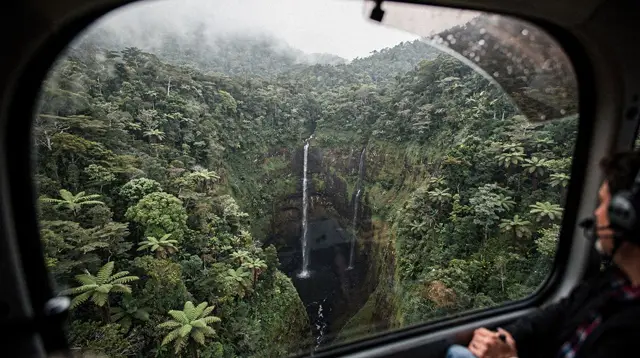
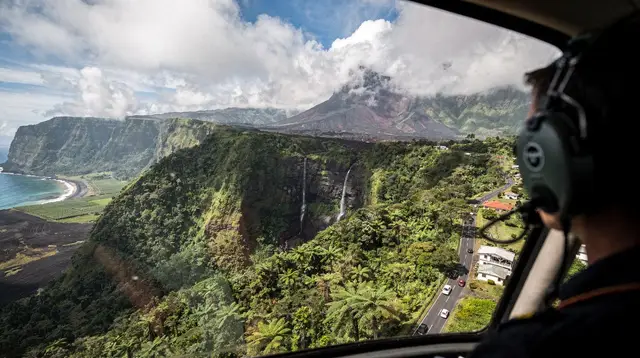
For a first look at how the three cirques relate to each other from above, a scenic flight is genuinely useful rather than just a photo op — you see the caldera shape that the road-level views never quite reveal.
a 45-minute microlight flight over the cirques, islets and lagoonFor a faster, more powerful overview with a bigger weather window, a helicopter tour departing from the west coast covers the same ground in less time.
a helicopter tour over the cirques departing from Saint-GillesPractical notes before you drive up
Weather changes fast in both cirques, and cloud tends to build through the morning — leave early rather than late, especially for the Trou de Fer viewpoint or anything above 1,500 m. Réunion’s seasons run opposite to Europe: the dry, cooler austral winter (May–October) is the better window for driving these roads and walking without rain gear on standby, while the austral summer (November–April) brings heavier rain, especially on Salazie’s windward slopes, and overlaps with cyclone season. Check the seasonal guide and cyclone season guide before locking in dates.
Fuel up before leaving the coast — options are limited once you’re in either cirque — and check the ONF trail-status pages if you’re adding a hike, since heavy rain closes sections of trail with little notice. Mobile signal is patchy in both cirques away from the main villages, so download maps and gîte confirmations in advance.
If you’d rather not self-drive the RN5 or the Salazie road at all, a full-island guided tour covers the highlights of both regions alongside other parts of Réunion without you handling the mountain driving.
a full-day guided tour covering Réunion’s main sights in 13 stopsAnd if wine and rum production interest you beyond Cilaos’s own vineyards, a distillery visit on the west coast rounds out a rest day between the two cirques.
a guided visit to an artisanal rum workshop in Saint-PaulCilaos vs Salazie: frequently asked questions
Which cirque is easier to visit as a day trip from Saint-Gilles?
Salazie is the easier day trip: the road from Saint-André is faster and less winding than the RN5 to Cilaos, and Hell-Bourg’s sights sit close together. Cilaos is not hard, but budget a full day once you add the mountain drive both ways.
How long does it take to drive to Cilaos?
From Saint-Louis, the RN5 climbs through roughly 400 bends and takes about 1 hour without stops, longer with traffic or roadworks. From Saint-Gilles, plan close to 2 hours door to door including the coastal approach.
How long does it take to drive to Salazie?
From Saint-André on the east coast, Salazie and Hell-Bourg are about 40 to 50 minutes by car. From Saint-Gilles, allow roughly 1.5 to 2 hours depending on traffic around Saint-Denis.
Can I visit both Cilaos and Salazie in one trip?
Yes, but not comfortably in a single day, since the two cirques are not directly connected by road and each visit involves its own mountain drive. Most itineraries pair them over two or three days, sometimes adding Mafate on foot for a three-cirques trip.
Is canyoning available in both cirques?
Cilaos is the island’s main canyoning base, with routes such as Fleurs Jaunes, Gobert and Bras Rouge run by local operators. Salazie has some canyoning too, but it is far less developed than in Cilaos.
Which cirque is better for waterfalls?
Salazie is the waterfall cirque, thanks to heavier rainfall on this windward side of the island. The Voile de la Mariée is the best-known cascade, and the Trou de Fer viewpoint near Belouve shows one of Réunion’s most dramatic gorges.
Do I need a car to visit Cilaos or Salazie?
Yes. Neither cirque has a useful public transport link for sightseeing once you arrive, and the Car Jaune network mainly serves coastal towns. A rental car, or a guided day tour from Saint-Gilles, is the realistic way to see either cirque.
Which cirque has better food and local products?
Cilaos is known for its wine, lentils and thermal spring water, with small producers open to visitors. Salazie’s Hell-Bourg has creole guesthouses and cafés, but it is less built around local food specialities than Cilaos.
Compare top-rated excursions on GetYourGuide
Verified deep-linked GetYourGuide tours. Book through these links and we earn a small commission at no cost to you.
GetYourGuide does not provide a product photo for this activity — the image shows the meeting point, photographed by us.