Can you drink tap water in Reunion Island?
The question I got asked on my first morning
A friend texted me the moment I landed at Roland-Garros: “wait, can you actually drink the tap water there?” I didn’t have a confident answer yet, so I did what I’d tell anyone to do — I asked at the gîte, I asked at a café in Saint-Denis, and I paid attention to what locals themselves were doing. Reunion Island is a French overseas department, and water supply here runs through the same public system as anywhere else in France: municipal networks, treatment plants, regular monitoring by the local water authority. That’s the honest starting point. What I can’t do — and won’t pretend to do — is hand you a national compliance percentage or a lab result for the tap in your specific rental, because that number isn’t something I have in front of me, and it varies commune by commune and even street by street depending on the network age and the season.
So here’s how I’ll actually answer this: what’s true in general, what changes locally, what I did on my own trip, and the water-related risk that’s worth far more of your attention than the kitchen faucet.
What I can honestly say about the tap
Reunion Island runs on the French public water supply framework, and in most towns and coastal areas — Saint-Denis, Saint-Gilles, Saint-Pierre, Saint-Leu — the tap water comes from a monitored municipal network like the rest of the country. That’s about as far as I can go without inventing a number. Water quality standards in France apply, but I’m not going to quote you a percentage of samples that pass or a specific safety threshold, because I don’t have that figure and neither does a generic travel guide — it’s the kind of thing that’s published commune by commune, tested and updated on a rolling basis, and the only place to get a real, current answer for the address you’re actually staying at is your commune’s own water utility or your accommodation host.
That’s not me dodging the question. It’s the same caution I’d want from a guide before I trusted it with my own stomach. If you want the actual figure for where you’re sleeping tonight, ask the person who runs the gîte or the hotel reception — they’ll know whether their building is on a recently renewed network, whether there’s been a boil notice, or whether locals simply drink from the tap without thinking about it. In the Hauts and in smaller villages up toward Cilaos or Salazie, infrastructure and water sourcing can differ from what you’ll find down on the coast, so the same “just check locally” rule applies even more.
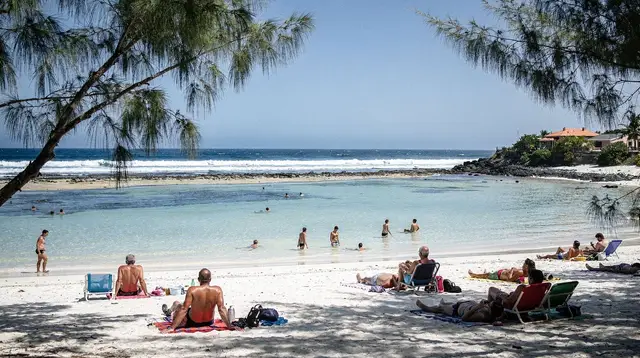
Once the tap question is settled and you’ve stopped worrying about the kitchen faucet, the water worth your actual attention on the west coast is the lagoon itself — calm, shallow, and about as different from a river after heavy rain as it gets. I ended up spending a full morning out with a guided snorkeling trip to see turtles in Saint-Gilles-les-Bains, which felt like the right way to actually use the water here rather than just worry about it.
My own approach, without overthinking it: in coastal towns I drank tap water the way I would in mainland France, and I didn’t have any issue. Up in the cirques, staying in smaller gîtes, I asked first rather than assumed, and more than once was told to stick to bottled or filtered water for that particular building. It cost nothing to ask, and it meant I wasn’t guessing.
The water risk that actually matters here: leptospirosis
Here’s the part that surprised me, because it’s not about the tap at all. The real water-related health risk in Reunion Island is leptospirosis, and it has essentially nothing to do with what comes out of a kitchen faucet. Leptospirosis is a bacterial infection linked to freshwater — rivers, streams, waterfalls, natural pools — especially after heavy rain, when runoff carries the bacteria (spread through animal urine) into standing or flowing fresh water. Given how often the island gets genuinely heavy rain, particularly on the wetter east coast and up in the Hauts, this isn’t a rare or theoretical warning.
The practical rule I stuck to: I didn’t swim in rivers, waterfalls, or natural freshwater pools after a period of heavy rain, and if a stream looked swollen or the water was visibly churned up and muddy, I stayed out entirely. This matters a lot if your itinerary includes canyoning, river hikes, or swimming under a waterfall — genuinely one of the best things to do here, but worth timing with some care rather than jumping in the moment you arrive at a pretty pool. It’s a completely different issue from the lagoon swimming on the west coast, which is calm, saltwater, and a different environment altogether — more on that distinction below.
And to be clear about what this article is and isn’t: this is not a piece about mosquito-borne illness. Dengue and chikungunya are separate risks tied to insect bites, not to water contact, and I’m not covering repellent strategy or symptoms here — that’s its own subject, deliberately kept apart from this one so the advice doesn’t get muddled.
Staying properly hydrated on the island
Whatever you decide about the tap, hydration itself deserves real attention here, because the tropical climate makes it easy to underestimate. Down on the coast the heat and humidity are constant, and up on a hike toward Piton des Neiges or across the cirques, the sun is intense even at altitude, and trails can run longer than the kilometre count suggests once you factor in the terrain. I carried more water than felt necessary on every hike, refilled whenever I had a reliable source, and treated any doubt about a tap as a reason to buy a bottle rather than debate it mid-trail. Bottled water is sold everywhere — supermarkets, petrol stations, kiosks near trailheads — so there’s no real inconvenience to defaulting to it if a particular building or village leaves you unsure.
If you’re planning multi-day routes, especially into Mafate where gîtes are the only accommodation and everything, water included, depends on what the ilet can supply, it’s worth asking your gîte host directly about their water source before you arrive rather than assuming.
What I’d actually tell you before you go
Don’t expect a single blanket answer, because there isn’t an honest one to give. Municipal tap water on Reunion Island generally follows French supply standards, and in coastal towns I never had a reason to think twice about it. But I’m not going to invent a compliance figure to sound more authoritative, and neither should any guide you read. For the address you’re actually staying at, ask locally — it takes one question and it’s the only way to get an answer specific enough to be useful. Meanwhile, put your actual caution where it belongs: freshwater after heavy rain, not the kitchen tap.
FAQ about tap water and water safety in Reunion Island
Is tap water safe to drink in Reunion Island?
In most coastal towns, tap water runs through the standard French municipal supply system, and I drank it without issue. Water quality can vary by commune and by building, especially in smaller villages in the Hauts, so the reliable answer for where you’re staying comes from asking locally, not from a general rule.
Where can I find the actual water quality figures for my area?
I don’t have a specific compliance number to give you, and I’d be inventing one if I did. Ask your accommodation host or check with the local commune’s water utility — that’s the only source specific enough to reflect the network you’re actually on.
Is leptospirosis linked to tap water?
No. Leptospirosis is linked to freshwater sources like rivers, streams, and natural pools, particularly after heavy rain, not to municipal tap water. It’s a completely separate issue and one of the more genuine outdoor health risks on the island.
Should I avoid swimming in waterfalls and rivers?
Not entirely, but avoid it after heavy rain or when the water looks swollen or murky, since that’s when the leptospirosis risk rises. Calm, clear conditions after a dry spell are a different story — just use judgment rather than assuming it’s always fine.
Is lagoon swimming on the west coast affected by this risk?
No. The lagoon is saltwater and a different environment from the freshwater rivers and pools linked to leptospirosis. That said, swimming and water activities are restricted to the lagoon and other protected or supervised zones on this coast for a separate reason: shark risk further out — it’s actually one of the better reasons to go out with a guided boat trip with snorkeling in L’Étang-Salé rather than swim unsupervised. If you’d rather stay closer to shore and still get in the water, a guided water hiking tour in the lagoon of Saline-les-Bains covers the same calm, shallow lagoon without heading out past the reef.
Should I drink bottled water instead, just to be safe?
It’s a reasonable default if you’re ever unsure, and bottled water is sold everywhere on the island. I switched to it in a few village gîtes simply because I hadn’t had a chance to ask about the local supply yet.
Does this affect hiking and altitude trips differently?
Hydration matters more on hikes than the tap-water question itself. The sun is strong even at altitude, and mountain trails often take longer than the distance suggests, so carry more water than you think you need, especially heading into multi-day routes.
Is this the same issue as mosquito-borne illness on the island?
No, and it’s worth keeping the two separate. Dengue and chikungunya are spread by mosquitoes, not through water contact, and call for a different kind of precaution entirely.
tours.Practical
Verified deep-linked GetYourGuide tours. Book through these links and we earn a small commission at no cost to you.
GetYourGuide does not provide a product photo for this activity — the image shows the meeting point, photographed by us.