Most people who fly into Réunion land at Roland-Garros and head straight for the west coast lagon. That’s a reasonable plan for a beach holiday, but it means skipping the one place on the island that actually functions as a city: Saint-Denis. This is the préfecture seat, the administrative capital of a French overseas department, and the closest thing Réunion has to an urban centre with a real downtown grid, department stores, government buildings and a working port history behind it. It is not a resort town, it has no managed lagon, and treating it as a beach stop will leave you disappointed. Treat it as a half-day or full-day city walk instead, and it earns its place on the itinerary.
Why Saint-Denis is not a beach stop
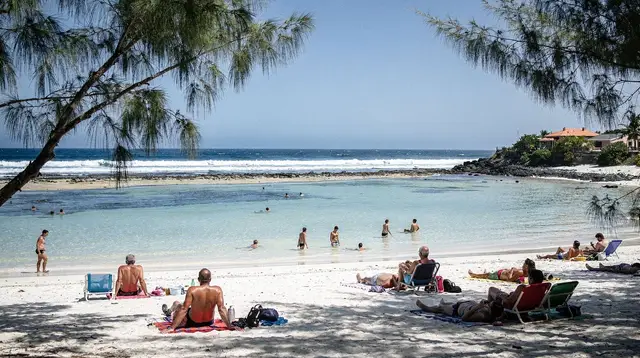
Réunion’s west coast — Saint-Gilles-les-Bains, l’Hermitage, La Saline-les-Bains — has the reef-protected lagon, the white sand and the water sports. Saint-Denis has none of that. The city sits on the north coast where the shoreline is mostly rock and exposed swell, unsuitable and, in places, unsafe for swimming. If a lagon day is what you’re after, budget 30–45 minutes by car southwest to reach the Saint-Gilles area, and plan Saint-Denis as a separate outing, not a stopover on the way to the beach.
What Saint-Denis does have is density: government buildings, the island’s main university, the busiest shopping streets, and a genuine mix of communities that shows up in the built environment in a way no other Réunion town matches. It rewards walking, not lounging.
Rue de Paris and the creole heart of the city
Start on rue de Paris, the city’s signature street and the best concentration of 19th-century creole houses on the island: wide verandas, timber lace trim (lambrequins), shuttered windows painted in the muted pastels typical of colonial-era Réunion architecture. Many of these houses now serve as government offices, consulates or the prefecture itself, which means you’re looking at working buildings, not a museum set piece — a detail that’s part of what makes the street feel authentic rather than restored for tourists.
Running parallel and perpendicular to rue de Paris, the surrounding blocks hold the Jardin de l’État, a shaded 18th-century botanical garden with mature trees, a colonial-era feel and, in one wing, the Léon Dierx museum of fine art — a reasonable indoor option if the weather turns, which it can without much warning even on the drier north coast. Budget 45 minutes to an hour for the garden and museum combined if you want more than a quick pass-through.
The Barachois and the seafront
Walk north from rue de Paris and you reach the Barachois, the city’s seafront promenade facing the open ocean rather than any lagon. This is where Saint-Denis does its version of a waterfront evening: joggers, families, food stalls at times, and a clear view out over water that is not for swimming — the surf and currents here are a different proposition from the reef-calmed lagon further southwest. The Barachois is worth a slow walk at the end of the afternoon, particularly for the light, but don’t come expecting sand or a dip.
A city built on shared faiths
What sets Saint-Denis apart from any other town on the island is how visibly its communities coexist within a few streets of each other. The Grande Mosquée Noor-e-Islam, reportedly the oldest mosque in France, stands not far from Hindu temples serving the island’s large Tamil community, with Chinese pagodas also part of the mix nearby. This isn’t a curated “heritage quarter” — it’s the ordinary religious landscape of the city, and walking between these sites in under half an hour gives a more concrete sense of Réunion’s mixed population than anything written about it. Dress modestly if you plan to approach the mosque or temple entrances, and check locally for open visiting windows, since access outside prayer or ceremony times varies.
For a guided read on how these communities fit into the island’s wider story, the Réunion Island culture and religions guide goes deeper than a single city visit can.
Roland-Garros airport: near the city, not in it
A common source of confusion: Roland-Garros airport (RUN) sits at Sainte-Marie, a separate commune east of Saint-Denis, not downtown. Depending on traffic on the coastal road, plan 20–35 minutes by taxi or bus between the airport and the city centre — longer during weekday peak hours, when the approach roads into Saint-Denis can back up. If your flight lands mid-afternoon, don’t assume you’ll be strolling rue de Paris within ten minutes; build in the transfer time. The Roland-Garros to Saint-Gilles guide covers the longer transfer to the west coast, which most visitors end up making the same day or the next.
Getting around the city and beyond
The centre of Saint-Denis is compact and walkable — you won’t need a car for rue de Paris, the Barachois and the Jardin de l’État. A car (or a connection on the Car Jaune bus network) becomes useful once you want to reach the airport, the West Coast lagon, or the green Hauts rising behind the city. If you’re renting a car for the rest of the trip, picking it up on arrival and parking it for the city walk is usually simpler than renting later. See the driving in Réunion guide for the basics: right-hand driving, and mountain-road travel times that run much longer than the kilometres suggest once you leave the coast.
A brief history behind the streets
Saint-Denis became the seat of French colonial administration on Réunion (then Île Bourbon) in the early 18th century, and the street grid around rue de Paris still reflects that period: wide avenues laid out for administrative buildings rather than a fishing village’s tangle of lanes. The port that once handled coffee, then sugar and vanilla exports, has long since moved, but the merchant houses built on that trade are what give rue de Paris its wealth of 19th-century creole architecture today. Réunion’s status changed over the centuries — colony, then French overseas department since 1946, and since the 1980s a région ultrapériphérique of the European Union — but Saint-Denis has stayed the administrative capital throughout, which is why the prefecture, the regional council and the main courts all sit within a few streets of rue de Paris rather than being spread across the island.
Markets, shopping and rainy-day options
Beyond rue de Paris and the Barachois, Saint-Denis has the island’s densest concentration of everyday shopping: department stores and chain outlets around rue Maréchal Leclerc, small Chinese and Indian grocers selling spices and ingredients you won’t find in West Coast supermarkets, and the kind of covered arcades that make an hour of rain easy to wait out without losing the day. This is also where a lot of the island’s administrative and business travel converges, so cafés along the main streets tend to be busy on weekday mornings and quieter by mid-afternoon. If the Jardin de l’État and Léon Dierx museum are already checked off and the weather is still uncooperative, a slow circuit of these covered shopping streets is the practical fallback — not a highlight of the trip, but a reasonable way to fill an hour without getting soaked.
Connecting Saint-Denis to the rest of the island
Because it sits on the north coast at the junction of the coastal roads, Saint-Denis works as a natural start or end point for a wider loop rather than a place to stay put. Heading west, the coast road runs toward Saint-Gilles and on to Saint-Leu; heading east it continues toward Sainte-Marie, Saint-André and the windward coast covered in the north and east overview. Inland and south, the roads climb toward the cirques — Cilaos and Salazie both start their approach roads from junctions south of the city, though the drive itself takes considerably longer than the straight-line distance suggests once the switchbacks start. Travellers building a full island loop around a Saint-Denis start or finish point sometimes follow the road trip around the island itinerary, which sequences these regions so the driving stays manageable rather than backtracking across the island.
If a single city day is all the time allows, the three days in Réunion Island itinerary and the four days in Réunion Island itinerary both show how a Saint-Denis morning or afternoon can bookend a trip that spends most of its time on the west coast or in the cirques, without the city eating into time better spent at the lagon or on the volcano.
What to eat
Saint-Denis has the island’s widest spread of everyday creole food away from a resort setting — carri, rougail saucisse, samoussas and bouchons turn up in unpretentious lunch spots around the centre, alongside Chinese and Indian-influenced options that reflect the city’s mixed population. A guided food walk is a straightforward way to get oriented on a first visit: the local food walk through Saint-Denis takes you to a handful of everyday spots rather than a single tourist-facing restaurant.
A different kind of city experience
Beyond the historical walk, Saint-Denis also has a small, quieter creative side worth knowing about if a slower pace appeals: a small-group sensory workshop in Saint-Denis or, for a more solo, hands-on option, a solo ceramic and sensory session — both a change of pace from museum-and-street walking and a reasonable way to fill an hour or two if the weather turns wet, which happens even on the drier north coast.
What Saint-Denis is not for
This page deliberately stops at the city limits. For the wider windward coast — Sainte-Suzanne, Saint-Benoît, the Rivière des Marsouins, vanilla plantations and the Anse des Cascades — see the north and east coast overview, which covers that ground properly rather than squeezing it in here. If white-water and river activity is what draws you to that side of the island, the rafting descent near Saint-Benoît or a river tubing run on the Rivière des Marsouins are the better starting points, not this city guide.
Similarly, Saint-Denis is not the place to base yourself for lagon time, hiking in the cirques, or the volcano — those are separate destinations with their own logistics, covered in the Saint-Gilles and Piton de la Fournaise guides.
Planning your visit
| Stop | Time to allow | Notes |
|---|---|---|
| Rue de Paris | 30–45 min | Creole houses, mostly administrative buildings now |
| Jardin de l’État + Léon Dierx museum | 45–60 min | Good wet-weather option |
| Le Barachois | 30–45 min | Best late afternoon; no swimming |
| Mosque and temple district | 30–45 min | Modest dress; check visiting hours locally |
| Lunch stop | 45–60 min | Carri, rougail saucisse, samoussas widely available |
A realistic half-day covers rue de Paris, the Barachois and lunch. A full day adds the garden, the museum and a slower pass through the mosque and temple area. If you’re building a longer island plan around this stop, the one-day in Réunion Island itinerary and the weekend itinerary both show where a Saint-Denis morning fits against a West Coast afternoon.
For where to stay before or after a Saint-Denis day, most visitors base themselves on the west coast near the lagon rather than in the city itself — see the where to stay guide for the trade-offs, and the how many days in Réunion guide for fitting a capital-city day into a wider trip. For a broader sense of what else the capital area offers beyond this walking route, the things to do in Saint-denis guide and the tours from Saint-Denis guide round out the options, including scenic flights such as a microlight flight over the island that some operators run from the north.
Saint-Denis: frequently asked questions
Is Saint-Denis worth visiting, and is it a beach destination?
Saint-Denis is Réunion’s administrative and cultural capital, worth a half-day to full-day walk through its creole streets, seafront and places of worship. It has no lagon or swimming beach in town; for the coast, head to Saint-Gilles-les-Bains or l’Hermitage on the west coast, roughly 30–45 minutes away by car.
Where is the airport in relation to Saint-Denis?
Roland-Garros airport (RUN) sits at Sainte-Marie, east of the city, not in the centre. Count 20–35 minutes by taxi or bus depending on traffic, longer at peak times on the coastal road.
Can you swim in Saint-Denis?
No. There is no protected lagon or managed swimming beach in the city. The nearest safe swimming spots are on the west coast around Saint-Gilles-les-Bains, l’Hermitage and La Saline-les-Bains, about 30–45 minutes by car.
How much time do you need in Saint-Denis?
A focused walk through rue de Paris, the Barachois and Jardin de l’État takes half a day. Add the Léon Dierx museum or a longer look at the mosque and temples and it becomes a full day.
What is rue de Paris known for?
It’s Saint-Denis’s best-preserved street of 19th-century creole houses, with wide verandas, wooden lace trim and shuttered facades, now home to administrative buildings, the prefecture and a handful of cafés.
Is the Grande Mosquée Noor-e-Islam open to visitors?
Non-Muslim visitors can often view the courtyard and exterior outside prayer times; modest dress is expected and shoes come off before entering the prayer hall. Check locally for current visiting hours before you go.
Do you need a car to visit Saint-Denis?
Not for the city centre itself, which is walkable. You’ll want a car (or a Car Jaune bus connection) to reach the airport, the West Coast beaches, or the Hauts above the city.
Is Saint-Denis safe for tourists?
Yes, in the central and seafront areas, with normal city-travel precautions. Keep valuables out of sight in the car and stick to lit, busy streets after dark, as in any mid-sized city.