Rhum arrangé, explained: Réunion's home-infused rum
A jar on every family’s shelf
The first time someone in Réunion Island hands you a small glass of dark, faintly syrupy rum with a lychee or a vanilla pod floating in the bottle, they’re not offering you a souvenir. They’re offering you a piece of how people here eat. Rhum arrangé, literally “arranged rum,” is white rum left to steep for weeks or months with local fruit, spices, or roots. It sits next to the carri and the rougail saucisse as one of the clearest ways into Creole table culture, except this one you can watch being made, buy by the bottle, and, if you’re honest with yourself, get slightly overwhelmed by the choice.
I’m not going to pretend I can tell you the exact alcohol content or the price of a bottle, because both vary a lot from one producer to the next and I’d rather not invent a number. What I can tell you is what the drink is, how it’s made, where to see it done properly, and how to taste it without turning your evening into a bad idea.
What actually goes into the jar
Rhum arrangé starts with a base of white rum, usually agricultural rum distilled from sugarcane juice rather than molasses, which is the style most associated with the French overseas islands. From there, a producer or a home cook adds whatever they’re steeping: pineapple, passion fruit, mango, lychee, vanilla pods, cinnamon, ginger, or vanilla-cinnamon blends that lean more toward dessert than cocktail. Some jars sit on a shelf for a few weeks, others for the better part of a year. The fruit softens, releases its sugar and aroma, and the rum darkens and rounds out.
This is not a cocktail mixed to order. It’s closer to a preserve, made the way you’d make a fruit liqueur or a flavored vinegar: patience does most of the work, not technique. That’s part of why it feels personal rather than commercial, even when you buy it from a shop. A lot of families have a version they consider theirs, passed down with small variations in fruit ratio or steeping time, and comparing notes on whose is better is a genuine conversation starter here.
Where to see it made, not just sold
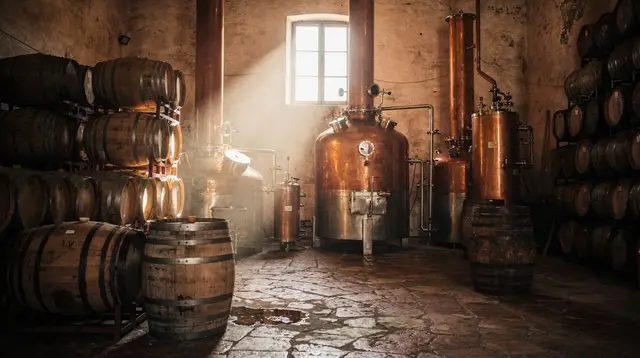
If you want to understand the process rather than just drink the result, Saint-Pierre is the easiest place to start. The Saga du Rhum, run by the Isautier distillery, walks through the history of rum production on the island and the distillation process itself, and it’s the kind of stop that turns an abstract bottle into something you’ve actually watched come together. It sits well alongside a morning at the Saint-Pierre market or a walk along the seafront, so you’re not building a whole day around one stop.
Beyond the dedicated distillery visit, rhum arrangé itself is everywhere once you start looking: covered markets, roadside stalls, small grocery shops in the Hauts, and plenty of restaurants that pour a small glass at the end of a meal, sometimes on the house. I’ve found the best bottles aren’t always the ones with the fanciest label. A shop with a dozen unlabeled jars lined up, each with a handwritten tag, is often run by someone who’s been doing this for decades.
Tasting it without overdoing it
A small glass of rhum arrangé at the end of a meal is a normal, unremarkable thing here, closer to how you’d treat a digestif than a shot. The trap for visitors is treating it like a novelty and working through several flavors back to back, especially after a day of sun and altitude, which hits differently than the same amount of alcohol at sea level. Pace yourself, ask what’s in a jar before you try it if you’re curious, and treat a tasting as a way of talking to the person pouring it rather than a checklist to get through.
If you’re buying bottles to bring home, keep in mind Réunion Island is French territory but sits outside the Schengen area, and rum falls under normal duty-free alcohol allowances for air travel rather than any special exemption, so check your airline’s limits before you commit to three jars of vanilla-pineapple.
A day that pairs well with it
Saint-Pierre works as a base for this because it combines the distillery, the market, and the town’s evening life without requiring a long mountain drive. If you’re staying on the west coast instead, Saint-Leu and Saint-Gilles have their own version of the same idea: smaller producers, family-run shops, and restaurants that treat rhum arrangé as a natural end to a meal rather than a tourist add-on.
Either way, this is a slow-paced day, not a randonnée, and it pairs naturally with something equally unhurried, like a sunset boat trip. If you’re around Le Port on the west coast, the whale watching excursion out of Le Port works well as an early-evening bookend before dinner. Between June and October, when humpback whales are more likely to be around, a boat trip out of Saint-Gilles such as the dolphin and whale watching outing from Saint-Gilles-les-Bains does something similar, though sightings are never guaranteed.
For a different kind of afternoon before you settle into a tasting, a tandem paraglide over the bay of Saint-Leu gives you a look at the west coast’s lagoon and reef from above, which is a good way to understand the geography you’ve been driving through. If you’d rather stay closer to sea level, a microlight flight over the island covers more ground and pairs a wide view of the coastline with the same relaxed, no-itinerary mood as an evening spent comparing rhum arrangé jars.
What to actually check before you go
Opening hours for distillery visits and small producers change with the season, and a market stall selling rhum arrangé one week might not be there the next. I’d rather send you to a current source than guess: check the Saga du Rhum’s own hours and any tasting fees directly, and treat prices you see quoted online as a rough guide rather than the number you’ll pay. The same goes for airline alcohol allowances if you’re planning to fly bottles home.
None of this needs much planning. Rhum arrangé isn’t an attraction with a ticket window and a queue; it’s something you stumble into at a market stall, a family-run shop, or the end of a meal, and the best version of the experience is usually the one you didn’t schedule.
Frequently asked questions about rhum arrangé in Réunion Island
What is rhum arrangé exactly?
It’s white rum, typically agricultural rum made from sugarcane juice, infused with fruit, spices, or roots such as pineapple, lychee, vanilla, or ginger. The mixture steeps for weeks or months so the rum absorbs color, sugar, and aroma from what’s inside the jar.
Is rhum arrangé strong?
It’s made from rum, so it carries real alcohol content, though the exact strength varies by producer and recipe and isn’t something we’ll put a precise number on here. Ask the person pouring it, or check the label on a bottled version, rather than assuming it’s mild because it tastes sweet.
Where can I see rhum arrangé being made in Réunion Island?
The Saga du Rhum in Saint-Pierre, run by the Isautier distillery, is the clearest place to see the production process explained on-site. Beyond that, most of what you’ll taste comes from small producers and family recipes sold in markets and shops rather than a single visitor attraction.
Can I bring rhum arrangé home on the plane?
Réunion Island is French and part of the EU, but it sits outside the Schengen area for entry purposes; for alcohol, normal duty-free and checked-baggage allowances apply, so check your airline’s specific limits before buying several bottles.
Is rhum arrangé the same as a cocktail?
No. It’s closer to a fruit liqueur or infused preserve than a mixed drink. There’s no shaking or mixing involved once it’s made; you pour it as it is, usually in a small glass.
What flavors of rhum arrangé should I try first?
Vanilla and pineapple are common starting points and give a good sense of the style without being too unusual. From there, lychee and ginger versions are widely available if you want something sharper.
Is it normal to be offered rhum arrangé for free at a restaurant?
Yes, it’s a common end-of-meal gesture in Creole restaurants and small family-run places, offered as a digestif rather than something you’re expected to order or pay extra for.
Does rhum arrangé connect to other Creole food traditions on the island?
It does. Like carri and rougail saucisse, it’s part of a home-cooking tradition built on patience and family recipes rather than restaurant technique, and trying it alongside a proper Creole meal gives a fuller picture than tasting it on its own.
Related reading: Réunion Island rum distilleries and Creole food, things to do in Saint-Pierre, what to eat in Réunion Island, bourbon vanilla in Réunion, the Saint-Paul market guide, things to do in Saint-Leu, Réunion Island culture and religions, séga and maloya, the music of Réunion, Dipavali and the Tamil temples of Réunion, a one-week Réunion Island itinerary, the Saint-Pierre destination guide, the Saint-Leu destination guide, and the food, rum and culture category.
tours.Food
Verified deep-linked GetYourGuide tours. Book through these links and we earn a small commission at no cost to you.
GetYourGuide does not provide a product photo for this activity — the image shows the meeting point, photographed by us.