The Grand Raid: how Réunion's mountain race reshapes the island in October
I first understood what the Grand Raid actually is not from a start line, but from a gîte owner in Cilaos apologising that she had no beds left for three nights in late October. She wasn’t turning me away for lack of interest. Half the island’s hiking infrastructure was already booked by runners, their support crews, and the friends and family who follow them from checkpoint to checkpoint. That’s when I stopped thinking of the Grand Raid as a sports event I could ignore and started treating it as something closer to a seasonal weather system: it doesn’t touch every part of the island, but where it lands, it reorganises everything around it.
A race built on trails you’ll already recognise
The Grand Raid, better known locally as the Diagonale des Fous, runs along the same grande randonnée network that structures most serious hiking on Réunion: the GR R1 around the Piton des Neiges, the GR R2 that crosses the island, and the GR R3 that circles Mafate. If you’ve read anything here about the three cirques or about planning a Mafate trek, you already know the terrain the race uses. It isn’t a closed circuit built for the event. It’s the island’s own hiking spine, borrowed for a few days in October and pushed to its limit by runners covering it in one continuous effort rather than the several days most visitors take.
That overlap is exactly why the race matters to someone who has no intention of running it. If your own itinerary includes the Piton des Neiges summit hike, a stay in Salazie, or a multi-day loop through Cilaos, you’re potentially sharing infrastructure — gîtes, mountain huts, narrow trail sections — with several thousand runners and their support network during race week.
What actually changes on the ground
I want to be precise here rather than dramatic, because the race doesn’t shut the island down. What it does is concentrate pressure on a few specific places for a short window:
- Gîtes and huts along the route fill early. Beds in Mafate and along the Cilaos and Salazie approaches get booked out by race logistics months in advance. If you’re planning to sleep in a gîte during that window for your own trek, book far ahead or expect to be turned away.
- Checkpoint villages get busy, briefly. Places like Cilaos and Hell-Bourg see a surge of spectators, support crews and vehicles around checkpoint times, which is a very different atmosphere from the quiet mountain villages most guides describe.
- Some roads see short diversions or restricted parking near race checkpoints and the Saint-Denis finish, mostly for a matter of hours rather than days.
- Trail sections carry heavier foot traffic, which isn’t dangerous but changes the experience of a hike you might otherwise expect to have largely to yourself.
None of this means you should avoid Réunion in October. It means you should decide, deliberately, whether you want to be near the race or away from it.
Why I’d still recommend timing a trip around it, not just avoiding it
Here’s the part that surprised me. The Grand Raid isn’t just a logistics headache to route around — it’s one of the more honest windows into how the island sees itself. Réunion doesn’t have a huge number of events that pull people from every corner of it, across every community, toward the same finish line in Saint-Denis. This one does. Watching runners come through a checkpoint in the middle of the night, greeted by people who’ve waited hours in the cold with headlamps and coffee, tells you something about the island’s relationship with its own mountains that a guidebook description of the cirques can’t.
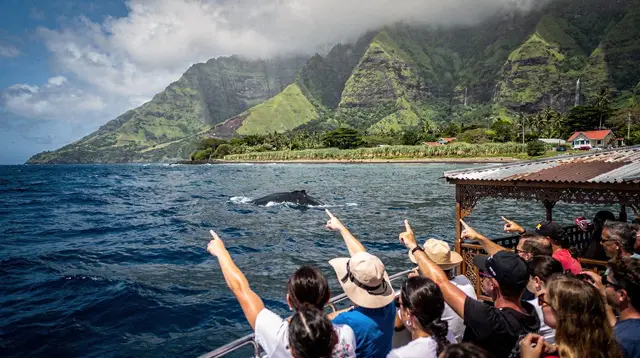
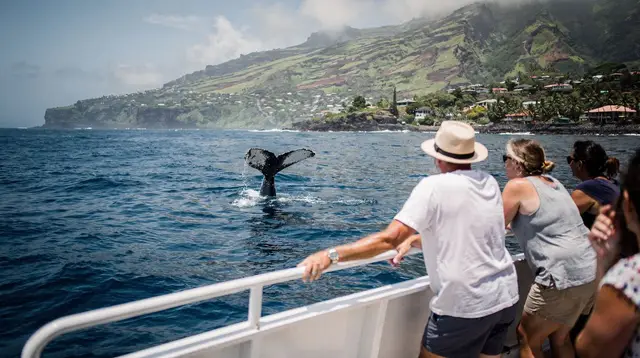
If you’re not hiking that week yourself, this is a legitimate reason to build a short visit around the event rather than despite it: watch a section of the race, spend an evening in a checkpoint village, then use the tours from Saint-Denis or coastal activities for the days when the high trails are busiest. October sits at the tail end of whale season, so it’s also a reasonable week to swap a planned summit day for time on the water. I did this myself the year I learned my lesson in Cilaos: I traded a planned trek for a morning boat trip watching dolphins and late-season whales off Saint-Gilles, and came back to the mountains once the trails had quieted down.
If you’d rather see the race terrain from above than compete with runners on it, a microlight flight over the cirques and the volcano gives you a sense of the scale of what the runners are covering without setting foot on a single busy switchback. And Saint-Leu, well south of the busiest race sections, keeps running its own outdoor scene regardless — a tandem paragliding flight over the bay is a fair substitute for a mountain day if Cilaos gîtes are fully booked.
Planning around it honestly
I won’t publish exact dates or entrant numbers here, because both shift from year to year and I’d rather send you to the organiser’s own channels than guess. What I will say plainly: if your trip’s main goal is a quiet trek through Mafate or a solitary Piton des Neiges sunrise, check the current race dates before booking gîtes for late October, and consider shifting by a week either side. If instead you’re drawn to the idea of an island united, for a few days, around people pushing themselves across its hardest ground, this is one of the more genuine cultural events to plan a short stay around — alongside the temple festivals and harvest traditions covered in Réunion’s culture and religions and the wider festival calendar. Either way, check current weather patterns for October and where to base yourself before you commit to a route.
Grand Raid and Diagonale des Fous: your questions answered
What is the Grand Raid, exactly?
It’s an ultra-distance trail race that crosses Réunion from south to north, mostly following the same grande randonnée network I describe in the cirques and Mafate guides. It runs in October, usually over one long weekend, and finishes in Saint-Denis.
Why is it called the Diagonale des Fous?
It’s the race’s popular nickname, roughly « the madmen’s diagonal », a nod to the terrain and effort involved. You’ll see it on banners and in conversation more often than the official name.
Does the Grand Raid close hiking trails to visitors?
Not entirely, but sections of the GR R1, R2 and R3 network get heavy race traffic, temporary signage and marshal points during the event. Some connecting roads near start, finish and checkpoint villages see short closures or diversions.
Should I avoid visiting Réunion during the Grand Raid?
Not necessarily. It’s genuinely one of the more interesting weeks to be on the island if you enjoy atmosphere over solitude. If you specifically want quiet trails and easy gîte bookings in the cirques, though, it’s worth picking a different week.
Can I watch the Grand Raid as a spectator?
Yes. Checkpoint villages and the Saint-Denis finish line draw crowds who follow runners’ progress, and it’s free to watch. Exact dates and the route shift slightly year to year, so check current information rather than assuming a fixed week.
Are gîtes and hotels harder to book during the race?
Along the race route and in Saint-Denis, yes, especially gîtes in Mafate and Cilaos that double as checkpoints. Book well ahead if your trip overlaps with the event, or shift your own trekking days to before or after it.
Is the Grand Raid only for elite athletes?
The headline race is extreme, but the event includes shorter companion races over the same days, which brings a wider range of runners and supporters to the island, not just an elite few.
Where can I find the current dates and route?
I don’t publish race-specific logistics here, since they change annually. This page is about what the event means for a visit, not a race guide; check the organiser’s official channels closer to your travel dates.
Seasonal Réunion Island activities on GetYourGuide
Verified deep-linked GetYourGuide tours. Book through these links and we earn a small commission at no cost to you.
GetYourGuide does not provide a product photo for this activity — the image shows the meeting point, photographed by us.