Best time to visit Réunion Island
When is the best time to visit Réunion Island?
May to October (austral winter) is the best window: dry, cooler in the highlands, and the best conditions for hiking and whale watching. November to April is hot, humid, and the cyclone season, with a risk peak in January-March.
Seasons are flipped here
If you’re used to planning a trip around a European calendar, put that instinct aside first. Réunion Island sits in the southern hemisphere, in the Indian Ocean east of Madagascar, and its seasons run opposite to Europe’s. There is no “summer (July-August)” here in the sense a European traveller might expect — July and August fall in the middle of the island’s dry, cooler winter. Getting this backwards is the single most common planning mistake for first-time visitors, and it affects everything from what to pack to which activities will actually be open and enjoyable.
The island has two broad seasons: the austral winter, from May to October, and the austral summer, from November to April. Each shapes the trip in a different way, and neither is simply “the good one” — they suit different priorities.
Austral winter (May to October): dry, cooler, best for hiking
This is the season most guidebooks quietly mean when they say “best time to visit.” From May to October, the trade winds bring drier air, humidity drops, and daytime temperatures on the coast settle into a comfortable 20-27°C range. It’s the most reliable stretch for the activities Réunion is genuinely known for.
Hiking benefits the most. Trails in Cilaos, Salazie, and Mafate are less likely to be closed by the mudslides and washouts that heavy rain triggers, and the multi-day routes through Mafate’s ilets are far more comfortable without the wet-season humidity. The classic night ascent of Piton des Neiges from the Caverne Dufour gîte is also more predictable in winter, though it still gets genuinely cold near the 3,070m summit — closer to 0°C at dawn, so pack a warm layer regardless of how warm the coast feels.
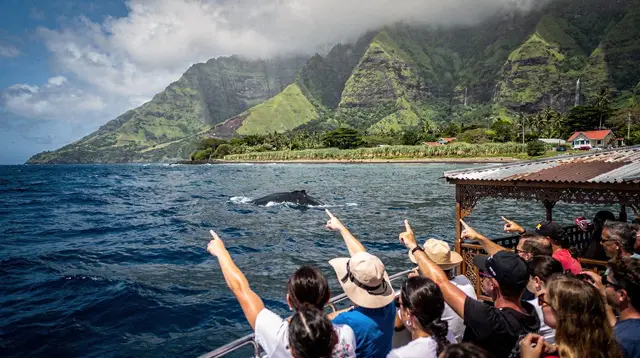
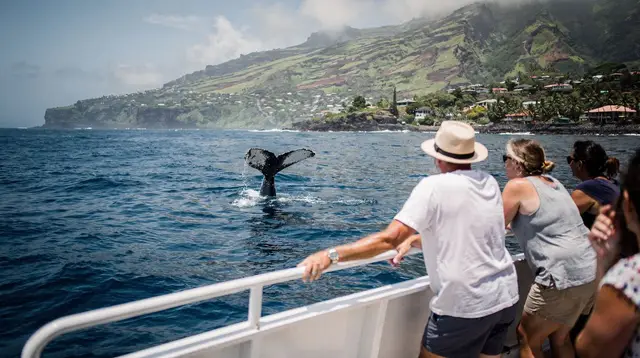
This is also whale season. Humpback whales pass the west coast roughly from June-July through October, and boat trips from Saint-Gilles-les-Bains and the surrounding lagoon area are the main way to see them. Sightings are never guaranteed on any single outing — this is wildlife, not a schedule — but the odds are best in this window.
Winter is also drier for the volcano route. The Route du Volcan from Bourg-Murat to Pas de Bellecombe and the Plaine des Sables is less likely to be socked in by cloud in the early morning, though fog still tends to roll in by mid-to-late morning most days year-round, winter included. None of this changes whether the Fournaise’s Enclos is actually open — that depends entirely on volcanic activity and préfecture decisions, not the calendar.
One trade-off: winter is also the busiest period for French visitors, since it overlaps with French school holidays (especially July-August). Expect fuller gîtes in Mafate and Cilaos, and book ahead.
Austral summer (November to April): hot, humid, and cyclone season
From November to April, temperatures and humidity both climb, afternoon showers become more frequent (especially on the east coast and in the highlands), and this is also the island’s cyclone season, with the highest statistical risk typically falling in January, February, and March.
Being honest about this rather than glossing over it: nobody can tell you months in advance whether a cyclone will affect a specific week of travel. Some summers pass with only distant systems that bring rain and rough seas without a direct hit; other years bring a storm that shuts down flights, closes trails, and triggers a red-alert confinement for a day or more. The préfecture’s alert system escalates from cyclone vigilance to orange alert to red alert (mandatory confinement) as a system approaches, and during a red alert, going outside is not optional-cautious, it’s prohibited. If you’re travelling in this window, two practical steps matter more than trying to predict the weather: buy travel insurance that covers cyclone disruption, and book accommodation and tours with flexible cancellation terms.
Summer isn’t without upside. It’s the low season for domestic tourism, so gîtes and cars are easier to book last-minute, the vegetation is at its greenest, and the lagoon water is at its warmest for snorkeling. Whale season is over, but the underwater life in the lagoon doesn’t take a break.
Microclimates: the same day, different weather
Réunion is small enough to cross in a few hours by car, but its weather varies sharply by region regardless of season. The west and southwest coast — Saint-Gilles-les-Bains, Saint-Leu, Saint-Pierre — sit in the rain shadow of the central peaks and stay noticeably drier and sunnier year-round. The east coast — Saint-Benoît, Sainte-Rose — faces the trade winds directly and gets substantially more rain, which is also why it’s the lush, green side of the island where vanilla and sugar cane thrive.
This means you can leave a sunny morning in Saint-Gilles-les-Bains, drive across the island, and be in steady rain in Réunion Island’s east coast: Saint-André, Saint-Benoît and Sainte-Rose territory within half an hour. It’s worth building flexibility into any itinerary that crosses the island in a single day, and worth checking ONF trail status before committing to a highland hike regardless of what the coastal forecast says.
The cirques add a third layer on top of the coastal east-west split. Cilaos, reached by the road with its several hundred bends, sits in a rain shadow of its own and often stays drier than the coast directly below it, which is part of why it built a reputation for wine and lentils. Salazie, by contrast, faces the moist trade winds and stays green and waterfall-fed even in winter — it’s the wettest inhabited corner of the island in most months, which is exactly what feeds its cascades. Mafate, with no road at all, sits somewhere between the two depending on which ravine you’re in; gîte keepers there track conditions ilet by ilet more than by any single island-wide forecast.
A quick comparison
| Austral winter (May-Oct) | Austral summer (Nov-Apr) | |
|---|---|---|
| Coastal temperatures | ~20-27°C, drier | ~26-32°C, humid |
| Rain | Lower, more predictable | Higher, especially east coast |
| Hiking conditions | Best of the year | Trails more often closed after rain |
| Whale watching | Peak season (Jun-Oct) | Not present |
| Cyclone risk | Very low | Present, peaks Jan-Mar |
| Crowds / gîte availability | Busier, especially Jul-Aug | Quieter, easier last-minute booking |
| Lagoon water temperature | Cooler | Warmest |
Time zone: one fixed offset
Réunion stays on UTC+4 all year — there is no daylight saving time on the island. That means the time difference with mainland France isn’t fixed: it’s about 2 hours ahead of Paris during the European summer and about 3 hours ahead during the European winter. Worth double-checking before booking flights or calling home, since the gap changes depending on the time of year in Europe, not in Réunion.
How this should shape your dates
If hiking, the volcano, or whale watching are the priority, aim for May to October, and lean toward August-September for the best balance of dry weather and manageable crowds — or July if French school-holiday crowds don’t bother you. If your dates are fixed within November to April, that’s still a legitimate time to visit: the lagoon is warm, the island is green, and prices and availability are generally easier. Just build in insurance, flexible bookings, and a mental note to watch the préfecture’s alerts if a system does form.
For a broader look at what a full week can look like in either season, see one week in Réunion Island or, if your trip falls in whale season specifically, four days built around whale season. If your priority is the volcano and the cirques rather than the beach, a tighter three cirques in four days or a Piton de la Fournaise weekend both work best on winter dates, for the same trail-closure reasons as the multi-day Mafate treks.
Shoulder months: April and November
The edges of each season — April and November — don’t fit neatly into either box, and they’re worth considering on their own terms rather than defaulting to “winter is safe, summer is risky.” Early April is often past the worst of the cyclone statistics while the vegetation is still at its greenest from the summer rains, and prices haven’t yet climbed to the July-August peak. November, at the other edge, still carries relatively low cyclone risk in its first half and can offer some of the last dry, hiking-friendly days before the humidity properly sets in.
Neither month is a guarantee — the calendar boundaries are statistical, not a hard switch — but travellers with flexible dates who want to avoid both the winter crowds and the peak of cyclone season often do well booking right at these edges. Whatever the month, pack for both extremes: warm layers for pre-dawn starts at altitude and light, quick-dry clothing for the coast and lagoon. The what to pack for Réunion Island guide breaks this down by activity rather than by season, which matters more here than in most destinations given how much the temperature swings between the coast and a 3,070m summit on the same day.
Festivals can also tip a shoulder-month decision. Winter carries several of the island’s biggest cultural events, and checking the calendar before fixing dates can turn an ordinary hiking trip into one that also lands on a Tamil temple festival or a Creole music event — worth building around rather than discovering by accident once you’re already on the island.
Whatever window you choose, the west coast’s lagoon is the easiest place to combine sightseeing with the water, whether that’s snorkeling over the reef or a boat trip out toward passing cetaceans. From Saint-Gilles-les-Bains, a half-day out on the water works in either season: a small-boat trip looking for dolphins and, in season, humpback whales, or for a gentler introduction to the lagoon’s marine life, a guided snorkeling outing to see sea turtles close to shore. During the winter whale window specifically, a dedicated cruise focused on spotting cetaceans is worth booking a few days ahead once you’re on the island, since trips depend on sightings and sea conditions.
For a different perspective on how the seasons shape the landscape — green highlands after rain, dry ochre slopes in winter — a helicopter flight over the cirques and the volcano from Saint-Gilles is one of the few ways to see Mafate, Cilaos, and the Piton de la Fournaise’s Enclos in a single outing, weather permitting on the day.
Planning notes specific to each season
Regardless of when you go, check trail closures before any highland hike — the ONF publishes current status and it changes quickly after rain in any season. If you’re arriving in the austral summer, build one or two flexible days into your itinerary rather than a tight back-to-back schedule, since a single heavy-rain day can close roads to Cilaos or Salazie temporarily. If you’re arriving in the austral winter for hiking or the volcano, start early: fog tends to build on the Plaine des Sables and around the Maido by mid-morning most days, winter included, so a 6 a.m. departure buys clearer views than a 9 a.m. one.
For the day-to-day weather pattern across the year, month by month, see Réunion Island weather by month, and for more detail on what a cyclone alert actually means for a trip in progress, see the cyclone season guide.
Frequently asked questions about the best time to visit Réunion Island
What is the best month to visit Réunion Island?
August and September usually offer the most reliable mix of dry weather, cool but manageable altitude temperatures, and active whale watching off the west coast. July can be excellent too but is the busiest month for French school holidays.
Is Réunion Island’s summer in July and August?
No. Réunion is in the southern hemisphere, so seasons are reversed compared with Europe. The austral winter runs from May to October and the austral summer from November to April.
When is cyclone season in Réunion Island?
Cyclone season runs from November to April, with the highest risk typically in January, February, and March. It is impossible to know months ahead whether a given week will be affected, so travel insurance and flexible bookings are worth having during this period.
When can you see whales in Réunion Island?
Humpback whales are typically present from around June-July through October, with sightings off Saint-Gilles-les-Bains and the west coast. Sightings are never guaranteed and depend on the season and the day.
Is it better to visit the west coast or the east coast of Réunion Island?
The west and southwest (Saint-Gilles-les-Bains, Saint-Leu, Saint-Pierre) are drier and sunnier year-round, while the east coast (Saint-Benoît, Sainte-Rose) receives significantly more rain. Many visitors base themselves on the west coast and take day trips east.
Does Réunion Island have daylight saving time?
No. Réunion stays on UTC+4 all year, which means the time difference with mainland France shifts between winter and summer in Europe rather than in Réunion.
Can it be cold in Réunion Island?
Yes, at altitude. Temperatures near the summit of Piton de la Fournaise and Piton des Neiges can drop close to freezing before dawn during the austral winter, even though the coast stays warm.
Seasonal Réunion Island activities on GetYourGuide
Verified deep-linked GetYourGuide tours. Book through these links and we earn a small commission at no cost to you.
GetYourGuide does not provide a product photo for this activity — the image shows the meeting point, photographed by us.