Festivals and events in Reunion Island: what's actually worth timing a trip around
What are the main events and seasons to know about in Reunion Island?
Reunion Island's clearest calendar markers are the Grand Raid (Diagonale des Fous) trail race across the island in October, humpback whale season roughly from June-July to October, and maloya, a Unesco-recognised music and cultural heritage that runs through the island's identity year-round rather than on a single date. Many smaller local festivals exist but do not have fixed, well-documented dates worth building a trip around.
Three real markers instead of a brochure calendar
Search for “festivals in Reunion Island” and most lists read like they were assembled from a press kit: a paragraph on Dipavali, a paragraph on Christmas markets, a paragraph on some harvest fair, all without dates that hold from one year to the next. This page does the opposite. It sticks to three things the island’s own facts actually support: a trail race that crosses Reunion Island every October, a whale season that runs roughly from June-July to October, and a music tradition, maloya, that has no calendar date at all because it is not an event — it is a thread running through daily life.
Where a fact is not precise enough to publish as a date, this page says so rather than inventing one. For rain, wind and temperature by month, see Reunion Island weather by month and when to visit; for cyclone risk specifically, see the cyclone season guide. Neither of those pages is what this one is about — this one is about what there is to see and join, not what the sky is doing.
The Grand Raid: the island’s biggest annual gathering
The Grand Raid, known locally as the Diagonale des Fous (“the madmen’s diagonal”), is Reunion Island’s largest organised sporting event and, for one week each October, its biggest draw of visitors who are not on the beach. Several thousand runners set off to cross the island on foot, largely at night, along trail networks that overlap with routes hikers use the rest of the year: sections through the cirques, climbs toward Piton des Neiges, and stretches near Piton de la Fournaise. Villages along the course — from the Hauts around Cilaos to points near Salazie and Saint-Denis — turn out with food stalls, cheering crowds at checkpoints, and a noticeably different atmosphere from a normal week.
Exact dates move from year to year, and this guide will not print a specific date that could be wrong by the time it is read. If a Grand Raid trip is the plan, check the race organiser’s official site for the confirmed edition before booking flights or accommodation, and expect the Hauts and mountain gites to be busier and pricier than usual that week. If the race itself is not the goal, October is still worth knowing as a month when trail access, gite availability and even taxi transfers near the start and finish points can be affected — plan hikes in Mafate or toward Piton des Neiges around the race rather than into it, and check current listings before committing to gite nights that week.
| Marker | Rough window | What it affects |
|---|---|---|
| Grand Raid (Diagonale des Fous) | October (exact dates vary by year) | Trail crowding, gite bookings in the Hauts, village atmosphere along the route |
| Humpback whale season | Roughly June-July to October | Boat trips from Saint-Gilles-les-Bains, coastal sightings |
| Maloya | Year-round, no fixed dates | Live music venues, some markets and community events, mainly around Saint-Denis |
| Cyclone season (separate risk window) | Roughly November to April, peak January-March | Boat trips, mountain hikes, outdoor events generally |
Whale season: a window, not a promise
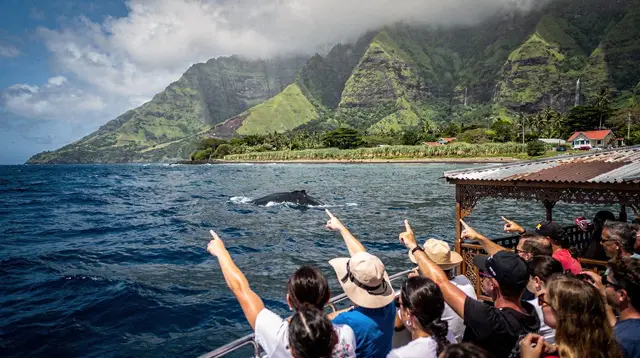
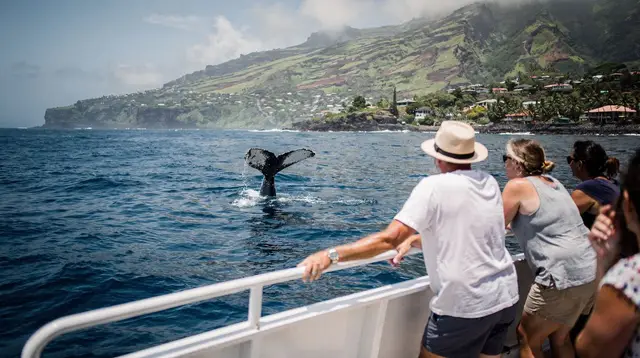
Humpback whales pass through Reunion Island’s waters on a seasonal migration, present roughly from June-July through to October — broadly the dry austral winter, the same months that suit hiking in the Hauts and up toward the volcano. Boats leave mainly from Saint-Gilles-les-Bains, where the marina sits beside the lagon and the reef, and operators watch for the same signs locals have tracked for years: breaches, blows, and pods moving along the west coast.
None of this is a guarantee, and any operator who promises a sighting on a specific day is overselling. Reputable boats in Saint-Gilles-les-Bains follow an approach charter that sets minimum distances from the animals, which is precisely why a trip can go out and come back without a close encounter — the boat is not supposed to chase. What a good operator can offer instead is a season with real odds and years of local pattern-watching, run from a base that also happens to be Reunion Island’s most developed stretch for water activities: the Reunion Island lagon between the Hermitage and La Saline-les-Bains, with the reef immediately offshore.
For a trip built specifically around this window, a boat out of Saint-Gilles-les-Bains searching for cetaceans is one option: a half-day boat trip from Saint-Gilles-les-Bains that watches for whales and dolphins along the west coast and for visitors who want to be in the water rather than just on deck when conditions allow it, there is a snorkelling-and-whale-watching combination:
a snorkelling trip from Saint-Gilles-les-Bains that combines lagon time with a search for dolphins and whales offshoreEither way, book with an operator that states the distance charter openly rather than one that guarantees a sighting up front — a guarantee is the clearest sign an operator is not following the rules meant to protect the animals. For a longer stay built around the season rather than a single boat trip, see four days built around whale season, and for the ethics question that comes up often, is swimming with dolphins in Reunion Island ethical is worth reading before booking anything in-water.
Maloya: the cultural thread, not a single event
Maloya is Reunion Island’s own music and dance tradition, grown out of the island’s history and recognised by Unesco as intangible cultural heritage in 2009. It does not have a festival date the way a trail race does — it is closer to a living practice than a one-off event, showing up in small venues, community gatherings, and sometimes local markets, particularly around Saint-Denis and in Creole villages across the island. Anyone hoping to catch a performance should not expect a printed festival programme the way they might in Europe; asking locally, at a tourism office or a guesthouse, tends to work better than searching for a fixed calendar online, because listings for smaller maloya nights are not consistently published far in advance.
Maloya sits alongside a broader Creole culture worth building time for on any trip: Creole food from carri to rougail saucisse, rum distilleries in the south and west, and a genuinely mixed population — Tamil, Christian, Muslim, Chinese and Creole communities living alongside each other, visible in the temples and mosques of Saint-Denis as much as in daily life. For more on this side of the island, see Reunion Island culture and religions and rum distilleries and Creole food. Some communities also hold their own observances through the year, including moments connected to the Tamil temples around Saint-Denis and Saint-Andre — see Dipavali and the Tamil temples of Reunion for what that looks like on the ground, again without a fixed date attached here, since the source facts behind this page do not include one that would still be accurate by the time it is read.
Why smaller local festivals are not listed here
Plenty of villages and communities in Reunion Island hold their own fairs, harvest events and religious observances through the year — sugar cane season in the east, vanilla-related events around Saint-Andre, patronal feast days in Creole villages, and more. This page deliberately does not list them with specific dates. The reasoning is simple: a date invented or half-remembered is worse than no date at all, because a visitor who plans a trip around a wrong date arrives to nothing.
Where the underlying facts available to this guide do not include a sourced, stable date, the honest move is to say so and point toward better sources rather than fill the gap with something that sounds plausible. For any specific village event, the local tourism office (in Saint-Gilles-les-Bains, Saint-Pierre, Saint-Denis or Cilaos, depending on where the trip is based) or the island’s official tourism site is the more reliable check closer to the travel dates.
Building a trip around these markers
None of the three markers on this page requires restructuring an entire trip, but each has a practical effect worth planning for.
Around the Grand Raid in October: expect gites and transport in the Hauts to be busier, particularly near Cilaos, Salazie and stretches toward Mafate. Hikers not there for the race are better off scheduling multi-day treks slightly before or after the confirmed race week, and booking gites earlier than usual if travel falls in October regardless.
During whale season, June-July to October: this overlaps with the dry austral winter, which is also the best window for hiking, for clearer skies at Piton de la Fournaise, and for cooler, more comfortable trekking in the cirques. A trip built around whale watching from Saint-Gilles-les-Bains slots naturally alongside hiking days in Cilaos or a volcano day, since both favour the same months. It is also, not coincidentally, outside cyclone season, which makes June to October the more dependable half of the year for outdoor plans generally.
Around maloya and Creole culture: no scheduling is needed — this is something to ask about locally once on the island, at a guesthouse or tourism office in Saint-Denis or wherever a trip is based, rather than something to time months in advance.
For travellers who want whale season, cooler hiking weather and lower cyclone risk in the same trip, a boat trip combined with land-based days works well. A broader look at the west coast base for both is worth reading first — see things to do around Saint-Gilles-les-Bains and whale and dolphin watching options — and for a wider circuit that fits a longer stay, Complete Tour of Reunion Island on 13 Steps gives a sense of how much ground a single trip can realistically cover:
a multi-stop island tour that ties together the coast, the Hauts and Creole villages in a single itineraryWhat this page is not
This is not a weather guide — for month-by-month rain, temperature and wind, use Reunion Island weather by month. It is not a cyclone safety guide either — that risk window (roughly November to April, peaking January to March) is covered on its own in the cyclone season guide, and it matters for planning independently of anything on this page. What this page tries to answer is narrower and more useful for timing a trip: what actually happens on Reunion Island that is worth being there for, stated as honestly as the available facts allow, including the parts — most local festival dates — that this guide is not going to guess at.
For a broader whale-focused encounter beyond a single boat trip, some operators run in-water swim programmes during the season:
an in-water swim experience with whales and dolphins, run under a distance and welfare charter during the seasonAs with any boat trip searching for wild animals, book with an operator who is upfront that sightings depend on the day, the season and the animals — not on a promise.
Questions about festivals, seasons and events in Reunion Island
When is the Grand Raid, the Diagonale des Fous?
The Grand Raid takes place in October each year, when several thousand runners cross Reunion Island on foot, mostly at night, along trails that also form part of the everyday hiking network in the cirques and around Piton de la Fournaise. Exact dates shift from year to year, so check the organiser’s site for the current edition before booking around it.
When can you see whales in Reunion Island?
Humpback whales are present in Reunion Island’s waters roughly from June-July through October, broadly matching the dry austral winter. Sightings are seasonal and never guaranteed on any given day, and approach boats operate under a distance charter designed to protect the animals.
Is whale watching in Reunion Island guaranteed?
No. Operators leaving from Saint-Gilles-les-Bains run trips during the season, but a sighting depends on the animals’ movements that day. Reputable operators follow an approach charter with minimum distances rather than chasing whales, which is part of why nothing can be promised in advance.
What is maloya and when can visitors experience it?
Maloya is a music and dance tradition rooted in Reunion Island’s history, recognised by Unesco as intangible cultural heritage in 2009. It is not tied to a single festival date; it surfaces year-round in local venues, community gatherings and some markets, particularly around Saint-Denis and the island’s Creole villages.
Are there religious festivals in Reunion Island worth knowing about?
Reunion Island’s population includes long-established Tamil, Christian, Muslim and Chinese communities, and their calendars produce visible moments such as temple ceremonies around Saint-Denis and Saint-Andre. This guide does not list fixed dates for these observances because the socle behind it does not include sourced dates; check current listings locally rather than relying on an assumed date.
Does cyclone season affect the event calendar?
Yes, indirectly. The cyclone season runs through the austral summer, roughly November to April, with the highest risk typically January to March. Outdoor events, boat trips and mountain hikes can be disrupted or cancelled with short notice during this window, which is a separate consideration from the specific events covered here.
Is there a single best month to see everything described on this page?
No single month covers all three. The Grand Raid is an October event, whale season runs June-July to October, and maloya has no season at all. Overlap is strongest in September and October, when whale season is still active and the Grand Raid is approaching or underway.
Where can I check exact festival dates before booking?
For the Grand Raid, check the race organiser’s official site for the confirmed edition dates. For whale season sightings, ask operators in Saint-Gilles-les-Bains what recent weeks have looked like. For maloya performances and community or religious events, local tourism offices and community associations are more reliable than a fixed calendar, since dates move from year to year.
Seasonal Réunion Island activities on GetYourGuide
Verified deep-linked GetYourGuide tours. Book through these links and we earn a small commission at no cost to you.
GetYourGuide does not provide a product photo for this activity — the image shows the meeting point, photographed by us.