Canyoning in Reunion Island: the Cilaos guide
Where do you go canyoning in Reunion Island, and is it safe?
Almost all canyoning in Réunion runs out of Cilaos, on named circuits such as Fleurs Jaunes, Gobert and Bras Rouge, always with a certified guide, harness, wetsuit and helmet. Trips are cancelled or postponed after heavy rain, since river levels rise fast and carry a leptospirosis risk.
Cilaos, the island’s canyoning ground
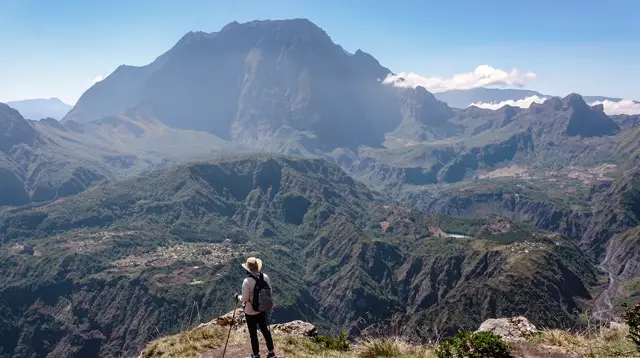
If you say “canyoning” in Réunion, people think of Cilaos. The cirque’s rivers drop off the flanks of the Piton des Neiges massif through a series of narrow granite gorges, and a cluster of certified operators has built named, repeatable circuits around them: Fleurs Jaunes, Gobert and Bras Rouge are the three you will see quoted on every booking page. This page treats canyoning as what it is — a technical, guided descent, in a wetsuit and harness, through moving water — and keeps it separate from the pedestrian routes covered in the Piton des Neiges summit guide and the Mafate hiking guide, and from lagoon swimming, which is a different activity in a different kind of water entirely.
Canyoning is not walking with a rope for backup. It is a river sport: you move downstream through a gorge by rappelling down waterfalls, sliding down smooth natural rock chutes, jumping into deep pools where a guide has checked the depth, and swimming short stretches between obstacles. Every rappel is set and supervised by a certified guide (moniteur de canyon), and you wear a wetsuit, a climbing harness and a helmet for the whole descent. None of that overlaps with a walking trail, and none of it happens in the sea.
Why Cilaos and not elsewhere on the island
The cirque of Cilaos sits at the head of several rivers fed by high rainfall on the surrounding peaks, and the granite terrain has cut deep, clean gorges with a series of natural drops — exactly the terrain canyoning needs. Access is also practical: Cilaos is reachable by road from Saint-Louis via the RN5, the road with roughly 400 bends that climbs into the cirque in about an hour without stopping, so operators, gear stores and guides have concentrated there rather than scattering across the island. A handful of guided outings run elsewhere on the coast in a good season, but availability is thin and inconsistent, which is why this guide, like the local industry, centres on Cilaos.
The three named circuits
| Circuit | Level | Typical duration | What to expect |
|---|---|---|---|
| Fleurs Jaunes | Beginner | Half-day (around 3–4 hours) | Shorter rappels, natural rock slides, the standard first-timer route |
| Gobert | Intermediate | Half to full day | Longer sequence of drops, more sustained rappelling |
| Bras Rouge | Intermediate to advanced | Full day | Longer, more committing gorge, better swimming ability expected |
Fleurs Jaunes is where almost every first-time visitor starts. The circuit alternates rappels of a few metres to around 15 metres with natural rock slides you sit into and let the water carry you down, and pools shallow enough for guides to check before anyone jumps. It is built to be approachable: fitness helps, but no prior canyoning is assumed.
Gobert steps up the commitment. Expect a longer sequence of rappels, a couple of taller drops, and stretches of swimming between obstacles. Most operators ask for a first canyoning experience, or at least confident swimming and comfort with heights, before booking this one.
Bras Rouge is the longest and most sustained of the three, a full-day outing with a higher number of technical sections back to back. It suits people who have already done a circuit or two and want more exposure, more distance, and a longer day in the gorge.
Prices for a half-day beginner circuit generally run in the €50–€80 range per person, with full-day or more technical outings closer to €90–€140; treat these as a starting point and check the current rate and inclusions directly with the operator or on the booking page, since they change with season and group size.
Gear and guiding: what “encadré” means in practice
Every legitimate canyoning outing in Cilaos is run by a certified guide, and the gear is provided as part of the trip: a full wetsuit for the water temperature, a climbing harness with the guide’s ropes and anchors, and a helmet for the whole descent. You bring swimwear to wear underneath, a change of dry clothes for afterwards, and old trainers or water shoes if you own a pair — operators usually have spares if you don’t. Group sizes stay small on purpose, because the guide is setting and checking every rappel by hand and needs to see each person through it.
This is also what separates canyoning cleanly from the two neighbouring activities on this site. The Piton des Neiges hike and the Mafate treks are on foot, on marked trails, with no ropes and no river crossings of this kind — you carry a pack and walk. Lagoon swimming and snorkelling around Saint-Gilles and the west coast happen in calm, shallow, protected sea water with no current to speak of. Canyoning is neither: it is downstream travel through a freshwater gorge, with a guide managing every technical section, and it belongs to its own category on this site, canyoning and rafting.
Weather, river levels and leptospirosis
Canyoning depends entirely on the weather, more so than almost any other activity on the island. A river that is a manageable trickle on a dry week can rise fast and turn dangerous within hours of heavy rain higher up the catchment, long before the rain even reaches Cilaos itself. Operators monitor river levels and forecasts closely and will postpone or cancel a booking rather than run a circuit in flood conditions — if that happens to you, it is not poor planning on the operator’s part, it is the outcome the system is meant to produce.
There is a health reason behind the caution as well as a safety one. Leptospirosis is a bacterial infection carried in freshwater that has been contaminated by animal urine, and infection risk rises sharply after heavy rain, when runoff washes more bacteria into rivers and streams and dilutes visibility so hazards are harder to spot. This is one of the reasons guides avoid freshwater outings in the days immediately after a big rain event, whether or not a flood is visible. If you build canyoning into a Réunion Island itinerary, keep a spare day free in your schedule rather than a fixed slot, since a same-day cancellation and rebooking is a normal, recurring part of how this activity works here — never a sign something has gone wrong.
A typical canyoning day
Most beginner outings from Cilaos follow a similar shape. You meet the operator in the village in the morning, get fitted for a wetsuit, harness and helmet, and walk a short distance to the start of the circuit — sometimes 15–30 minutes on a trail before the first rappel. The guide briefs the group at each obstacle: how the rappel is set, where to place your feet, whether the next move is a slide or a jump, and where the safe landing zone is. Expect two to four hours actually in the gorge for a circuit like Fleurs Jaunes, moving at the pace of the slowest member of the group, with the guide checking every person through every section before moving on. You finish at a pickup point lower down, change into dry clothes, and the operator drives or walks the group back.
Nothing about this day resembles a hike: you are wet the entire time, moving with the current rather than against gravity on a trail, and every technical move is set up by someone else. It also is not the same as chartering a boat trip on the coast: there is no sea, no snorkel gear, and no marine life to spot — just granite, moving fresh water and rope work.
Booking and planning around the weather
Book a Cilaos canyoning circuit a few days ahead in high season (the austral winter, roughly May to October, is also the driest and most reliable stretch for outdoor activities across the island), and keep your phone number current with the operator so they can reach you if conditions force a change. If you are staying on the coast, plan for the RN5 drive up to Cilaos as roughly an hour each way outside peak traffic, and build that into your day rather than treating the kilometre distance on a map as the real travel time.
If a canyoning trip is rained off, Réunion has enough weather-independent or coastal alternatives that a lost morning rarely means a lost day. A helicopter flight gives a view over the cirques and the volcano without depending on river levels: a helicopter tour of the island departing from Saint-Gilles covers ground a canyoning trip never reaches. On the coast, a supervised introductory scuba dive near Le Port is a similarly guided, gear-supplied activity that works even when the mountain rivers are running high. For a change of terrain rather than water, a quad or buggy ride through the Saint-Gilles-les-Hauts area stays largely unaffected by a wet gorge forecast. And if you want to see how the island’s regions connect once your weather-dependent days are locked in, a full 13-stage tour of Réunion Island is a useful way to frame the rest of the trip around Cilaos.
Cilaos beyond the gorges
A canyoning day pairs naturally with the rest of what Cilaos offers, since you are already making the drive up. The village itself is known for lentils, a small local wine industry, thermal springs, and cases créoles along quiet streets — worth an afternoon once you are out of the wetsuit. It is also the trailhead for Piton des Neiges, the island’s highest point at 3,070 metres, usually climbed overnight from a mountain refuge for sunrise — a completely different kind of day from canyoning, on foot, dry, and best treated as its own outing rather than combined with a gorge descent. For a wider view of what else the cirque offers beyond both, see things to do in Cilaos and the full adventure activities overview, which covers paragliding, scenic flights, mountain biking and diving alongside canyoning rather than repeating the gorge-by-gorge detail kept here.
Getting there and getting around
Most visitors reach Cilaos by rental car from the west coast or Saint-Denis; there is no direct road shortcut, and the RN5 climb is the only way in or out by vehicle. If you are based in Saint-Gilles or along the west coast, factor the return drive into a canyoning day rather than adding other activities afterwards — most people are ready to head back once the circuit and a shower are done. For a broader sense of how a Cilaos day fits into a longer trip, the three cirques in four days itinerary and the general getting around Réunion Island guide cover the logistics in more depth.
Canyoning in Cilaos: frequently asked questions
Do I need canyoning experience to try it in Reunion Island?
No. Most Cilaos operators run half-day introductory circuits such as Fleurs Jaunes for first-timers, with a guide setting every rappel and explaining the moves at the top of each drop. A reasonable level of fitness and comfort in moving water help more than prior experience.
What is the difference between canyoning and hiking to Piton des Neiges?
Canyoning is a guided descent through a river gorge using rappels, jumps and natural rock slides, done with a wetsuit, harness and helmet. The Piton des Neiges hike is a walking ascent on marked trails from Cilaos, on foot, with no ropes or water crossings of this kind.
Why do canyoning trips get cancelled in Reunion Island?
After heavy rain, rivers in the cirques rise within hours and currents in narrow gorges become dangerous, so guides postpone or cancel. It also raises the risk of leptospirosis, a bacterial infection linked to freshwater contact after floods, so operators wait for levels to drop and water to clear.
Which canyoning circuit should a beginner choose in Cilaos?
Fleurs Jaunes is the usual first circuit: shorter rappels, natural slides, and a route built for people trying canyoning for the first time. Gobert and Bras Rouge involve longer, more technical sections and are better suited to a second outing or a stronger swimmer.
What should I bring for a canyoning day in Cilaos?
Operators supply the wetsuit, harness, helmet and rope work, so bring swimwear underneath, a change of dry clothes for afterwards, water shoes or old trainers if you have them, and cash for anything not included. Sun cream and a hat matter for the drive up, not the gorge itself.
Can you go canyoning in Reunion Island outside Cilaos?
Cilaos concentrates the named, well-established circuits and most of the operators, which is why this guide centres on it. Guided descents occasionally run elsewhere on the island, but availability is far more limited and less consistent than in Cilaos.
Is canyoning in Reunion Island the same as swimming in the lagoon?
No. The lagoon around Saint-Gilles and the west coast is calm, shallow, protected sea water for swimming and snorkelling. Canyoning takes place in freshwater river gorges in the mountains, moving downstream through rapids and pools with ropes and a guide, and the two activities share no location or skill set.
Canyoning and river adventures on GetYourGuide
Verified deep-linked GetYourGuide tours. Book through these links and we earn a small commission at no cost to you.
GetYourGuide does not provide a product photo for this activity — the image shows the meeting point, photographed by us.