3 days in Réunion Island: lagoon, volcano and Cilaos
Why a third day changes the trip
The weekend version of this itinerary pairs the lagoon at Saint-Gilles-les-Bains with a day on the Piton de la Fournaise volcano road. That combination works, but it leaves the island’s cirques untouched. A third day is enough to add exactly one of them — Cilaos — without turning the trip into a forced march.
Be clear about what this extra day does and does not buy. It buys a night in a genuine mountain cirque, a look at landscapes nothing on the coast resembles, and a realistic activity or two once you’re there. It does not buy the Piton des Neiges summit hike: that ascent needs a night at the Caverne Dufour gîte and a pre-dawn start, which is a trip of its own (see the Piton des Neiges summit guide if that’s the goal). Trying to squeeze the summit into a 3-day loop means arriving in Cilaos exhausted from the volcano and leaving with no sleep. Skip that trap: this itinerary treats Cilaos as a cirque to see and a place to unwind in, not a base camp.
Route: Saint-Gilles-les-Bains (night 1) → Piton de la Fournaise volcano road → Cilaos (night 2) → back to the coast or the airport (day 3).
Day 1: lagoon, whale watching and the Maido
Start on the west coast, where the lagoon and the drier climate make for an easy first day after a long-haul flight into Roland-Garros (RUN).
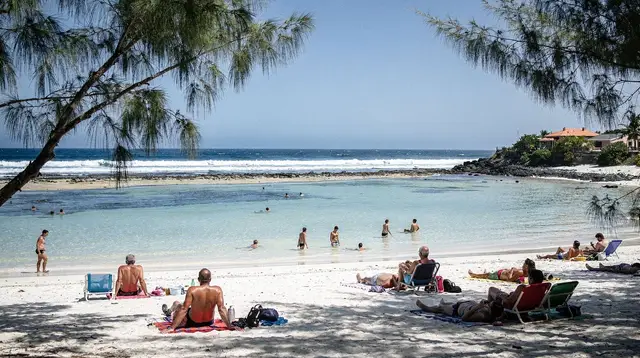
Spend the morning in the water: the lagoon between the Hermitage and La Saline-les-Bains is one of the few places on the island where swimming outside a designated, protected zone is actually allowed, thanks to the barrier reef. Stick to marked areas — Réunion enforces a strict prefectural ban on swimming and watersports outside the lagoon and supervised zones because of shark risk, and that rule is not negotiable.
From June to October, humpback whales pass close to the west coast, and a boat trip run under the island’s approach charter (minimum distances, no chasing) is the honest way to try for a sighting — never guaranteed, whatever a brochure promises.
a whale and dolphin watching boat trip out of Saint-Gilles-les-BainsIn the afternoon, drive up to the Maido (about 2,200 m) for the belvedere over Mafate. Go as early as the rest of your day allows — cloud tends to build from mid-morning, and by early afternoon the cirque below can already be hidden. There is no road into Mafate itself; everything you see from the Maido is reached on foot. For the full picture of the cirques you’re not visiting on this trip, the cirques overview and the Cilaos vs Salazie comparison are useful background.
Sleep in Saint-Gilles-les-Bains or nearby, and check road and weather conditions before day two — the drive ahead needs a clear morning.
Day 2: the volcano road, then the climb to Cilaos
This is the long day, and it needs an early start.
Drive to Bourg-Murat and up the volcano road to the Plaine des Sables, a stretch of mineral plateau that looks more like a different planet than a tropical island, then on to Pas de Bellecombe (2,311 m) for the view over the enclos and the Formica Leo. This section repeats the volcano day from the weekend itinerary, so for trail options, the state of the Dolomieu crater access and what to do if the enclos is closed, see the volcano day trip guide rather than reading it twice here. The short version: access to the crater rim depends on current volcanic activity and can be closed with no notice by the préfecture, and no guide can promise you’ll see lava.
a guided hike toward the Piton de la Fournaise crater rimIf the ground trail is closed, or if you’d rather see the volcano from above with a guaranteed view, a helicopter flight is the fallback that isn’t weather-dependent on the ground.
a scenic helicopter flight over the Piton de la FournaiseBy early afternoon, head back down toward Saint-Louis and turn onto the RN5 for Cilaos. This is where the extra day earns its keep. The road climbs through roughly 400 bends carved into the cirque’s outer wall, and it is not a road to rush: figure on a good hour of steady, attentive driving from Saint-Louis to Cilaos, more if you’re behind a truck or a rental-car driver taking it cautiously (which you should also do). Kilometres on a map are close to meaningless here — the road doubles back on itself so often that the time behind the wheel is the only number worth planning around. Trying to combine this drive with a full volcano morning and a same-day return to the coast is how people end up driving the bends in fading light, which is worse than doing it once, slowly, in daylight.
That drive time alone is the reason to sleep in Cilaos rather than treat it as a detour. For more on judging Réunion’s mountain roads in general, see driving in Réunion Island.
Arrive in Cilaos in the late afternoon, settle into a guesthouse, and eat well — the cirque has a small but distinct food culture built around lentils and locally grown wine, unusual for a tropical island.
Day 3: Cilaos, then back down
With the mountain road behind you, day three is about using the cirque rather than rushing out of it.
Cilaos is the island’s canyoning capital, and a half-day descent — Fleur Jaune is the classic introduction, with abseils down waterfalls in a narrow gorge — fits neatly into a morning before the drive back.
a half-day canyoning descent at Fleur Jaune, near CilaosIf canyoning isn’t for you, or you’d rather move slowly after two active days, Cilaos’s thermal springs are the realistic alternative — a genuine local tradition rather than a tourist add-on, and a far better fit for a single morning than an attempt at the Piton des Neiges. The summit above Cilaos is visible from several spots around town, and it’s worth pointing your camera at it and saving the actual climb for a dedicated trip; the summit hike guide covers what that takes, including the required night at the Caverne Dufour gîte.
For more on what to actually do with a stop here, see things to do in Cilaos.
By early afternoon, drive back down the same road toward Saint-Louis — the descent takes roughly as long as the climb, so don’t schedule a tight flight on this day. From Saint-Louis you can head to Saint-Pierre and Pierrefonds (ZSE) if that’s your departure airport, or back up the west coast to Saint-Gilles-les-Bains and on to Roland-Garros (RUN). Either way, build in the drive time rather than the map distance.
Trip overview
| Day | Base | Focus | Realistic drive time |
|---|---|---|---|
| 1 | Saint-Gilles-les-Bains | Lagoon, whale watching, Maido viewpoint | 30–45 min to the Maido |
| 2 | Cilaos | Volcano road and Pas de Bellecombe, then climb to Cilaos | About 2 h to Bourg-Murat, then about 1 h Saint-Louis to Cilaos |
| 3 | Coast or airport | Canyoning or thermal springs, then descent | About 1 h Cilaos to Saint-Louis, plus onward transfer |
How this compares to the weekend and 4-day versions
If two days is genuinely all you have, the weekend itinerary covers the lagoon and the volcano without Cilaos, and is honest about not attempting the cirques at all. If you have a fourth day, the 4-day itinerary is where a second cirque, or a proper east-coast detour, becomes realistic — three days is enough for one cirque, not two.
Practical notes for this route
- Book Cilaos accommodation ahead, especially outside the cyclone season (May–October is the busy, dry hiking season). Rooms fill up fast for a town this small.
- Fuel up before Bourg-Murat and again before Saint-Louis — options thin out on the volcano plateau and on the climb.
- Pack a warm layer for the volcano and light hiking shoes for Cilaos. Temperatures near Pas de Bellecombe can sit close to 0°C at dawn even though you started the day in shorts on the coast.
- Carry cash for Cilaos — cards are accepted less reliably away from the main coastal towns.
- Rent the car for the full three days; there’s no practical way to do this route by Car Jaune bus. See renting a car in Réunion Island for what to expect.
Frequently asked questions about this 3-day Cilaos itinerary
What does the third day actually add compared to the weekend itinerary?
It adds one cirque — Cilaos — reached by the roughly 400-bend mountain road from Saint-Louis. It does not add the Piton des Neiges summit, which needs its own overnight trip with a gîte booking.
How long does the drive from Saint-Louis to Cilaos really take?
Plan on a good hour of steady driving each way, more if traffic or weather slows you down. The road’s roughly 400 bends make the distance in kilometres a poor guide to travel time.
Can I hike Piton des Neiges as part of this itinerary?
Not realistically. Reaching the summit requires a night at the Caverne Dufour gîte and a pre-dawn departure, which this 3-day loop doesn’t have room for. Treat Cilaos as a viewpoint toward the peak, not a base for climbing it, and plan a separate trip using the summit hike guide if that’s your goal.
Is canyoning in Cilaos suitable for beginners?
The Fleur Jaune route is commonly used as an introduction, combining moderate abseils with swims through a gorge. Basic fitness and comfort with heights and water are enough; no prior canyoning experience is required, but check the operator’s minimum age and fitness notes when booking.
What if the Piton de la Fournaise crater trail is closed on day 2?
Closures happen without much notice when the préfecture restricts access to the enclos. A scenic helicopter flight over the volcano is a reliable alternative that doesn’t depend on ground access, and the Plaine des Sables and Pas de Bellecombe viewpoints are usually still open even when the crater trail itself is not.
Do I need a 4x4 for the road to Cilaos?
No — the RN5 to Cilaos is a paved, maintained road, just a very winding one. Any standard rental car handles it fine; what it needs is time and a driver comfortable with continuous hairpin bends, not extra ground clearance.
Which airport should I use to end this itinerary?
Either works. Roland-Garros (RUN) near Saint-Denis suits a route back up the west coast; Pierrefonds (ZSE) near Saint-Pierre is closer if you’re heading south from Cilaos. Check which one your flight actually departs from before planning the day-3 drive.
Is this itinerary affected by the cyclone season?
Cyclone season runs roughly November to April, with the highest risk in January–March. It’s impossible to say whether a cyclone will affect a specific future date, so book flexible accommodation and travel insurance if you’re visiting during those months, and check the current prefectural alert level before driving mountain roads.
tours.3 days
Verified deep-linked GetYourGuide tours. Book through these links and we earn a small commission at no cost to you.
GetYourGuide does not provide a product photo for this activity — the image shows the meeting point, photographed by us.