Saint-Pierre, the capital of the South
Saint-Pierre is the largest town in the South of Réunion Island and, for many visitors, the region’s obvious base. It has a covered market open daily, a much larger open-air market on Saturday mornings along the seafront, and a promenade that stays busy into the evening. Restaurants, bars and a small nightlife scene set it apart from the quieter villages further along the coast — this is the closest thing on the island to a proper town break rather than a beach stop.
The town also has its own airport, Pierrefonds (ZSE), a short drive from the centre. Pierrefonds handles a fraction of the traffic that Roland-Garros (RUN) near Saint-Denis does, and it is not where most long-haul flights land, but it matters for anyone based in the South who wants to skip the drive north, and for a few regional connections. Check your specific route before assuming Pierrefonds covers it.
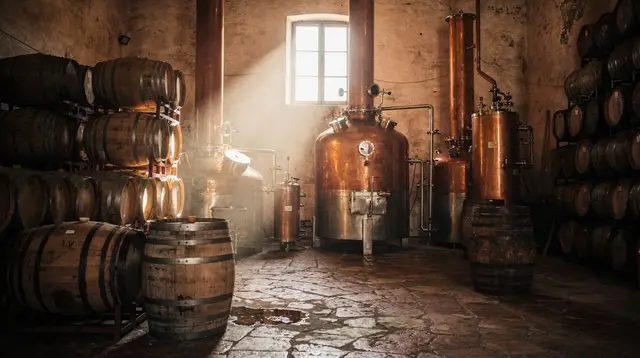
If you want a feel for the town itself before deciding how long to stay, things to do in Saint-Pierre lays out the market, the seafront and the Saga du Rhum distillery tour in more detail than this overview page.
Getting oriented: where the South actually is
“The South” here means the coastal strip and the foothills running from roughly Saint-Pierre through Le Tampon and Petite-Île, with Grand’Anse marking the point where the built-up coast starts giving way to the wilder stretch beyond. It sits between two very different neighbours: the drier, sunnier West coast around Saint-Leu and Saint-Gilles, and the wetter, greener East around Saint-Benoît.
Climate-wise, the South lands in between those two. It gets more rain than Saint-Gilles or Saint-Leu, particularly up on the slopes around Le Tampon, but nowhere near the volume that falls on the East coast. In practice that means you can usually count on more sun here than in the East, without the near-certainty of dry days you get further west. May to October, the dry austral winter, is still the more reliable stretch for outdoor plans.
Le Tampon, up in the hills above Saint-Pierre, is worth knowing about even if you don’t stay there: it’s cooler than the coast, it’s the route up toward the Plaine des Cafres and the Piton de la Fournaise, and its climate shifts noticeably the higher you climb.
Saint-Pierre also works as a practical staging point for trips inland rather than just along the coast. It’s the more direct approach to Cilaos for travelers based in the South, and it sits closer to the start of the Piton des Neiges summit hike than a base in the West does, even though the trailhead itself is well up in the highlands. None of that makes Saint-Pierre a substitute for staying in the cirques if that hike is the main goal, but it can shave time off a day trip there.
Grand’Anse and the coast toward Petite-Île
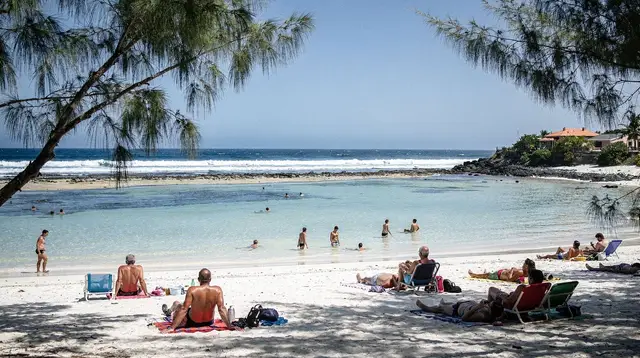
Continuing southwest from Saint-Pierre, Grand’Anse is the beach most visitors stop at. It combines black volcanic sand with a paler patch near the water, backed by an unusually large stand of filao pines that gives real shade — rare on this island’s beaches. The main draw is a seawater pool built into the rock, refreshed by the tide, which is the sheltered place to swim: as everywhere on this coast, swimming and water sports outside supervised or protected zones are banned by prefectural order because of shark risk, so the open sea beyond the pool is not the place for a casual dip.
Grand’Anse has picnic shelters, grills and food vendors, which makes it a natural lunch stop on a day heading further south. It’s also where a on the beach itself runs for visitors who want to cook rather than just eat. That’s one way to spend an afternoon here without needing a car for anything else that day.
Petite-Île and the villages between Saint-Pierre and Grand’Anse are mostly residential, with a scattering of viewpoints and small chapels rather than headline sights — worth a stop if you’re driving through, not a reason to detour on their own.
Where the wild south begins
Past Grand’Anse, the coast road continues into Saint-Joseph, then Langevin and on to Saint-Philippe: this stretch is what the island calls the wild south, and it has its own dedicated page rather than being covered in depth here. In short, it’s where the basalt coastline gets dramatic — the Cap Méchant cliffs, the Grand Brûlé lava fields where eruptions from the Piton de la Fournaise have reached the sea, and the Langevin river valley with its waterfall and canyoning routes.
For the details on those sights, opening hours and how to sequence a day there, see the wild south destination page and the matching wild south day trip guide. If you’re staying in the South and want to fold the wild south into a longer loop rather than a single day, the wild south and east coast in two days itinerary picks up roughly where this page leaves off.
As a rough distance guide: Saint-Joseph is about 30 minutes from Saint-Pierre, and reaching Saint-Philippe and the Grand Brûlé adds another 30 to 45 minutes on top. Those are short distances on a map that take longer than they look, since the road hugs the coast and passes through several villages.
Getting around the South
A rental car is close to essential here, as it is across most of the island. Saint-Pierre itself is walkable for the market and seafront, but reaching Le Tampon, Grand’Anse or anything past it means driving. The Car Jaune bus network connects Saint-Pierre to the coastal towns in both directions, but service to Le Tampon and the inland villages is slower and less frequent, so budget extra time if you’re relying on it.
For a scenic alternative to driving, helicopter flights from Saint-Pierre cover the cirques, the volcano and the wild south coastline in under an hour, departing from near the town. It’s a way to see terrain — Mafate’s ravines, the Grand Brûlé’s lava fields — that would otherwise take a full day or more to reach on foot or by road. Mornings are the more reliable window before cloud builds over the interior.
For the logistics of picking up a car — agencies, insurance, what to expect at Pierrefonds versus Roland-Garros — see renting a car in Réunion Island and, more broadly, driving in Réunion Island, which covers mountain roads and the driving habits that catch visitors off guard.
Practical essentials for the South
The South runs on the same rules as the rest of the island, which is French territory in the euro zone but sits outside the Schengen area: a Schengen visa alone doesn’t cover entry, and EU citizens travel here with a national identity card rather than needing a passport specifically. French is the working language everywhere in Saint-Pierre and Le Tampon, alongside Réunion Creole, and day-to-day spending works exactly as in mainland France — cards are widely accepted, and tipping isn’t expected in restaurants or cafés.
Power sockets are the standard European 230V, types E and F, so travelers from outside continental Europe will need an adapter. EU mobile plans use their normal roaming allowance here, since Réunion is an outermost region of the European Union, not a separate destination for phone plans. In an emergency, 112 reaches the general European number, 15 is the SAMU medical service, 17 the police and 18 the fire brigade. For the fuller picture before you land, see entry requirements for Réunion Island, money and payments in Réunion Island and phone and internet in Réunion Island.
Where to stay and how long to spend
Two to three days is enough to cover Saint-Pierre itself, a beach afternoon at Grand’Anse, and either a day trip into the wild south or up toward the volcano — not both comfortably in that window. If your plan includes the wild south, Cilaos and the volcano route, stretch to four or five days, or read how many days in Réunion Island for a fuller breakdown by itinerary length.
| Base | Good for | Trade-off |
|---|---|---|
| Saint-Pierre | Market, seafront, restaurants, nightlife | Not central for the Maido or the North |
| Le Tampon | Cooler climate, closer to the volcano road | Fewer restaurants, more driving to the coast |
| Grand’Anse / Petite-Île | Quiet beach access | Limited amenities after dark |
For a wider comparison of where to base yourself across the whole island, see where to stay in Réunion Island.
Diving, snorkeling and the sea here
The South’s lagoon is smaller and less developed for snorkeling than the reef-protected stretch around Saint-Gilles and l’Hermitage in the West, so most visitors treat the sea here as a swim-and-relax stop rather than a diving destination. If diving or snorkeling is a priority, scuba diving around Saint-Leu and l’Étang-Salé and the wider West coast cover the island’s main sites in more depth. Whatever the location, the same rule applies everywhere on Réunion Island: stay within supervised or protected zones, since open-water swimming is restricted by prefectural order because of shark risk. If you’re unsure where that leaves you along this coast, is it safe to swim in Réunion, sharks and beaches and where can you swim in Réunion Island both walk through it town by town.
Weather and cyclone season in the South
Like the rest of Réunion, the South runs on inverted, Southern Hemisphere seasons: a hot, humid austral summer from November to April, which is also the island’s cyclone season, and a drier, cooler austral winter from May to October that’s the more reliable stretch for a beach day at Grand’Anse or a walk around Le Tampon. The South doesn’t see the near-freezing nights that hit the Piton de la Fournaise or the Piton des Neiges summit in winter — it’s a coastal and mid-altitude region, not a high-mountain one — but a cyclone warning during the summer months can still ground a helicopter flight, cancel a segway tour or close roads toward the wild south at short notice.
If your trip falls between December and March, it’s worth building at least one buffer day into the plan rather than scheduling every activity back to back. Réunion Island’s cyclone season guide, Réunion Island weather by month and the best time to visit Réunion Island go through what to expect month by month in more detail than fits here.
A day or two in the South, in practice
A first day might run: morning at the Saint-Pierre market, a walk along the seafront, then a guided segway loop through the town centre and seafront if you’d rather cover ground without driving. Lunch and an afternoon swim at Grand’Anse’s seawater pool round out the day.
A second day is where you decide between the volcano and the wild south. Either a guided day tour through the wild south’s waterfalls, lava fields and viewpoints covers Saint-Joseph through Saint-Philippe without you needing to plan the stops yourself, or, weather permitting, a helicopter tour departing from Saint-Pierre over the cirques and the volcano gives you a wider view of the island’s interior in under an hour. Both depend on clear weather more than most South coast activities, so keep a backup plan — the market, the seafront, or a second pass at Grand’Anse — for a cloudy morning.
FAQ: visiting the South of Réunion Island
Is Saint-Pierre a good base for exploring Réunion Island?
Saint-Pierre works well if you want a real town rather than a resort strip, with a covered market, a Saturday street market and a walkable seafront. It puts you closer to the wild south and Cilaos than a base in the West, but further from the Maïdo and the North.
Which airport should I use for the South, Roland-Garros or Pierrefonds?
Pierrefonds (ZSE), just outside Saint-Pierre, is the South’s own airport, but it handles far fewer routes than Roland-Garros (RUN) near Saint-Denis. Most international flights, including those from mainland France, land at Roland-Garros, so many visitors still drive about 1h15 south to reach this region.
How far is the wild south from Saint-Pierre?
Saint-Joseph is about 30 minutes from Saint-Pierre, and Saint-Philippe and the Grand Brûlé lava fields add another 30 to 45 minutes. Those distances read as short on a map but take longer than expected on the coastal road, so plan a half-day or full day rather than a quick detour.
Is the sea safe for swimming in the South?
Swimming and water sports outside the lagoon and officially supervised or protected zones are banned by prefectural order because of shark risk. In this region that means sticking to Grand’Anse’s protected pool and other marked, supervised spots rather than swimming freely along the open coast.
What is Grand’Anse like for a day at the beach?
Grand’Anse is a scenic black-and-gold sand beach with a seawater pool built into the rocks, which is the safe place to swim here since the open sea is not supervised. It has picnic shelters and food stalls, and it is a common stop on the way toward Saint-Joseph.
How does the South’s climate compare to the West and East coasts?
The South sits between the two: drier and sunnier than the East coast around Saint-Benoît and Sainte-Rose, but slightly wetter and greener than the West coast around Saint-Gilles and Saint-Leu. Rain is more frequent here than in the West, though nowhere near East coast levels.
Does the South get hit by cyclone season?
Yes, the whole island shares the same austral summer cyclone season from November to April, and the South is not sheltered from it. A cyclone warning can ground helicopter flights, close roads toward the wild south or cancel a segway tour with little notice, so a visit planned for those months benefits from a buffer day. May to October, the dry austral winter, avoids the risk entirely.