Reunion Island trip cost: a budget breakdown
How much does a trip to Reunion Island cost?
The main cost blocks are the flight to Roland-Garros or Pierrefonds, a rental car (near-essential on the island), accommodation, activities booked through GetYourGuide or Viator, and fuel or time for mountain drives. Prices run a little higher than mainland France because most goods are imported, and the currency is the euro.
What actually drives the cost of a Reunion Island trip
Reunion Island is a French overseas department in the Indian Ocean, in the euro zone, roughly 200 km southwest of Mauritius. It is not a cheap side trip from anywhere: for most visitors it means a long flight, a rental car, and a stay of at least a week to make the flight worthwhile. This page does not hand you a single all-in number, because none would be honest. Instead it walks through the five blocks that make up almost every trip’s cost, so you can price your own itinerary instead of trusting a average that may not match your dates, your season or your style of travel. For tactics on trimming the bill, see ways to save money in Reunion Island; this page is the map of where the money goes.
Two currency and payment facts sit underneath every number below. First, the currency is the euro (EUR); there is no separate island currency and no exchange step if you already hold euros. Second, prices on Reunion Island are often a little higher than in mainland France, mostly because a large share of goods, from imported food to spare parts, arrives by sea or air. That gap shows up most in fuel, packaged groceries and some restaurant meals, less in lodging.
Flights: the biggest single line for most visitors
Reunion Island has two airports: Roland-Garros (RUN) at Sainte-Marie, near Saint-Denis in the north, and Pierrefonds (ZSE) near Saint-Pierre in the south. Most long-haul arrivals land at Roland-Garros, with direct connections to Paris (around 11 hours of flight time), Mauritius, Madagascar and Mayotte. For travellers coming from Europe, this flight is usually the largest single cost of the whole trip, well ahead of any single week of accommodation or activities. See flights to Reunion Island for route and timing detail, and Roland-Garros airport to Saint-Gilles for what happens after landing.
Because flight prices swing hard with season, especially around the July-August and end-of-year windows when French metropolitan travellers fly home, booking timing affects this line more than almost any other budget decision you will make for the trip.
Rental car: close to a fixed cost, not an optional extra
A rental car is near-essential on Reunion Island. The Car Jaune bus network connects the coastal towns reasonably well but is slow and infrequent into the Hauts, the cirques and the volcano road, and it does not reach trailheads at the Maido, Pas de Bellecombe or the Cilaos gorges on a hiker’s schedule. If your itinerary includes the volcano, the Maido viewpoint over Mafate, or a day in Cilaos or Salazie, treat the car as a fixed cost of the trip, not a discretionary one. Details on choosing and driving one: renting a car in Reunion Island and driving in Reunion Island; for the bus alternative on a lighter itinerary, see Reunion Island by bus: the Car Jaune guide and Reunion Island without a car.
Traffic around Saint-Denis and along the coastal road backs up at peak hours, which does not change the rental price but does change how much ground you can realistically cover per day, a planning cost as real as a euro figure.
Accommodation: varies by coast, not just by star rating
Where you base yourself changes the budget more than the category of room. Saint-Gilles-les-Bains and the west coast, with the lagoon, tend to carry a premium over quieter east-coast towns, while a night at altitude, such as a gite before a Piton des Neiges summit push from Cilaos, or a gite in Mafate, is priced and booked differently again: these mountain gites should be reserved well ahead, since they are limited in number and cannot be substituted at short notice. For a comparison of the west coast bases, see Saint-Gilles vs Saint-Leu: where to stay and the general primer where to stay in Reunion Island.
Splitting a trip across two or three bases, rather than one hotel for the whole stay, usually adds driving time more than it adds cost, since accommodation rates do not vary as sharply between regions as many visitors expect.
Activities booked through GetYourGuide or Viator
Boat trips, snorkelling, helicopter flights, scuba introductions and guided hikes are the most variable line in a Reunion Island budget, and this guide will not put a fixed euro figure on any of them, because prices shift with season, operator and demand. The reliable way to price this block is to check the listing itself before you commit funds elsewhere in your budget.
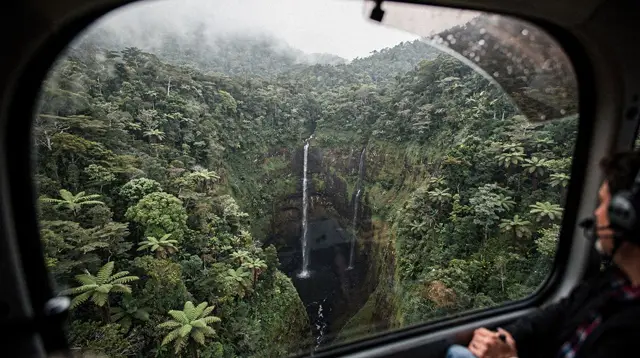
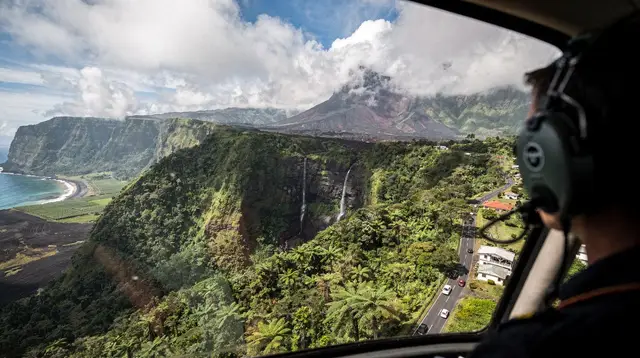
On the water, a half-day out of Saint-Gilles can mean snorkelling over the reef, such as the boat trip that lets you snorkel with turtles in the Saint-Gilles-les-Bains lagoon, or a seabed and wildlife-watching outing like the dolphin, whale and seabed boat trip departing from the port of Saint-Gilles-les-Bains, useful roughly from June to October when humpback whales are present, though a sighting is never guaranteed. From the air, a scenic flight over the cirques and the volcano, such as the helicopter tour of the island departing from Saint-Gilles, sits at the top of the activity budget and is worth checking against a microlight alternative; see helicopter vs microlight flight over Reunion before booking. On land, options range from a full-day overview like the 13-stop complete tour of the island to a shorter adrenaline outing such as a quad or buggy ride above Saint-Gilles.
Budget for activities as a separate, itemised block rather than a daily average: two people doing a whale-watching trip, a snorkelling outing and one scenic flight over a week will spend very differently from two people who hike on their own and book nothing.
Fuel, mountain driving time, and the cost hidden in kilometres
Fuel is one of the clearer examples of the island’s import-driven price gap, running a bit above prices in mainland France. But the real budget risk on Reunion Island is not the fuel bill, it is underestimating time. The road to Cilaos climbs through roughly 400 bends from Saint-Louis and takes about an hour without stopping; the volcano road from Bourg-Murat crosses the Plaine des Sables before reaching Pas de Bellecombe; the climb to the Maido belvedere overlooking Mafate is similarly slow going. None of these covers much distance in kilometres, but each takes far longer than a mainland road of the same length, and fog often rolls in by late morning. Planning too many of these drives into one day is the most common way a Reunion Island itinerary quietly breaks its own time and fuel budget. See driving the road to Cilaos and its 400 bends for what that particular drive involves.
Food, cash, and the small daily costs
Cards are accepted almost everywhere along the coast, in supermarkets, most restaurants and larger shops. In the Hauts, at small roadside stalls, and especially at gites in Mafate, cash is the safer assumption, since card readers are unreliable or simply absent where deliveries and connectivity are harder. No tip is expected anywhere on the island; service is included in restaurant prices, though rounding up for a guide or a driver is a welcome, optional gesture rather than a budgeted line.
Meals built around Creole staples, such as a carri or a rougail saucisse at a roadside snack or a market stall, cost noticeably less than a sit-down restaurant on the coast, and self-catering from a supermarket or the Saint-Paul market is the clearest lever if food is where you want to save.
A sample cost structure, block by block
The table below sets out the blocks to price for your own trip rather than a fixed total, since flight cost, season, group size and the number of paid activities change the outcome more than any other factor.
| Budget block | What it covers | What moves the price |
|---|---|---|
| Flight | Roland-Garros or Pierrefonds, usually via Paris | Season, booking window, origin airport |
| Rental car | Near-essential for the Hauts, cirques and volcano | Rental duration, vehicle size, season |
| Accommodation | Coastal stay plus any mountain gite | Coast chosen, number of bases, gite nights |
| Activities | Boat trips, flights, scuba, guided hikes via GetYourGuide/Viator | Number and type of activities, season for whale watching |
| Fuel and mountain driving | Petrol plus the extra time mountain roads demand | Number of cirque and volcano days |
| Food | Restaurants, market stalls, self-catering | Coastal vs Hauts, restaurant vs market mix |
How the seasons shift the same budget
The austral winter, from May to October, is the drier, cooler season and the best window for hiking, and it also coincides with the whale-watching months from roughly June to October; it tends to be the busier and costlier period for flights and accommodation. The austral summer, from November to April, is hot, humid and the cyclone season, with the risk peaking around January to March; flights and lodging can be more flexible in price outside the peak weeks of this window, but flexible booking terms and travel insurance become part of the real cost of travelling then. Full seasonal detail: best time to visit Reunion Island, Reunion Island weather by month and Reunion Island cyclone season guide.
Reunion Island trip cost: frequently asked questions
What is the biggest single cost on a Reunion Island trip?
For most visitors it is the international flight, since Reunion is a long-haul destination reached mainly through Roland-Garros (RUN) near Saint-Denis or Pierrefonds (ZSE) near Saint-Pierre. Accommodation and the rental car are usually the next largest blocks, ahead of activities and food.
Do I really need to budget for a rental car?
Yes. Public transport (the Car Jaune network) links the coastal towns but is slow into the Hauts, the cirques and the volcano road, so a rental car is close to essential for reaching Cilaos, Salazie, the Maido or the Piton de la Fournaise trailheads on your own schedule.
Are activities like whale watching or helicopter flights included in a typical daily budget?
No, they are usually booked separately, one activity at a time, through GetYourGuide or Viator. Treat them as a distinct line in your budget rather than folding them into a daily average, since prices vary by activity and by season.
Is Reunion Island more expensive than mainland France?
Prices are often a little higher than in metropolitan France, mainly because many products are imported to the island. Fuel, groceries and some restaurant meals reflect that gap more than accommodation does.
Can I pay by card everywhere on the island?
Cards are accepted almost everywhere along the coast, but it is worth carrying cash for the Hauts, small roadside stalls, and especially for gites in Mafate, where card readers are unreliable or absent.
Is tipping expected in Reunion Island?
No, service is included and no tip is expected, though rounding up or leaving a small amount for a guide or driver is appreciated and never out of place.
How does the volcano road or the road to Cilaos affect my fuel or time budget?
Mountain roads such as the route to Cilaos or the volcano road from Bourg-Murat cover modest distances in kilometres but take far longer to drive than the distance suggests, so budget more time than fuel for these legs, and check GetYourGuide or Viator for the current price of any guided option before deciding whether to self-drive.
Where can I check the current price of a specific tour?
Prices for boat trips, helicopter flights or guided hikes change with season and demand, so the listing on GetYourGuide or Viator is the reference for the price of the day rather than any figure quoted in a general guide.
Trip planning tours and activities on GetYourGuide
Verified deep-linked GetYourGuide tours. Book through these links and we earn a small commission at no cost to you.
GetYourGuide does not provide a product photo for this activity — the image shows the meeting point, photographed by us.