How many days do you need in Réunion Island?
How many days do you need in Réunion Island?
Plan at least 5 to 7 days to cover the west coast lagoon, one cirque and the volcano without rushing mountain roads. Ten to fourteen days lets you add the wild south, the east coast and a multi-day trek into Mafate, which has no road and needs its own time.
Think in zones, not in kilometres
Réunion Island looks small on a map — you can drive its coastal ring road in a few hours. That number is misleading. The island is built around a volcanic massif, and getting from the lagoon to a cirque or to the volcano means climbing narrow mountain roads that switchback for an hour or more to cover a distance that would take fifteen minutes on flat ground. The road to Cilaos alone has roughly 400 bends. Planning a Réunion Island trip by distance, the way you might plan a trip around a smaller, flatter island, produces itineraries that look fine on paper and fall apart in the car.
The more reliable way to plan is to count one full day per zone: the west coast and lagoon, the south and wild south, the east coast, one cirque such as Cilaos or Salazie, and the volcano. Trying to compress two of these into one day almost always means arriving somewhere tired, at the wrong time of day, or not at all — mountain roads close for landslides after heavy rain, and cloud typically rolls in over the volcano and the high cirques by mid-morning. A “tour of the island in one day” by car covers only the coastal ring; it cannot include a cirque, a hike, or a volcano crater walk on top of that driving.
This guide is about length of stay only — the arbitrage between a short trip that stays on the lagoon and west coast, and a longer one that adds the cirques, the volcano and the wild south. It does not cover where to sleep or which beach to pick; those choices belong on the destination and accommodation pages.
The one-zone-per-day rule
Five broad zones make up most itineraries:
| Zone | What a day there typically includes | Realistic minimum |
|---|---|---|
| West coast and lagoon | Saint-Gilles-les-Bains, l’Hermitage, La Saline-les-Bains, Saint-Leu | 1–2 days |
| A cirque (Cilaos or Salazie) | Mountain drive, viewpoints, a short walk, optional canyoning | 1 full day, 2 if hiking further |
| The volcano | Bourg-Murat, Plaine des Sables, Pas de Bellecombe | 1 full day |
| South and wild south | Saint-Pierre, l’Etang-Salé, Grand Anse, Saint-Joseph, Grand Brûlé | 1 full day |
| East coast | Sainte-Rose, Saint-Benoît, Saint-André | 1 full day |
| Mafate | Multi-day trek, no road access | 2–3 days minimum |
Add a travel day at each end for flights into and out of Roland-Garros or Pierrefonds, and a buffer day if you are visiting during a season when a trail or the volcano access could close. This table is the backbone for every length of stay below.
Four to five days: lagoon and west coast only
A short trip of 4 to 5 days is realistic if the goal is sun, the lagoon, and one or two easy excursions rather than a full picture of the island. In this window, most visitors base themselves around Saint-Gilles and spend their time between the lagoon, a snorkelling outing, and a half-day trip up to the Maido for the sunrise view over Mafate — without descending into the cirque itself, since that requires a full day on its own.
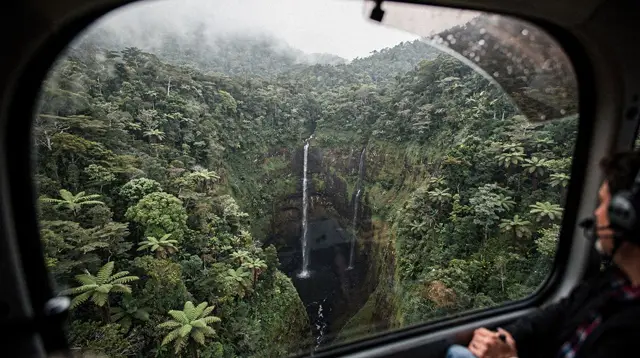
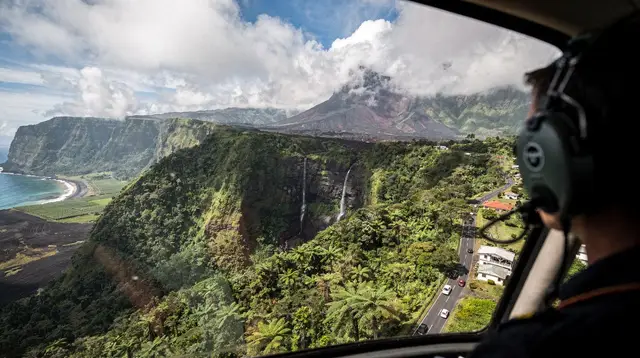
This length works well combined with a short snorkelling trip among the sea turtles of Saint-Gilles-les-Bains, which fits into half a day without disturbing the rest of the schedule. A short scenic flight is also a realistic add-on at this length: a helicopter flight over the island departing from Saint-Gilles compresses views of the cirques, waterfalls and the volcano into under an hour, without the multi-day driving a ground visit would need. It is not a substitute for going in on foot, but it is honest value for a short stay.
What a 4–5 day trip has to skip: the volcano route, a cirque visited properly rather than glimpsed from a viewpoint, the wild south, the east coast, and Mafate. If any of those matter to you, this is not enough time — see the three-day or five-day itinerary pages for how that time actually breaks down hour by hour.
One week: the practical minimum for a first real trip
Seven days is where a Réunion Island trip starts to feel complete rather than partial. A common structure: two days on the west coast and lagoon (including Saint-Denis as a half-day detour), one full day in a cirque, one full day at the volcano, one day covering either the south or the east coast, and a buffer day.
This is also the point at which a boat trip along the coast to look for dolphins and, in season, whales fits naturally as a lagoon-day activity, and at which a first full-day mountain excursion — Cilaos or Salazie — becomes worth the drive, since you are not trying to combine it with anything else that same day. The three cirques in four days itinerary shows what it looks like to push further into the highlands if hiking is a priority, though at seven days most visitors pick one cirque rather than three.
A week is enough to see the headline sights of Réunion Island. It is not enough to add the wild south and the east coast on top of a cirque and the volcano, and it leaves no real margin if a trail closes or a cyclone-season front moves through — see what happens if you build in a buffer day before committing to a packed seven-day plan.
Ten to fourteen days: the version that adds everything
This is the length where the arbitrage tips from “see the highlights” to “cover the island properly.” Ten to fourteen days is enough to keep the west coast, a cirque and the volcano from the one-week version, and add the wild south between Saint-Joseph and Saint-Philippe, the east coast around Sainte-Rose and Saint-Benoît, a second cirque, and — critically — enough slack to absorb one lost day to weather without losing an entire zone from the trip.
At this length, a longer sightseeing day like the guided tour covering thirteen stops across the island can work as an orientation day near the start of the trip, giving a first overview of the geography before you commit full days to specific zones later on. It is not a replacement for those full days — a single guided day cannot substitute for a cirque visit or a volcano morning — but it helps with route planning early on, before mountain-road driving times are second nature.
Ten to fourteen days is also the realistic minimum if a multi-day trek into Mafate is part of the plan, since that alone needs two to three days on top of everything else. See the next section for why Mafate cannot be squeezed into a day trip alongside anything else.
Why Mafate needs its own days
Mafate is the one cirque with no road at all: every ilet — La Nouvelle, Marla, Roche Plate, Grand Place, Aurère — is reached on foot, from trailheads at the Maido, the Col des Boeufs or the Rivière des Galets. Helicopters resupply the gîtes and fly sightseeing loops over the cirque, but there is no vehicle access, and no day trip that “drives into Mafate.”
A one-day loop from the Maido rim down toward La Nouvelle and back is physically possible for a fit hiker, but it is a long, tiring day that leaves no time to actually experience an ilet rather than pass through it. Most visitors who want to see Mafate properly sleep at least one night in a gîte, which means booking ahead — gîtes fill up, particularly in the dry season — and building two to three days into the itinerary specifically for this cirque. If Mafate is a priority, treat it as its own trip component with its own day count, not as something to fit into a west-coast-and-volcano week; the Mafate three-day trek itinerary and the Mafate planning guide lay out route options and gîte logistics.
How season changes the day count
Réunion Island runs on southern-hemisphere seasons, the reverse of Europe’s calendar, and this genuinely changes how many days you should plan.
Austral winter, May to October, is dry and cooler, and it is the season when hiking trails, the volcano route and the road to Cilaos are least likely to be closed by weather. A tightly packed week or ten-day itinerary is more realistic in this window because you are less likely to lose a day to a closure.
Austral summer, November to April, is hot, humid, and includes the cyclone season, with the highest risk from January to March. Heavy rain can close mountain roads and hiking trails with little notice, and a cyclone alert can require staying indoors for a full day. This does not mean cancelling a trip in this window — it means building in a buffer day (or two, for a longer trip) rather than scheduling every day back to back, and keeping bookings flexible. See the full breakdown on the Réunion Island weather by month page and the cyclone season guide for what an alert actually means for your plans.
Whale season, roughly June to October, overlaps with the dry season and is a reasonable extra reason to lean toward a winter visit if a whale-watching outing is a priority; nothing is guaranteed, since sightings depend on the animals, not the calendar.
Matching trip length to what you actually want
| If you want… | Plan for | What you’ll have to skip |
|---|---|---|
| A lagoon-focused stopover | 4–5 days | Cirques, volcano, wild south, east coast, Mafate |
| A solid first trip covering the headline sights | 7 days | A second cirque, wild south and east coast together, Mafate |
| A trip that covers most of the island | 10–14 days | Nothing major, aside from an extended Mafate trek |
| A dedicated multi-day trek into Mafate | 2–3 extra days on top of the above | — |
There is no single right number of days for Réunion Island — the honest answer depends on whether the lagoon is the whole point of the trip, or one part of a longer look at the cirques, the volcano and the south. What stays constant regardless of length is the one-zone-per-day discipline: mountain roads do not get faster because the itinerary is short, and a rushed cirque or volcano day tends to disappoint more than a shorter, simpler one done properly.
Trip length questions, answered
Is 4 days enough for Réunion Island?
Four days covers the west coast lagoon around Saint-Gilles-les-Bains, one day trip to Saint-Leu or the Maido, and little else. It works as a stopover, not as a full picture of the island, and leaves no slack for bad weather.
Is a week enough to see Réunion Island properly?
One week is the practical minimum for a first real trip: one day for the lagoon and west coast, one full day for a cirque such as Cilaos or Salazie, one full day for the volcano, and the rest split between Saint-Denis, a lagoon rest day and one buffer day for weather or a closed trail.
How many days do you need for Mafate?
Two to three days minimum, since Mafate has no road and every ilet is reached on foot. A one-day loop from the Maido or Col des Boeufs is possible but rushed; most visitors sleep at least one night in a gîte.
Can you see the whole island in one day?
No. A one-day “tour of the island” by car only skims the coastal ring road; it cannot include a cirque, a hike or the volcano crater trail, because mountain roads such as the road to Cilaos or the Maido climb are slow regardless of the kilometres on the map.
Do you need more days in the dry season or the wet season?
The dry season (May to October) is when hiking and volcano access are most reliable, so a tightly packed itinerary works better then. In the cyclone season (November to April) it is safer to plan a longer trip with spare days, since heavy rain can close trails and delay flights or transfers.
How many days should I add for the volcano and the wild south?
Budget one full day for the Piton de la Fournaise route from Bourg-Murat, and a separate full day for the wild south between Saint-Joseph and Saint-Philippe, including the Grand Brûlé lava fields. Trying to combine both in one day is possible only if you start very early and skip the volcano hike itself.
Is 10 to 14 days better than a week in Réunion Island?
Ten to fourteen days lets you add what a one-week trip usually drops: the wild south, the east coast, a second cirque, and enough slack to reschedule a hike if a trail closes or cloud rolls in. It also allows a multi-day trek into Mafate instead of just a viewpoint from the Maido.
Should trip length change based on whether I plan to hike Piton des Neiges?
Yes. Climbing Piton des Neiges means an overnight at the Caverne Dufour gîte before a pre-dawn summit push, which adds at least one extra day around a Cilaos visit and needs a gîte reservation made well in advance.
Trip planning tours and activities on GetYourGuide
Verified deep-linked GetYourGuide tours. Book through these links and we earn a small commission at no cost to you.
GetYourGuide does not provide a product photo for this activity — the image shows the meeting point, photographed by us.