Saint-Gilles or Saint-Leu: where to stay on Réunion's west coast
Should I stay in Saint-Gilles-les-Bains or Saint-Leu?
Saint-Gilles-les-Bains and l'Hermitage suit travellers who want the busiest white-sand lagoon beaches, restaurants, boat trips and easy access to the Maido. Saint-Leu, about 25 minutes south, is quieter and better for paragliding, snorkelling off a smaller beach and a slower pace, with fewer dining options after dark.
Two towns, one lagoon, different trips
Réunion Island’s west coast is where the sun is, the sea is calm, and most visitors end up sleeping. But “the west coast” covers two quite different bases: Saint-Gilles-les-Bains, with l’Hermitage right next to it, and Saint-Leu, about 25 to 35 minutes further south. Both sit on the same sheltered, sunny stretch of coastline, protected from the trade winds by the island’s central peaks — that’s why the west is dry and sunny while the east coast gets soaked. This guide is only about picking a base between these two. If you’re weighing Cilaos against Salazie for a cirque stay, or trying to work out whether you meant Réunion or Mauritius, those questions are answered elsewhere.
The short version: Saint-Gilles-les-Bains and l’Hermitage are the busier, more convenient choice, with the island’s best beaches, a marina, restaurants, and the Aquarium de La Réunion. Saint-Leu is calmer, better for paragliding and a slower kind of holiday, with less to do after dark. Neither is “the wrong answer” — it depends on what your days will actually look like.
Saint-Gilles-les-Bains and l’Hermitage at a glance
Saint-Gilles-les-Bains is the busiest seaside town on Réunion Island, and l’Hermitage, immediately south along the same beach, is quieter but still part of the same walkable strip. Together they have the longest run of white-sand beach on the island, backed by a lagoon that the barrier reef keeps flat and swimmable most of the year.
The marina (Port de Plaisance) runs boat trips out to open water for dolphin- and whale-watching, and the Aquarium de La Réunion gives families a solid option on a cloudy or windy day. In the evening, Saint-Gilles has by far the most restaurants and bars of any town on the west coast — this is where the island’s limited nightlife actually happens. It’s also the shortest drive up to the Maido viewpoint over Mafate, since the access road climbs from Saint-Paul, just to the north.
The trade-off is that Saint-Gilles is busy, especially in July–August and over the Christmas and New Year period (which falls in the austral summer here — see the note on seasons below). Parking near the beach can take a while to find at peak times, and the town has more traffic than Saint-Leu.
Saint-Leu at a glance
Saint-Leu is a smaller, more residential town built around a compact bay. Its lagoon is calm and good for snorkelling, though the beach itself is shorter and partly rocky compared with Saint-Gilles-les-Bains. What sets Saint-Leu apart is what happens above it: this is one of the best paragliding sites in Europe, with tandem flights launching from the hillside directly overhead and landing on the beach below. If a paragliding flight is on your list, staying here removes a drive before and after.
Saint-Leu is also home to Kélonia, a marine turtle observatory and rehabilitation centre, and Stella Matutina, a museum in a former sugar factory that covers the island’s plantation history. Evenings are quiet — a handful of restaurants, no real nightlife — which suits travellers who’d rather be up early for a hike or a flight than out late.
The town sits further from Saint-Denis and the airport, and further from the Maido, so factor in an extra 20 to 30 minutes on those drives compared with a Saint-Gilles base.
Side-by-side comparison
| Saint-Gilles-les-Bains / l’Hermitage | Saint-Leu | |
|---|---|---|
| Beach | Longest white-sand stretch on the island | Smaller, partly rocky |
| Lagoon swimming | Wide, shallow, well signposted | Calm but narrower |
| Signature activity | Boat trips, dolphin/whale watching, snorkelling | Tandem paragliding |
| Family fit | Aquarium, wider choice of shallow spots | Fewer facilities, quieter |
| Restaurants and evenings | Most choice on the west coast | Limited, early nights |
| Drive to Maido | Around 45 minutes to just over an hour | Add 20–30 minutes |
| Drive to Saint-Pierre | Around 40–45 minutes | Around 20–25 minutes |
| Typical pace | Lively, holiday-town feel | Slower, sport-and-nature focused |
Which one for which trip
If your days will mostly involve beach time, a boat trip, dinners out, and a day up at the Maido, Saint-Gilles-les-Bains or l’Hermitage is the more convenient base — everything is close, and there’s more to do if the weather turns. Families travelling with young kids also tend to do better here, thanks to the wider shallow lagoon and the aquarium as a backup plan.
If paragliding is a reason you’re coming to Réunion at all, or you want mornings on the water and quiet evenings rather than restaurant-hopping, Saint-Leu is worth the extra drive time to reach the south or the airport. It also puts you closer to things to do in Saint-Leu like snorkelling off the point and visiting Kélonia without a return drive.
Some visitors split the difference: three or four nights in Saint-Gilles-les-Bains for the beach and boat trips, then two or three in Saint-Leu for a flight and a slower finish. The coastal road between them takes 25 to 35 minutes depending on traffic, so a one-way move mid-trip is straightforward and avoids backtracking.
What doesn’t change wherever you stay
A few things apply equally to both towns. Swimming and water sports are restricted to the lagoon and other supervised or protected zones by prefectural order because of shark risk — this isn’t a Saint-Gilles-only rule or a Saint-Leu-only rule, and it applies at every beach along this coast. Don’t swim or surf in open water outside marked zones at either base.
A rental car is close to essential from both towns. The Car Jaune bus network connects coastal towns reasonably well but is slow for reaching the Hauts, the Maido, or inland sites, so plan on driving for day trips inland or toward Cilaos and the volcano.
Réunion’s climate runs on southern-hemisphere seasons, the reverse of Europe’s. The austral summer (November to April) is hot, humid and includes cyclone season; the austral winter (May to October) is drier, cooler at altitude, and the better window for hiking and clear Maido sunrises. This affects both towns similarly, though the west coast — sheltered from the trade winds — stays noticeably drier than the east year-round.
Both towns share the same protected reef lagoon system, part of the Réserve naturelle marine de La Réunion: don’t walk on coral, and use reef-safe sunscreen.
Getting to Saint-Gilles or Saint-Leu
Most visitors land at Roland-Garros airport (RUN) near Sainte-Marie, north of Saint-Denis, and pick up a rental car there — see Roland-Garros airport to Saint-Gilles for the drive itself. Saint-Leu adds roughly 20 to 30 minutes to that same journey compared with heading straight to Saint-Gilles-les-Bains, simply because it’s further down the coast. A smaller number of visitors fly into Pierrefonds airport near Saint-Pierre in the south, which actually sits closer to Saint-Leu than to Saint-Gilles.
Renting a car matters more than which base you pick: see renting a car in Réunion and driving in Réunion for what to expect on mountain roads, at fuel stations and with parking in both towns. If you’d rather not drive at all, read getting around Réunion Island and Réunion by bus (Car Jaune) first — the west coast towns are connected to each other and to Saint-Denis by bus, but reaching the Maido, Cilaos or the volcano without a car is slow and, for some sites, effectively impossible.
Day trips from either base
Both towns work as a launch point for the rest of the island, though the drive times differ slightly depending on which side of the coast you’re starting from. From Saint-Gilles-les-Bains, the Maido is the closest big-ticket viewpoint, and a full guide to that trip plus deeper hikes into Mafate is worth reading before you go — see Maido and Mafate guided hikes. Saint-Gilles is also the more common starting point for organised day trips: Piton de la Fournaise day trip from Saint-Gilles, Cilaos day trip from Saint-Gilles, Salazie day trip from Saint-Gilles, east coast day trip from Saint-Gilles and wild south day trip from Saint-Gilles all assume a Saint-Gilles or l’Hermitage base and work just as well starting from Saint-Leu with a bit of extra drive time tacked on at each end.
The volcano deserves its own planning, wherever you stay: Piton de la Fournaise volcano tours and self-drive or guided tour cover the options, and what time to start the hike matters more than which coastal town you set off from, since the drive up to Pas de Bellecombe takes a similar amount of time from either base once you’re past Saint-Pierre or the Plaine des Cafres. If cirque hiking is the main draw, compare Cilaos against Salazie separately — both are accessible as day trips or overnight stays from either west coast town.
How long to stay on the west coast
A short trip built around a single west coast base still leaves room for a volcano day and a hike, but doesn’t leave much slack for detours to the wild south or a Mafate trek. If you’re planning the whole island rather than just this stretch of coast, how many days in Réunion Island and one week in Réunion Island both work through what fits around a Saint-Gilles or Saint-Leu base, and Réunion Island for first-time visitors covers the basics of entry requirements, currency and driving that apply regardless of which town you pick.
For money and connectivity while you’re here: Réunion uses the euro, and EU mobile roaming applies for EU-based SIM plans — see money and payments in Réunion and phone and internet in Réunion. Both towns are considered safe for tourists by the usual standards; is Réunion Island safe for tourists covers road safety, hiking risk and the shark-related swimming restrictions in more detail than the summary above.
Booking a boat trip or a flight
For Saint-Gilles-based days on the water, a half-day out to look for dolphins or, in season (roughly June/July to October), humpback whales, is a reliable way to spend a morning: a dolphin and whale watching trip from Saint-Gilles-les-Bains. Snorkellers can also book a guided outing over the reef: a snorkelling trip to see turtles in Saint-Gilles-les-Bains.
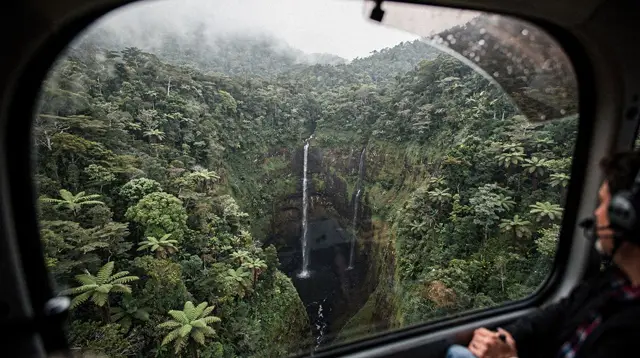
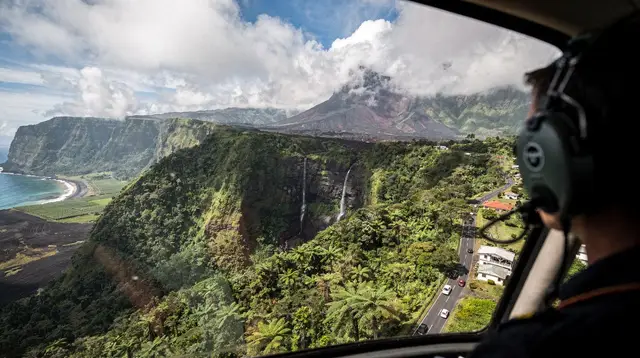
For a Saint-Leu-based stay built around the coast’s signature activity: a surfing lesson in Saint-Leu is a lower-key alternative to paragliding for a first morning in the water. And if the budget stretches to it from either base, an aerial view puts the whole coastline in context: a helicopter tour departing from Saint-Gilles.
Prices for boat trips and flights vary by season and demand; check the current rate and availability on the booking page before committing to dates.
FAQ: choosing between Saint-Gilles and Saint-Leu
Is Saint-Gilles or Saint-Leu better for families?
Saint-Gilles-les-Bains and l’Hermitage generally work better for families: shallow lagoon sections, more restaurants within walking distance, and the Aquarium de La Réunion as a rainy-day option. Saint-Leu has a smaller beach and fewer facilities, though its lagoon is also calm.
Where should I stay for paragliding in Réunion?
Saint-Leu. Tandem paragliding flights launch from the hills directly above town and land on the beach, so staying there saves a drive before and after each flight.
Can I do a day trip between Saint-Gilles and Saint-Leu?
Yes. The drive is around 25 to 35 minutes depending on traffic on the coastal road, so both towns work as a day trip from the other. Staying a few nights in one and visiting the other once or twice is a common pattern.
Which town is closer to the Maido viewpoint over Mafate?
Saint-Gilles-les-Bains is the shorter drive to the Maido, roughly 45 minutes to just over an hour depending on the road, since the access road climbs from Saint-Paul just north of Saint-Gilles. From Saint-Leu, add another 20 to 30 minutes.
Is the beach better in Saint-Gilles or Saint-Leu?
Saint-Gilles-les-Bains and l’Hermitage have longer stretches of white sand and the most swimmable lagoon area on the island. Saint-Leu’s beach is smaller and partly rocky in places, though its lagoon is also protected by the barrier reef.
Is nightlife better in Saint-Gilles or Saint-Leu?
Saint-Gilles-les-Bains has noticeably more restaurants, bars and evening activity. Saint-Leu quiets down early, which suits travellers who came for the outdoors rather than the evening.
Do I need a car if I stay in Saint-Gilles or Saint-Leu?
Yes, in both cases. Réunion’s public transport (Car Jaune) connects coastal towns but is slow for reaching the Hauts, the Maido, Kelonia or Stella Matutina, so a rental car is close to essential from either base.
Can I swim in the open ocean at Saint-Gilles or Saint-Leu?
No. Swimming and water sports outside the lagoon and supervised zones are banned by prefectural order because of shark risk. Stay within the marked lagoon areas at both Saint-Gilles-les-Bains/l’Hermitage and Saint-Leu.
Trip planning tours and activities on GetYourGuide
Verified deep-linked GetYourGuide tours. Book through these links and we earn a small commission at no cost to you.
GetYourGuide does not provide a product photo for this activity — the image shows the meeting point, photographed by us.