Réunion Island on a budget: what actually saves you money
What's the single biggest way to save money in Réunion Island?
Spend your days on what's free: swimming in the protected lagoon at Saint-Gilles, l'Hermitage or La Saline, and hiking marked trails without a guide. Add local markets over touristic restaurants and, if you can live with slower travel, the Car Jaune bus network along the coast instead of a rental car.
Spend on what’s worth paying for, skip the rest
Réunion Island doesn’t need a long list of paid tours to feel worth the trip. The most memorable parts of the island — the lagoon, the trails, the markets — don’t charge admission. The trick isn’t finding a cheaper version of everything; it’s being honest about which few paid activities actually earn their price, and building the rest of the trip around what’s already free.
This isn’t a breakdown of what a week here costs overall — see reunion island trip cost for that. This page is about the choices that change your daily spend: where you swim, how you eat, how you move around, and which paid experiences are worth keeping.
Swim in the lagoon, not in a paid pool or excursion
The protected lagoon along the west coast, from Saint-Gilles and l’Hermitage down to La Saline-les-Bains, is calm, shallow near the shore and free to access. This is also the only stretch of coast where open-water swimming is generally safe and permitted: due to shark risk, swimming and water sports outside the lagoon and supervised or protected zones are restricted by prefectural order, so this isn’t just the cheap option, it’s the sensible one.
A day at l’Hermitage or La Saline costs nothing beyond a towel and reef-safe sunscreen (walking on coral damages the reserve, so keep to sandy patches). Saint-Leu and l’Etang-Salé also have supervised swimming areas worth knowing about, particularly if you’re based in the south. None of this requires booking anything.
If you do want a guided moment in the water, a short reef swim like the turtle snorkeling trip in Saint-Gilles-les-Bains is a reasonable one-off: it’s inexpensive relative to boat-based excursions and puts you somewhere you’re unlikely to find alone. Treat it as an occasional add-on, not a daily habit.
Hike without booking a guide
Hiking is the island’s other free activity, and arguably its best one. Marked trails in the cirques, along the coast and around the volcano don’t require a guide, an entry fee or advance booking — only sturdy shoes, water, and a check of trail conditions with the ONF before you set out, since paths close after heavy rain or rockfall.
A day walking from the Maido viewpoint toward Mafate, a loop around Cilaos, or the approach to Piton de la Fournaise via Pas de Bellecombe costs nothing but time and transport to the trailhead. Guided hikes exist and are useful if you want route-finding help or local context, but for well-marked trails, going independently is both cheaper and just as good an experience. See best hikes in Réunion Island for routes that don’t need a guide.
The Cité du Volcan museum near Bourg-Murat is a low-cost option on a foggy day, when the summit walk itself isn’t worth attempting.
Eat where locals eat
Restaurant prices along the tourist-facing seafront in Saint-Gilles or Saint-Pierre run higher than they need to, and the food isn’t always better for it. Markets are the better value: the Saint-Pierre forain market on Saturday mornings, or smaller daily markets around the island, sell fruit, vegetables, samosas, bouchons and rougail-based dishes at a fraction of restaurant prices, often prepared by the same people selling them.
Groceries in general cost a little more than in mainland France, since much is imported, so self-catering isn’t automatically cheap — but it’s still usually less than eating out for every meal. Mixing market food, a few self-cooked meals if you have a kitchen, and one or two proper restaurant meals a week keeps food costs down without feeling like you’re missing out. And since service is already included in the bill and no tip is expected anywhere in Réunion Island, what you see on the menu is close to what you’ll actually pay.
Car Jaune instead of a rental, if your itinerary allows it
A rental car is the default way to get around Réunion Island, and for a trip that includes Cilaos, Salazie or the volcano road, it’s close to essential — the Car Jaune network reaches the coast well but is slow and infrequent into the Hauts. See driving in Réunion Island for why a car matters for mountain routes.
But if your trip stays mostly on the coast — Saint-Denis, Saint-Gilles, Saint-Leu, Saint-Pierre — the Car Jaune bus network is a genuine way to cut a significant recurring cost. It connects the main coastal towns for a fraction of what several days of car rental plus fuel would cost. The trade-off is time: journeys that take 30–40 minutes by car can take well over an hour by bus, and services thin out in the evening and on Sundays. For a coast-and-lagoon trip without the cirques or the volcano, it’s a workable way to travel. Full detail in Réunion Island by bus: the Car Jaune guide.
A middle path that works for many trips: rent a car for a shorter block — say, the days you’re tackling Cilaos, the Maido or the volcano road — and rely on Car Jaune or walking for the rest.
Where you’re based changes what “free” costs you
The island’s zones aren’t interchangeable when it comes to budget travel. The west coast, from Saint-Gilles to Saint-Leu, is where the free lagoon lives, so basing yourself there means fewer kilometres driven just to reach a beach. The north, around Saint-Denis and the Barachois, has fewer paid attractions to skip in the first place — the waterfront walk and the creole houses along the rue de Paris cost nothing to see. The south, around Saint-Pierre, combines the cheapest market on the island with reasonably close access to Grand Anse and the wild south’s lava fields at Grand Brûlé, which are free to walk once you’ve reached them. The east coast, wetter and less touristy, tends to have lower accommodation prices precisely because it draws fewer visitors — worth considering if the itinerary allows a night or two away from the west.
The cirques are the exception. Cilaos and Salazie are free to walk once you’re there, but getting there — by car, or the limited Car Jaune service — and staying overnight in a gîte both cost more than a coastal night, and Mafate has no road at all, so every visit means walking in with everything you need; see hiking in Mafate: planning guide before assuming it fits a tight budget. If a farm-style meal appeals more than a market stall, a stop like a farm tour and local brunch near Sainte-Rose on the east coast bundles food and a bit of local context into one paid stop instead of several separate ones.
Money practicalities that keep costs predictable
Réunion Island uses the euro, and as a French overseas department it’s inside the European Union even though it sits outside the Schengen area — worth checking against your passport before you fly, since a Schengen visa alone doesn’t automatically cover entry here (EU citizens can enter with just an ID card; see entry requirements for Réunion Island for the detail). Cards are widely accepted along the coast, contactless increasingly so, but as noted above, carry some cash for the Hauts. There’s no separate currency to exchange and, as already mentioned, no local SIM to buy if EU roaming already covers your phone plan. For a fuller breakdown of what things actually cost day to day, money and payments in Réunion Island goes beyond what this page focuses on.
Timing your trip around the seasons, not just the calendar
Because Réunion Island sits in the southern hemisphere, its seasons run opposite to Europe’s. The austral winter, from May to October, is dry, cooler and the best window for hiking — trails are less likely to be closed by rain or rockfall, and it also overlaps with the main whale-watching season. The austral summer, November to April, is hot, humid and the cyclone season: entirely doable, and it isn’t sold at a discount here the way some beach destinations are marked down off-season, but it comes with a higher chance of a wet week that keeps you off the trails and closer to the lagoon instead. Neither season changes what’s free — the lagoon and the markets run year-round — but it’s worth planning hikes into the dry months and building slack into the itinerary if you’re traveling during summer. See Réunion Island weather by month and the Réunion Island cyclone season guide for the detail.
What’s genuinely worth paying for
Not everything free is enough, and not everything paid is skippable. A few paid experiences are worth the line item precisely because there’s no free equivalent:
| Activity | Why it’s hard to replace for free |
|---|---|
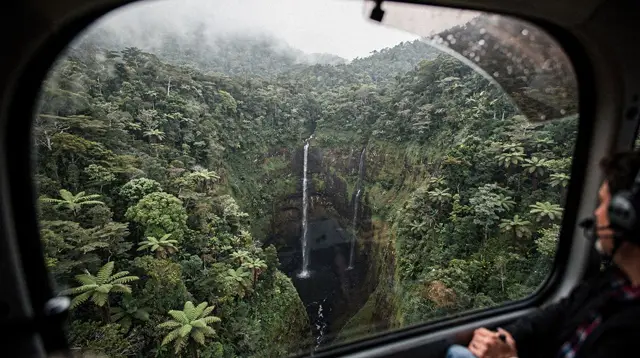
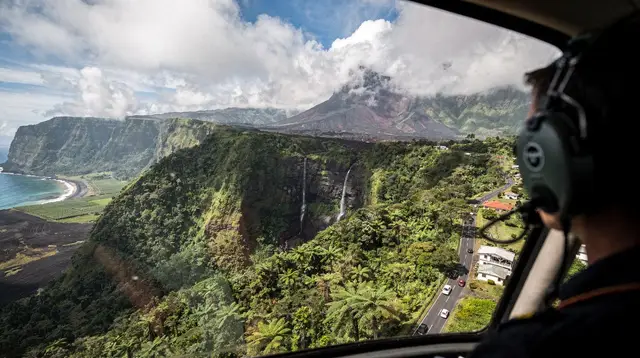
| Helicopter flight over Mafate, Salazie or the volcano | The only way to see the cirques’ full scale; no trail offers the same view |
| Canyoning in Cilaos | Requires guiding, ropes and safety equipment |
| Boat trip to look for whales or dolphins | Open-water viewing from shore is unreliable; boats improve the odds |
| Paragliding in Saint-Leu | Requires a certified pilot and equipment |
| Gîte nights in Mafate | The only accommodation option inside the cirque; book ahead regardless of budget |
If you’re weighing a marine excursion, a trip like a lagoon snorkeling and kayak outing at l’Hermitage covers both swimming and a bit of paddling in one outing rather than paying for each separately. For divers curious about the reef beyond snorkeling depth, an introductory scuba dive around Saint-Leu and l’Étang-Salé is a reasonable one-time cost rather than a recurring one. And if whales are in season (roughly June to October, never guaranteed), a shared outing like a coastal sea cruise from the west coast is cheaper than a private charter and still gets you on the water.
A few small habits that add up
- Bring cash into the Hauts. Cards are accepted almost everywhere on the coast, but gîtes, small épiceries and market stalls in Cilaos, Salazie or Mafate often aren’t set up for card payments.
- EU roaming works normally here, so there’s no need for a local SIM if you already have an EU mobile plan — one less cost to plan for.
- Refill water bottles rather than buying single-use ones, especially before longer hikes; tap water is generally fine to drink, though avoid swimming in freshwater rivers after heavy rain due to leptospirosis risk.
- Off-peak timing matters less for price than for crowds and weather. The dry season (May–October) is better for hiking and generally has more settled weather, but Réunion Island doesn’t have a sharply cheaper season the way some beach destinations do — don’t plan around a discount that isn’t there.
- Pack for altitude. A warm layer for the volcano or Piton des Neiges summit saves you from buying one on the spot at inflated prices near the trailhead.
- Follow a plotted route rather than improvising each day. An itinerary like Réunion Island on a budget: five days groups the free lagoon days and the paid must-dos by zone, so you’re not doubling back across the island and burning fuel money on avoidable driving.
The trade-offs, stated plainly
Budget travel here means accepting some friction: slower travel on Car Jaune, more walking, fewer air-conditioned tour buses, and meals that come from a market stall rather than a table with a view. None of that is a downgrade — the lagoon and the trails are free precisely because they don’t need packaging — but it does mean building a trip around your own legs and a bus timetable rather than a private driver. For a first visit built around convenience over cost, see where to stay in Réunion Island and how many days in Réunion Island to weigh how much ground you realistically want to cover.
Frequently asked questions about a budget trip to Réunion Island
Is Réunion Island expensive to visit?
Prices for groceries, fuel and some restaurant meals run a little higher than in mainland France, since many goods are imported. But accommodation, food and activities span a wide range, and the island doesn’t force you into paid experiences the way some destinations do.
Can you visit Réunion Island without spending much on activities?
Yes. The lagoon, most hiking trails and many viewpoints cost nothing beyond getting there. A trip built mostly around swimming, walking and markets, with one or two paid activities, keeps the daily spend well below a tour-heavy itinerary.
Do you need to tip in Réunion Island?
No. Service is included in restaurant and bar prices, as in mainland France, so tipping isn’t expected. Rounding up or leaving small change for good service is appreciated but never required.
Is the Car Jaune bus a good way to save money?
It’s the cheapest way to move between coastal towns like Saint-Denis, Saint-Pierre and Saint-Leu without renting a car. It’s slow and infrequent toward the Hauts and the cirques, so it suits a coast-focused trip more than one built around Cilaos, Salazie or Mafate.
Where can you swim for free in Réunion Island?
The lagoon protected by the coral reef along the west coast, from Saint-Gilles and l’Hermitage down to La Saline-les-Bains, is free to access and safe to swim in. Saint-Leu and l’Étang-Salé also have supervised or reef-protected swimming areas.
Are markets cheaper than restaurants in Réunion Island?
Generally yes. Buying fruit, vegetables, samosas or bouchons at a local market and eating along the seafront costs a fraction of a sit-down meal at a touristic restaurant, and it’s often better food.
Is renting a car worth skipping to save money?
It depends on your itinerary. Skipping the rental saves a real daily cost, but it limits you to what Car Jaune reaches. If Cilaos, Salazie, the Maido or the volcano are on your list, a car (even rented for just part of the trip) is usually worth the expense.
Trip planning tours and activities on GetYourGuide
Verified deep-linked GetYourGuide tours. Book through these links and we earn a small commission at no cost to you.
GetYourGuide does not provide a product photo for this activity — the image shows the meeting point, photographed by us.