Is Reunion Island accessible for reduced mobility?
Is Reunion Island accessible for travellers with reduced mobility?
Only partially. Most flagship hikes, the road to Cilaos, and the cirques are steep, unpaved, or reached by winding mountain roads with no easy stops. Flat, accessible alternatives do exist: the Barachois seafront in Saint-Denis, the Aquarium de La Réunion, Kélonia, Cité du Volcan, and the sheltered lagoon at Saint-Gilles and l'Hermitage. A helicopter flight is the most realistic way to see the cirques and the volcano without walking.
What “accessible” actually means on a volcanic island
Réunion is a young volcanic island built almost entirely of steep terrain: three collapsed cirques ringed by cliffs, an active volcano reached by a mineral plateau, and a coastline that alternates between cliffs and narrow lava fields. That geology is exactly what makes the island dramatic, and exactly what makes it a difficult place for anyone with a mobility limitation, a wheelchair, a walker, or simply a body that can’t manage steep, uneven, or unpaved ground for hours at a time.
This page is not a promise that Réunion is broadly accessible, because it isn’t, in the way a flat European city or a purpose-built resort can be. It is a realistic map of what does work: a handful of flat, paved, or motorised options that let you experience the island’s landscapes, culture, and wildlife without needing to hike a mountain trail or navigate 400 hairpin bends. Where a specific site’s step-free access isn’t confirmed, this guide says so rather than guessing.
Where the relief works against you
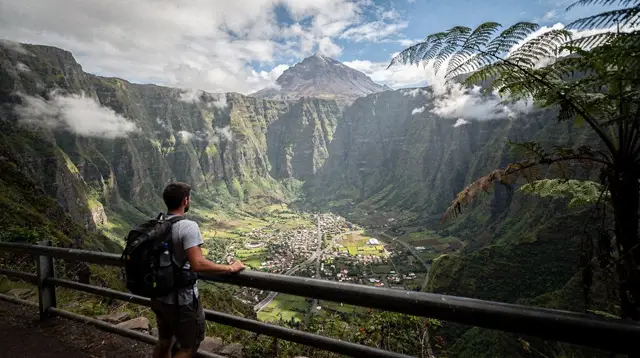
Start with what to rule out, because misjudging this costs a day. The three cirques — Cilaos, Salazie, and Mafate — are reached either by a long, winding mountain road or, for Mafate, by foot only. Mafate has no road at all; every ilet inside it is reached on trails that take hours over rock and root. Cilaos is reached by the RN5, roughly 400 bends climbing from Saint-Louis, a drive that takes about an hour without stops and is demanding even for passengers with no mobility issue. Once in Cilaos, the canyons, thermal baths trail, and the ascent to Piton des Neiges are all on uneven, often steep ground.
The volcano access road (Route du Volcan) is paved and drivable up to Pas de Bellecombe, so the drive itself is manageable, but the platform overlooking the enclos sits on volcanic rock, and the walk onward toward the Dolomieu crater — around five hours round trip when the enclos is open at all — is entirely on loose, uneven lava terrain. The Maido viewpoint above Mafate is reached by a paved road and has some flat viewing area, though weather (cloud often rolls in from mid-morning) affects it more than terrain does.
None of this means skip the island. It means plan around the relief rather than against it.
When to go for the easiest conditions
Réunion sits in the southern hemisphere, so its seasons run opposite to Europe’s, and the season you pick affects accessibility as much as the terrain does. The austral winter, roughly May to October, is the drier, sunnier period, with more stable conditions for driving to Maido or Pas de Bellecombe and a better chance that a helicopter flight departing from Saint-Gilles actually goes ahead rather than being rerouted or cancelled for cloud. It’s also the recommended window for anyone relying on paved viewpoints rather than trails, since low cloud over the Hauts is less frequent than in summer. See the best time to visit Reunion Island and Reunion Island weather by month for month-by-month detail.
The austral summer, November to April, is hotter, more humid, and is Réunion’s cyclone season: a cyclone warning can close mountain roads, cancel flights (including helicopter tours), and shut the volcano’s enclos with very little notice, on top of the mobility challenges already described above. If a trip has to fall in this window, build in flexible days and keep an indoor backup like Cité du Volcan or the Aquarium de La Réunion in reserve. See Réunion Island cyclone season guide for what a warning actually changes day to day. Note too that the west coast, where most of the flat, accessible sites in this guide sit, is drier and sunnier than the east coast at any time of year, which is another reason Saint-Gilles and l’Hermitage work better as a base than the wetter east.
Flat, paved, low-effort options that genuinely work
A short list of places where the ground itself is not the obstacle:
- The Barachois, Saint-Denis — a flat, paved seafront promenade in the island’s capital, good for an easy walk with views over the water, close to the rue de Paris and its creole houses. See things to do in Saint-Denis.
- Cité du Volcan, Bourg-Murat — a covered, indoor museum on the island’s volcanism, largely single-level, useful both as a genuine alternative to the volcano hike and as a weather backup.
- Aquarium de La Réunion, Saint-Gilles — indoor, flat-floored exhibition space in the heart of Saint-Gilles-les-Bains.
- Kélonia, near Saint-Leu — a sea turtle observatory with paved paths and viewing pools, a calmer alternative to a snorkelling trip for anyone who prefers to stay on land.
- The lagoon beachfront at Saint-Gilles and l’Hermitage — flat sand and, in places, paved promenade behind the beach, with the calmest water on the island.
None of these are marketed here as having confirmed wheelchair-specific facilities (ramps, adapted toilets, reserved parking); that level of detail should be checked directly with each venue or with Réunion’s tourism office before a visit, since provisions change. What’s confirmed is that the terrain itself, unlike a mountain trail, is flat.
Seeing the cirques and the volcano without walking
For most visitors, the two things that define a Réunion trip are the cirques and the volcano, and for someone who can’t manage the hikes, the honest answer is: you largely see them from above, or not at all.
A scenic helicopter flight departing from Saint-Gilles covers Cilaos, Salazie, Mafate, and the Piton de la Fournaise crater in a single flight, typically under an hour, with no walking required beyond boarding. It’s dependent on clear weather — flights are cancelled or rerouted in cloud, most often over the Hauts by late morning — and it isn’t cheap, generally in the €150–€300 range for a shared flight depending on route and duration, but it is the only way to see Mafate’s interior or the crater rim area without a multi-hour trek.
a helicopter flight over the cirques and the volcano departing from Saint-GillesIf a helicopter isn’t an option, a scenic drive to Maido or to Pas de Bellecombe still delivers a paved-road view of Mafate and the volcanic plateau respectively, even if it stops short of the interior. Pair that with Cité du Volcan for the geological context you’d otherwise get from a guided crater walk. For trip pacing ideas that don’t assume full-day hikes, see how many days in Reunion Island and Reunion Island for first-time visitors.
The lagoon: the safest way to enjoy the water
Swimming on Réunion isn’t a free-for-all anywhere you like. Because of shark risk, swimming and water sports outside the lagoon and away from surveilled or protected zones are restricted by prefectural order — a rule that applies to every visitor, not only those with mobility limitations. That restriction happens to line up with the most accessible water on the island: the lagoon fronting Saint-Gilles, l’Hermitage, and La Saline-les-Bains is shallow, calm, and protected by the reef, with flat beach access in several spots.
For a lower-effort way to experience the lagoon than snorkelling under your own power, a guided clear-kayak or water-hiking tour lets you stay seated and above the surface while still seeing the reef and its fish through a transparent hull or viewing panel.
a guided clear-kayak tour over the reef in the lagoonFor anyone able to snorkel with light assistance, the shallow water near Saint-Gilles is one of the calmer entry points on the island.
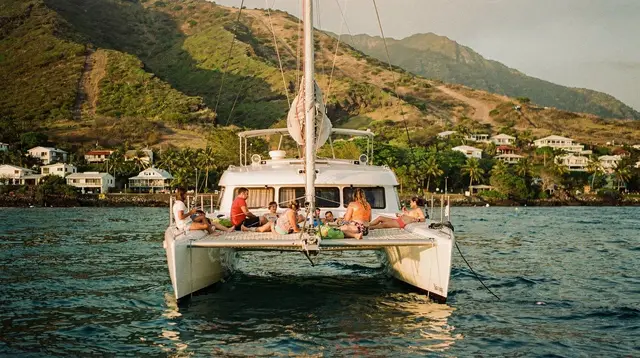
a shallow-water snorkelling trip to see turtles near Saint-Gilles-les-BainsAnd for those who’d rather stay on deck entirely, a short sea cruise from the same stretch of coast covers the same lagoon and coastline views without entering the water at all.
a boat cruise along the lagoon and west coastSee also best beaches in Reunion Island and things to do in Saint-Gilles for more on this stretch of coast.
Getting around: distances that look short and aren’t
Réunion’s kilometre distances are misleading. A 30 km drive from Saint-Denis to the Hauts can take well over an hour on a winding mountain road, and there is no realistic way to reach most of the accessible sites above without a rental car; Car Jaune, the island’s interurban bus network, is useful along the coast but slow and not built around step-free connections into the Hauts. Budget your driving time by the road, not the map distance — see getting around Reunion Island and driving in Reunion Island before building an itinerary. Renting a car in Reunion Island covers what to expect at pickup; book ahead in the high season (July–October, which is also the best-weather window for driving in the Hauts).
Réunion has two airports — Roland-Garros in the north near Saint-Denis, and Pierrefonds in the south near Saint-Pierre — which can shorten driving time depending on where you’re staying; see flights to Reunion Island.
Practical facts that matter for planning
Réunion is a French department and part of the European Union, but it sits outside the Schengen area, so a Schengen visa alone doesn’t automatically cover it; EU citizens travel on a national ID card. See entry requirements for Reunion Island before booking. The currency is the euro, French is the official language alongside Réunion Creole, and the island drives on the right, which matters if you’re used to a different side. Power sockets are the European 230V type E/F standard, so UK and non-European travellers need an adapter. In an emergency, 112 reaches the general European number, with 15 for SAMU, 17 for police, and 18 for the fire service.
None of these details are specific to reduced mobility, but they’re easy to overlook while focused on terrain, and getting them wrong (a missed adapter, an assumed Schengen visa) can cost more of a short trip than a closed trail would. For a broader safety picture beyond terrain and access, see is Reunion Island safe for tourists, and for what to bring given the packing constraints of limited mobility (sturdy but not technical footwear, layers for the cooler Hauts, reef-safe sunscreen for the lagoon), see what to pack for Reunion Island.
Planning table: activity by realistic accessibility
| Activity | Terrain | Realistic for limited mobility? | Notes |
|---|---|---|---|
| Barachois seafront, Saint-Denis | Flat, paved | Yes | Easy walk, no steep sections |
| Cité du Volcan museum | Indoor, largely single-level | Yes | Weather-proof; not the crater itself |
| Aquarium de La Réunion | Indoor, flat | Yes | Central Saint-Gilles location |
| Kélonia turtle observatory | Paved paths | Yes | Near Saint-Leu |
| Lagoon beach, Saint-Gilles/l’Hermitage | Flat sand, some promenade | Mostly | Confirm specific beach access locally |
| Helicopter flight over cirques/volcano | No walking | Yes, weather permitting | Best option for Mafate and the volcano |
| Boat cruise along the coast | No walking | Yes | Stay on deck |
| Route du Volcan to Pas de Bellecombe | Paved drive, viewpoint on rock | Partially | Viewpoint only, not the crater walk |
| Maido viewpoint | Paved drive | Partially | Some flat viewing area; cloud risk |
| Road to Cilaos (RN5) | Winding, no stops | Difficult | About an hour of continuous bends |
| Cirque of Mafate | No road, trail only | No | Foot access only |
| Piton de la Fournaise crater hike | Uneven volcanic ground | No | About 5 hours round trip when open |
| Piton des Neiges summit | Multi-day mountain trail | No | Overnight hut, steep terrain |
Accessibility on Réunion Island — frequently asked questions
Can you visit Piton de la Fournaise if you can’t hike?
You can drive to viewpoints along the Route du Volcan, including Pas de Bellecombe, but reaching the crater rim is a walk over uneven volcanic ground, roughly five hours round trip when the enclos is open. A helicopter flight over the volcano is the realistic alternative to that walk.
Is Cilaos accessible by wheelchair?
The town has some flat streets, but getting there means the RN5’s roughly 400 bends from Saint-Louis, about an hour of continuous winding driving with no easy stops. The surrounding canyons and hiking trails are not adapted for wheelchairs or limited mobility.
Can you go to Mafate with limited mobility?
No. Mafate has no road; the only way in is on foot over several hours of uneven mountain trail. A helicopter flight from Saint-Gilles or Saint-Pierre is the only way to see the cirque without walking into it.
What is the most accessible way to see the cirques and the volcano?
A helicopter flight departing from Saint-Gilles, covering Cilaos, Salazie, Mafate, and the volcano from the air in under an hour without any walking. It depends on clear weather and isn’t cheap, but it is the most complete option available.
Where can you swim safely with reduced mobility?
The protected lagoon at Saint-Gilles and l’Hermitage is the most accessible water on the island, shallow and calm with flat beach access in places. Swimming outside the lagoon and away from surveilled zones is restricted by prefectural order for everyone, regardless of mobility.
Are there accessible museums or indoor activities on Réunion?
Cité du Volcan in Bourg-Murat is a covered, largely single-level museum on volcanism, useful as a weather-proof alternative to the volcano hike. The Aquarium de La Réunion in Saint-Gilles and Kélonia near Saint-Leu are both largely flat and partly indoor.
Do accessible facilities exist at specific sites like Pas de Bellecombe or Cité du Volcan?
This guide does not confirm step-free access, adapted parking, or dedicated facilities at any single site, since these details can change. Contact the venue or Réunion’s tourism office directly before your visit if you need that confirmed.
Is a rental car necessary for a limited-mobility trip to Réunion?
Yes, in practice. Car Jaune, the island’s bus network, is slow and not built around step-free connections into the Hauts, so a rental car is close to essential for reaching the flatter, more accessible sites at your own pace. See renting a car in Reunion Island and reunion Island travel mistakes to avoid before you book.
When is the easiest time of year to visit Réunion with limited mobility?
The austral winter, roughly May to October, is drier and gives more stable driving and helicopter conditions, especially in the Hauts. The austral summer, November to April, is hot, humid, and includes cyclone season, when heavy rain or a cyclone warning can close roads and ground flights with little notice. See Réunion Island weather by month and the cyclone season guide for details.
Easy-access tours and excursions on GetYourGuide
Verified deep-linked GetYourGuide tours. Book through these links and we earn a small commission at no cost to you.
GetYourGuide does not provide a product photo for this activity — the image shows the meeting point, photographed by us.