Snorkeling and surfing in Saint-Leu
Can you snorkel and surf at Saint-Leu?
Yes, but they happen in different water. Snorkeling stays inside the reef-protected lagoon in calm, shallow water, while surfing works the reef break further out where the swell breaks. Both are restricted to the lagoon and authorised zones because of shark risk under a standing prefectural order.
Two activities, one stretch of coast
Saint-Leu, on the west coast of Réunion Island, covers two very different ways of being in the water, and it is worth separating them before you pack a bag. Snorkeling happens inside the lagoon: a shallow, reef-protected pool where you float with a mask and tuba and look down. Surfing happens further out, where the swell meets the reef and breaks into a wave you ride standing up, looking out rather than down. Both are popular here, both can be booked as a guided outing or a lesson, and both are covered on this page. Scuba diving, which goes underwater with a tank and certification, is a separate activity with its own page — see scuba diving in Saint-Leu and Étang-Salé if that is what you are after.
Saint-Leu also has a reputation beyond the water: it is one of the best tandem paragliding spots in Europe, with pilots launching from the hills above town and soaring over the same lagoon and reef described here. That is a different page and a different activity — see things to do in Saint-Leu for the fuller picture — but it explains why the town has this particular mix of an unhurried beach vibe and a steady flow of adventure sport traffic overhead.
The lagoon: where snorkeling happens
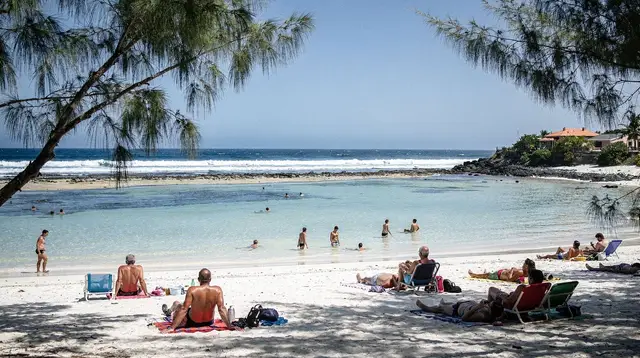
The lagoon at Saint-Leu sits between the reef and the shore, roughly in front of the town centre and around the marina. It is shallow — often under 2 to 3 m — calm on most days, and this is where snorkeling takes place. You will see parrotfish, surgeonfish, the occasional moray eel in a crevice, and coral formations that range from healthy to visibly bleached in patches. It is not the biggest lagoon on the island (Saint-Gilles and l’Hermitage have more open water), but it is sheltered and easy for beginners, including children who can stand up if they get tired.
A guided outing is the simplest way to do this well: someone points out what is worth looking at, checks conditions before you go in, and supplies gear that fits.
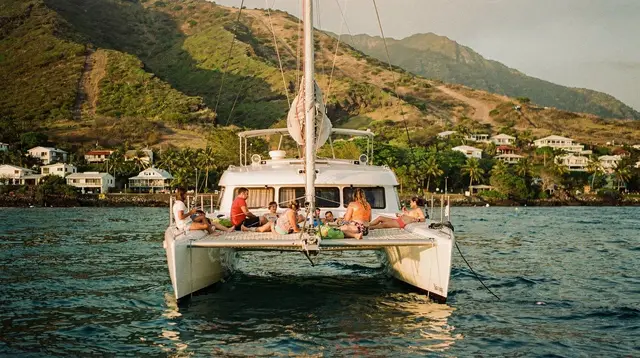
a guided snorkeling outing inside the Saint-Leu lagoonIf you would rather go at your own pace, a straightforward fins-mask-snorkel rental and outing works just as well for confident swimmers who know the area.
a fins, mask and snorkel outing over the coral reefEither way, the same rules apply: stay inside the lagoon, avoid touching the coral, and skip the reef-toxic sunscreens — plain physical sunscreen (zinc oxide or titanium dioxide) does far less damage to what you are looking at.
Gear matters more here than it looks like it should. A mask that leaks turns a calm lagoon session into a frustrating one, so it is worth testing the seal against your face — no strap on — before you buy or rent anything. Reef shoes or water socks help on the walk in over coral rubble and sea urchin patches near the shore, and they save you from needing to touch anything for balance once you are floating. A rash vest or light wetsuit top is not essential in warm lagoon water but cuts down on both sun exposure and the occasional graze from drifting too close to the reef edge. If you are still assembling a kit for the wider trip, what to pack for Réunion Island covers this alongside hiking and volcano gear.
The reef break: where surfing happens
The surf spot at Saint-Leu is a reef break, meaning the wave forms as swell hits the coral reef rather than a sandy bottom. That makes it a serious wave on a good day and one reason the town has a long-standing surf culture, with a competitive scene that has produced internationally ranked surfers. It also means the water here rewards respect: reef breaks are less forgiving than beach breaks if you fall, and local knowledge of the tide and swell direction on a given day matters more than it looks like it should from the beach.
For a first attempt, a lesson on a gentler inside section with an instructor is the sensible way in — you learn to read the water instead of guessing.
a surfing lesson in Saint-Leu, aimed at beginnersConfident surfers head further out toward the main reef pass, where the wave has more shape and more consequence. That is not a guided-tour activity; it is local knowledge, a board you already know, and a look at the swell forecast before you paddle out.
Currents, tides and reading the water
The lagoon and the reef break behave differently once you look past the map. Inside the lagoon, water movement is mostly gentle — a light current along the shore rather than anything that pulls you out — but it can still pick up near gaps in the reef, where water pushed in by breaking waves finds its way back out to open sea. Those gaps are worth noticing and avoiding rather than swimming through out of curiosity. Tide matters too: at low tide the lagoon can get shallow enough that fins scrape coral or sand in places that were comfortably deep an hour earlier, which is part of why a guided outing that times the tide is often smoother than going in blind.
On the reef break itself, the same gaps in the coral that let water escape the lagoon are often the channels surfers use to paddle out, since paddling straight through breaking whitewater over shallow reef is both harder and more dangerous. Locals read these channels by eye; visitors renting a board for the first time are better off asking at the surf school rather than guessing from the beach. None of this is a reason to overthink a first snorkeling session in calm midweek conditions — it is a reason to ask a guide or instructor about the day’s specific conditions rather than assuming yesterday’s calm lagoon looks the same today.
Same coast, different water, same rule
It is worth repeating because visitors regularly get this wrong: snorkeling in Réunion Island happens inside the lagoon or in zones marked as authorised or supervised, never in open water off a beach with no protection. A standing prefectural order restricts swimming and nautical activities outside these areas because of shark risk, and it has applied to the west coast, Saint-Leu included, for years. That order does not carve out an exception for surfing.
Surf breaks that sit within recognised, regularly used surf zones function under local practice and lifeguard awareness, but the underlying rule — stay inside the lagoon or an authorised zone — is the same one that governs snorkeling, and it is not optional or a formality. If you see a beach with no flag, no lifeguard, and no other swimmers in the water, that absence is the message. For the fuller context on why the rule exists and how it has evolved, see is it safe to swim in Réunion: sharks and beaches.
The reef itself is fragile
The reef around Saint-Leu sits inside the Réserve naturelle marine de La Réunion, established in 2007 to protect what is left of the island’s coral after decades of coastal development and, more recently, warming water. Coral bleaching is visible in parts of the Saint-Leu lagoon on a close look — patches of white or grey coral that has lost its colour and, often, its living tissue. None of that is a reason to skip snorkeling here; it is a reason to snorkel carefully: float rather than stand, keep fins clear of the bottom in shallow spots, and never take a piece of coral or shell as a souvenir, which is illegal inside the reserve.
Weather and swell decide the day
Neither activity here is guaranteed by a booking. Snorkeling visibility depends on how much sediment is in the water, which rises sharply after heavy rain, especially in the austral summer (November to April) when the west coast gets short, intense downpours even though it is the drier side of the island overall. The austral winter (May to October) generally gives calmer, clearer water and is the better season for snorkeling.
Surfing runs on the opposite logic: no swell, no wave. Saint-Leu can have flat, glassy mornings with nothing to ride, and days later a swell arrives and the reef break turns into the reason surfers fly here. Operators and instructors check the forecast each morning rather than promising conditions in advance, and a lesson booked for a flat day may be rescheduled rather than cancelled outright. Build in a spare day if surfing is the main reason for your stop in Saint-Leu. Réunion’s seasons run opposite to Europe’s — the austral summer (November to April) is hot, humid, and the island’s cyclone season, while the austral winter (May to October) is drier and cooler, which is why it doubles as the better window for both clear snorkeling water and steadier surf planning. See best time to visit Réunion Island for how that plays out month by month across the whole island.
Snorkeling and surfing at Saint-Leu, at a glance
| Activity | Where | Skill level | Best season |
|---|---|---|---|
| Guided lagoon snorkeling | Inside the reef, in front of town | Any, including children | May–October, calmer water |
| Independent snorkeling | Inside the lagoon only | Confident swimmers | May–October |
| Surf lesson | Inner section of the reef break | Beginners | Depends on swell, checked daily |
| Independent surfing | Main reef pass | Experienced surfers | Depends on swell, checked daily |
Prices for a half-day snorkeling outing or a two-hour surf lesson typically sit in the mid double digits per person in euros; check the current rate on the booking page linked above rather than relying on a printed figure.
Getting there and pairing it with the rest of the coast
Saint-Leu sits on the west coast road, a manageable drive south from Saint-Gilles-les-Bains — figure 20 to 30 minutes depending on traffic on the coastal road, longer at peak times around Saint-Paul. A rental car is the practical way to reach it; see driving in Réunion Island if you are still deciding on a car. Many visitors base themselves in Saint-Gilles or l’Hermitage and treat Saint-Leu as a half-day or full-day stop, combining a lagoon session in the morning with lunch in town and, for some, a tandem paragliding flight in the afternoon when the thermals are working.
If snorkeling with marine life beyond reef fish is the priority — dolphins, and whales in season — the stronger base is Saint-Gilles-les-Bains or Étang-Salé further south, both covered by dedicated outings.
a snorkeling outing with dolphins and whales departing from Saint-Gilles-les-BainsFor a wider look at west coast options, things to do in Saint-Leu and snorkeling-lagoon activities both round up nearby operators, and Saint-Gilles vs Saint-Leu: where to stay helps decide which town to base yourself in if you have not booked accommodation yet.
Practical basics before you go
A few points worth knowing before you turn up at the lagoon or book a lesson. Réunion uses the euro, and payment for tours and lessons here works the same as anywhere else in the eurozone. The island is a French overseas department and part of the European Union, but it sits outside the Schengen area, so a Schengen visa alone does not automatically cover entry — EU citizens travel on a national ID card or passport, and other nationalities should check requirements before flying in; entry requirements for Réunion Island has the detail. Driving is on the right, which matters if you are self-driving down from Saint-Gilles or up from Saint-Pierre. Mobile coverage along the west coast is generally solid, and EU roaming rules apply for EU-based phone plans. There is no tipping expectation at surf schools or dive shops, and the emergency number across the island is 112.
Planning around the rest of Réunion Island
Saint-Leu rarely stands alone on an itinerary. Most visitors pair it with a day or two along the west coast — Saint-Gilles, l’Hermitage, La Saline-les-Bains — before heading up into the Hauts or across to the cirques. If you are still building your route, how many days in Réunion Island and where to stay in Réunion Island are useful starting points, and reunion island travel mistakes to avoid covers the shark-risk and swimming-zone rule in more detail alongside other common missteps.
Snorkeling and surfing at Saint-Leu: your questions
Is it safe to swim or surf at Saint-Leu?
Only inside the lagoon and any zones marked as authorised or supervised. A prefectural order bans swimming and nautical activities outside these areas because of shark risk, and that applies to surfing as much as snorkeling.
Where exactly do you snorkel in Saint-Leu?
Inside the lagoon between the reef and the shore, in front of the town and around the marina, in shallow water rarely deeper than a few metres. Surf spots sit further out, on the reef break, in separate water from the snorkeling area.
Do I need experience to surf at Saint-Leu?
No. Local surf schools run beginner lessons on foam boards in a gentler section of the break, with an instructor in the water. Experienced surfers head to the main reef pass on bigger swell days.
Is the coral reef at Saint-Leu protected?
Yes. It sits inside the Réserve naturelle marine de La Réunion, created in 2007. Standing on coral, touching it, or using non-reef-safe sunscreen all damage a fragile structure that is already under pressure.
What is the difference between this and scuba diving at Saint-Leu?
Snorkeling and surfing both happen at the surface, with a mask and snorkel or a board, no tank or certification involved. Scuba diving goes underwater with equipment and training and is covered on a separate page.
When is the best time to snorkel or surf at Saint-Leu?
Snorkeling visibility is best in the austral winter (May to October) when the water is calmer and the wind is lighter. Surf conditions depend on swell direction and size on the day, and can change from one morning to the next.
Can you see dolphins or whales while snorkeling at Saint-Leu?
Occasionally, but Saint-Leu is not the main whale-watching base. Humpback whales are seen roughly from June-July to October, and dedicated whale and dolphin outings run mainly from Saint-Gilles and Étang-Salé.
Snorkeling and lagoon activities on GetYourGuide
Verified deep-linked GetYourGuide tours. Book through these links and we earn a small commission at no cost to you.
GetYourGuide does not provide a product photo for this activity — the image shows the meeting point, photographed by us.