Scuba diving in Saint-Leu and L'Étang-Salé
Where do you scuba dive in Saint-Leu and L'Étang-Salé?
Dive centres on this stretch of the west coast run boat and shore dives on the barrier reef and drop-offs off Saint-Leu and L'Étang-Salé, separate from the Saint-Gilles lagoon sites further north. Trips depend on sea conditions and run through registered centres inside the Réserve naturelle marine de La Réunion.
A different stretch of coast from the Saint-Gilles lagoon
Most visitors hear about diving in Réunion Island through Saint-Gilles, where the sheltered lagoon and its shallow reef make for an easy introduction close to the beach. Saint-Leu and L’Étang-Salé, a short drive further south along the west coast, are a separate proposition. The reef here drops off into open water rather than staying inside a lagoon, which means different sites, often clearer visibility, and more exposure to swell and wind. If you already read our guide to scuba diving in Saint-Gilles, treat this page as its southern counterpart rather than a repeat of the same coastline.
Saint-Leu itself is known first for something in the air rather than underwater: it is one of the best paragliding launch sites in Europe, with tandem flights taking off from the hillside above town and drifting out over the reef and the lagoon below. Before or after a dive, most visitors also stop at Kélonia, the sea turtle observatory on the seafront, which cares for injured and rehabilitating turtles and explains the species found in Réunion’s waters — useful context if you hope to see a turtle on your dive, since sightings there are never guaranteed either.
Part of why this stretch of coast draws divers in the first place comes down to the weather. Like the rest of the west coast, Saint-Leu and L’Étang-Salé sit on the dry, sunny “leeward” side of the island, generally seeing far less rain than the east coast on the other side of the cirques and the volcano. That does not make sea conditions predictable on any given day, but it does mean this coast tends to offer more reliably clear, calm-enough windows across the year than the wetter side of Réunion. Our guide to the best time to visit Réunion Island covers how the seasons split across the whole island if you are still building an itinerary around more than one activity.
Inside the Réserve naturelle marine de La Réunion
The reef along this coast sits inside the Réserve naturelle marine de La Réunion, created in 2007 to protect a fragile and already stressed ecosystem. The practical rules that follow from that matter for anyone booking a dive:
- No standing on, touching, or collecting coral, shells, or other marine life.
- Buoyancy control is expected; drifting into the reef, even briefly, damages it.
- Reef-safe sunscreen only — apply it well before entering the water so it has time to absorb, since residue washed off in the sea harms coral tissue.
- Spearfishing and any form of fishing within reserve boundaries is restricted or banned outright; this is not an activity a scuba trip offers.
Registered dive centres brief divers on these points before every trip. If a centre skips the briefing, that is worth noting as a red flag rather than a convenience.
Dive sites off Saint-Leu
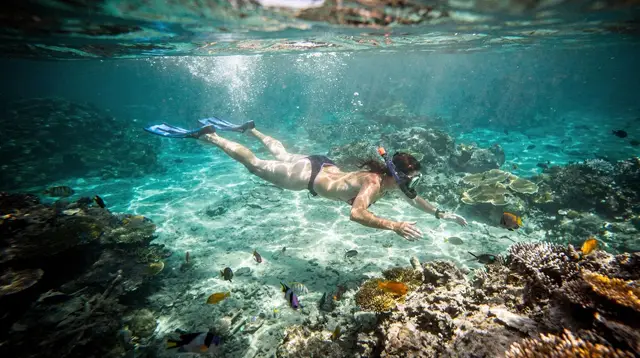
Sites off Saint-Leu sit on the outer edge of the reef and along a series of drop-offs, generally reached by boat rather than from the beach. Depths and conditions vary by site, and a good centre will choose the day’s dive based on swell and visibility rather than a fixed schedule. Expect volcanic rock formations mixed with coral growth, reef fish, and the occasional turtle or moray eel — never promised, always possible.
For visitors who are not yet certified, the practical entry point is a supervised introductory dive, which does not require prior experience or equipment.
a one-hour introductory scuba dive with full equipment and a qualified instructor is the simplest way to try breathing underwater for the first time, usually staying in shallower, sheltered water before any open-sea attempt.
Divers who already hold a certification, or who want a fuller trip across several of the richer sites along this coast, can book a dedicated exploration outing.
a guided exploration dive across some of the richer reef sites off L’Étang-Salé covers more ground in a single outing and suits divers comfortable with open water conditions.
L’Étang-Salé: black sand, not the lagoon
L’Étang-Salé sits a short distance south of Saint-Leu and is worth understanding on its own terms rather than as an extension of the lagoon beaches further north. Its beach is made of dark, coarse volcanic sand rather than the white coral sand at Saint-Gilles or L’Hermitage, a striking and photogenic difference that visitors often remark on. The forest behind the beach (Forêt de l’Étang-Salé) adds shade and a walking option if you are killing time between dives, and the town itself is a quieter, more residential stop than Saint-Leu or Saint-Pierre.
Keep this black-sand image for diving and beach context specifically. Surfing at this end of the coast, along with snorkeling closer to shore, is covered separately in our guide to Saint-Leu snorkeling and surfing, which is a better fit if a board is more your interest than a tank.
Dive sites off L’Étang-Salé
The seabed off L’Étang-Salé continues the volcanic character of the beach, with rockier structures alongside coral patches and a reef that, like Saint-Leu’s, sits inside the marine reserve. Centres based here run both introductory sessions for first-timers and fuller dives for certified divers, and some combine a pool-based first step with a short sea component on the same booking.
an introductory session that starts in a pool before a short first dive at sea is a gentler way to build confidence before committing to open water, and it suits families or anyone unsure how they will react to a regulator and mask.
Saint-Leu’s other well-known activity, a surf lesson on the waves that also make it a paragliding and watersports hub, is a reasonable pairing for a multi-activity day if diving is not the only thing on your list.
a surfing lesson on the waves off Saint-Leu works well the morning before or the afternoon after a scheduled dive, since surf lessons run independently of dive-boat timing.
Combining diving with Saint-Leu’s other activities
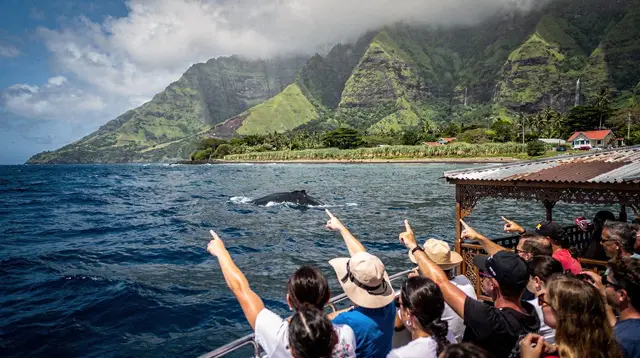
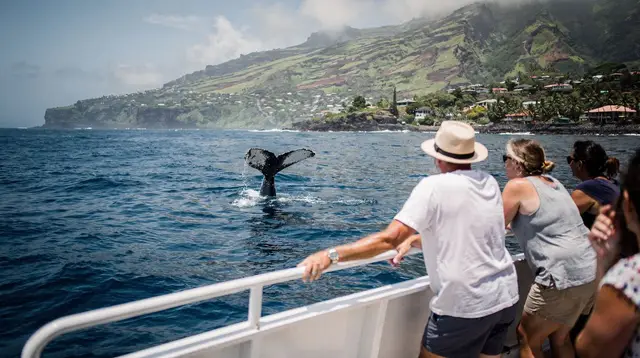
A day built around diving does not have to stop at the water’s edge. Saint-Leu’s hillside is a well-known paragliding launch point, and a broader look at the town’s options — from the turtle observatory to the market and the seafront — sits in our guide to things to do in Saint-Leu. Divers travelling roughly from June-July to October, when humpback whales pass offshore, sometimes pair a morning dive with an afternoon boat trip; our guide to whale and dolphin watching from Saint-Gilles covers the surface-based side of that season, and a catamaran or sunset cruise out of Saint-Gilles is another way to be on the water without a tank on your back. None of these sightings are ever guaranteed, on a dive or a boat, but the odds of seeing something in the water go up when you spend more than one outing on the coast.
Dive types, duration, and price range
Prices vary by centre, season, and group size; treat the figures below as a starting range and confirm the exact rate and inclusions with the centre or on the GetYourGuide or Viator listing before booking.
| Dive type | Typical duration | Suited to | Price range (per person) |
|---|---|---|---|
| Pool-based introduction | About 45-60 minutes | First-timers, children from around age 8-10 | €40-€70 |
| Introductory sea dive | About 1-2 hours total, including briefing | First-timers comfortable in water, from around age 12 | €60-€100 |
| Single certified dive | About 2-3 hours including boat time | Certified divers | €50-€80 |
| Multi-site exploration outing | Half-day (about 3-4 hours) | Certified divers wanting several sites in one trip | €90-€140 |
Equipment is generally included for introductory sessions; certified divers should check whether their own gear or centre-provided gear is expected, and whether the price includes boat transport to offshore sites.
Choosing a dive centre and booking
A handful of points are worth checking before paying a deposit:
- The centre should be a registered operator recognised to dive inside the Réserve naturelle marine de La Réunion, briefing every group on reef rules before entry.
- Ask what happens if conditions are unsuitable on the day — a clear rebooking or refund policy is a sign of a well-run operation, not a formality.
- Confirm whether the price includes wetsuit, tank, weights, and boat transport, since some listings quote a base rate before add-ons.
- For introductory dives, ask about the maximum depth planned and the instructor-to-diver ratio; a smaller ratio generally means closer supervision for nervous first-timers.
- If you already hold a certification, bring the physical card or a digital copy plus your logbook; centres will ask for proof before allowing an unsupervised or deeper dive.
Weather, sea conditions, and honest expectations
Diving along this coast depends on the sea, not just the calendar. Swell, wind direction, and visibility change from day to day, and a centre that cancels or reschedules a trip is protecting divers rather than being difficult. The dry austral winter, roughly May to October, tends to bring calmer, clearer conditions and is generally the more reliable stretch for diving trips, though it is not a guarantee on any single day. The cyclone season, roughly November to April, brings a higher chance of rough seas, heavy rain, and last-minute cancellations; if you are travelling then, keep at least one flexible day in your itinerary rather than scheduling a dive on your only full day near Saint-Leu.
No centre can promise what you will see underwater. Turtles, rays, and larger fish are possible but not scheduled, and whale sightings from the surface — roughly June-July to October — belong to a boat trip rather than a dive itself. Treat any listing that promises guaranteed sightings with caution. If your trip falls within the cyclone season, our guide to Réunion’s cyclone season explains what that period actually means for a visit beyond just diving, and our monthly breakdown of Réunion’s weather by month is a useful reference when you are choosing which week to book.
Getting there and where to base yourself
Saint-Leu and L’Étang-Salé sit on the west coast, reachable by car from Saint-Gilles in around 20-30 minutes or from Saint-Pierre in the south in a similar time, depending on traffic along the coastal road. A rental car is the practical option for reaching dive centres directly with wetsuits and gear rather than relying on the Car Jaune bus network, which runs along the coast but not on a schedule built around dive departure times.
Most visitors base themselves in Saint-Leu itself, in nearby Saint-Gilles, or further south around Saint-Pierre, and treat a day of diving as one component of a broader stay on the west coast. If diving is the centrepiece of your trip, staying in or near Saint-Leu cuts down on early-morning drive time before a boat departure.
Most visitors arrive via Roland-Garros airport (RUN) near Saint-Denis in the north, though some itineraries route through Pierrefonds airport near Saint-Pierre in the south, which sits closer to Saint-Leu and L’Étang-Salé. Our guide to getting from Roland-Garros airport to Saint-Gilles covers that first leg for most arrivals, and driving in Réunion Island is worth reading before picking up a rental car, since the coastal road and mountain routes behave differently from what visitors expect. Pack for a mix of water time and sun exposure; our packing guide for Réunion Island covers what to bring for a trip that combines diving days with hikes or drives elsewhere on the island.
Scuba diving in Saint-Leu and L’Étang-Salé: your questions answered
Is diving in Saint-Leu different from diving in Saint-Gilles?
Yes. Saint-Gilles diving mostly covers the sheltered lagoon and its shallow reef just off the beach. Saint-Leu and L’Étang-Salé sit further south along the same west coast and give access to a different set of reef drop-offs and open-water sites, often with better visibility but more exposure to swell.
Do I need certification to dive here?
No. Registered centres offer introductory sessions for beginners, including pool-based tries, alongside certified dives for qualified divers. Bring your certification card and logbook if you already dive; if not, ask the centre which introductory format suits your comfort in the water.
Why is L’Étang-Salé’s sand black?
The beach at L’Étang-Salé is made of volcanic sand, dark and coarse rather than the white coral sand found at Saint-Gilles or L’Hermitage further north. It is a distinct stretch of coast, not part of the main lagoon beaches, and the seabed just offshore reflects the same volcanic origin.
Can I touch the coral or collect shells while diving?
No. The Réserve naturelle marine de La Réunion protects the reef along this coast, and touching or standing on coral is not permitted. Divers are asked to keep buoyancy off the bottom and use reef-safe sunscreen before getting in the water, since ordinary sunscreen residue harms coral tissue.
Will the dive definitely happen on the day I book?
Not necessarily. Dive centres cancel or move sites when swell, wind, or visibility make conditions unsafe or not worthwhile, particularly during the cyclone season from November to April. Book with some flexibility in your itinerary and confirm the day before with the centre.
What marine life might I see?
Sightings vary by site and season and are never guaranteed. Divers commonly report reef fish, turtles, moray eels, and volcanic rock formations; humpback whales pass offshore roughly from June-July to October but are a surface sighting, not part of a dive.
Is there a minimum age for scuba diving in Saint-Leu?
Most centres set a minimum age around 8-10 for pool-based introductory sessions and 12 for open-water introductory dives, with certified diving following the standard international minimums. Confirm the exact age policy with the centre when booking, since it varies by operator and dive format.
Scuba diving off Réunion's coast on GetYourGuide
Verified deep-linked GetYourGuide tours. Book through these links and we earn a small commission at no cost to you.
GetYourGuide does not provide a product photo for this activity — the image shows the meeting point, photographed by us.