Scuba diving in Saint-Gilles: dive sites, season, and the boat harbour
Where do you scuba dive in Saint-Gilles, and do you need to be certified?
Dives leave from the Saint-Gilles marina and run along the reef edge and drop-offs between Saint-Gilles and L'Hermitage, with sites for both first-time and certified divers. No certification is needed for an introductory dive with an instructor; certified divers can book deeper sites and bring their own logbook.
The Saint-Gilles marina is where the dives start
Most scuba diving out of Saint-Gilles begins at the same place: the small boat harbour at Saint-Gilles-les-Bains, on Réunion Island’s west coast. Dive boats, whale-watching boats, and catamarans all leave from the same marina, which is why this stretch of coast reads as one address rather than a scattered list of beaches. If you’re weighing up where to base yourself for diving specifically, this guide covers the Saint-Gilles side; the Saint-Leu diving scene, further south, is a separate write-up, and it’s also where you’ll find paragliding and Kélonia, not here.
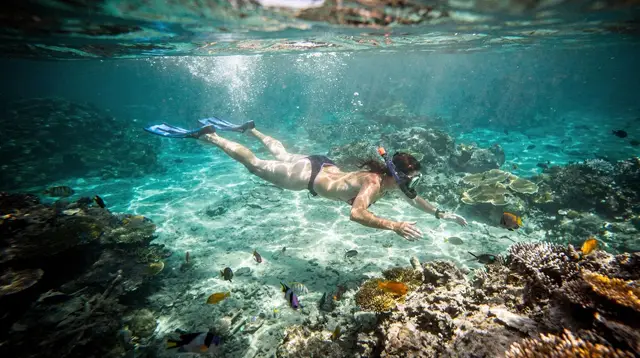
The lagoon itself, the shallow stretch of water protected by the coral barrier between Saint-Gilles and L’Hermitage, is mostly a snorkeling and swimming zone rather than a scuba site: it’s too shallow and too built up with swimmers, paddleboards, and glass-bottom boats for tank diving. Scuba dives leave the lagoon by boat and head to the reef edge and the drop-off just outside it, where depth and visibility make sense for diving.
The lagoon, the reef, and what you can’t do here
The waters off Saint-Gilles sit inside the Réserve naturelle marine de La Réunion, created in 2007 to protect the coral reef running along this coast. Two rules matter for anyone in the water here, diver or snorkeler: you don’t walk on or touch the coral, and you don’t swim or dive outside the lagoon and outside authorised, supervised zones. That second rule isn’t a suggestion — swimming and water sports outside the lagoon and protected areas are banned by prefectural order because of shark risk, a rule that applies along most of Réunion Island’s west coast. Dive centres operating out of the Saint-Gilles marina know exactly which stretches of water are cleared for diving and which aren’t; this is one of the clearest reasons to book with an approved centre rather than improvise your own outing.
Reef-safe sunscreen is worth packing specifically for this stretch of coast — the reserve is a working conservation zone, not a backdrop.
Water conditions: visibility, current, and temperature
Conditions off Saint-Gilles change with the season and the swell, not on a fixed schedule, so a good centre will talk you through what to expect on the day rather than promise a number. Visibility tends to be clearer when the sea is calm and the wind is light, which lines up more often with the austral winter than the summer months. Current varies by site — some drop-offs sit in a gentle drift, others need more experience to handle comfortably, which is one reason centres ask about your certification level and recent dive history before assigning you to a site. Water temperature swings with the season too, warmer in the austral summer and cooler in winter; most centres supply a wetsuit sized to you, so this isn’t something you need to plan around on your own.
Dive sites off Saint-Gilles and L’Hermitage
Sites cluster along the reef edge and the drop-off between Saint-Gilles and L’Hermitage, typically in the 6-25 metre range depending on the site and your certification level. Expect coral formations, reef fish, moray eels, turtles on a good day, and occasional pelagic passes further out. None of this is guaranteed day to day — visibility and what you see depend on swell, current, and plain luck, and a good centre will tell you that honestly rather than promise a checklist of species.
an introductory scuba dive in Saint-Gilles is the standard way in if you’ve never dived before: one-on-one with an instructor, shallow water, no certification required. A near-identical option is sold island-wide as an introduction to scuba diving on Réunion Island, worth comparing on schedule and price before you book either.
Certified divers with their own logbook can go further and deeper. One option departing from the Le Port area, a short drive north of Saint-Gilles, is a guided dive for certified divers with gear provided — check the meeting point carefully when booking, since it’s not the Saint-Gilles marina itself.
If you’d rather not put your head underwater
Not everyone diving-curious wants a tank on their back, and Saint-Gilles has an option for that too: a seabed observation cruise that lets you view the reef from a semi-submersible boat without getting wet. It’s a reasonable plan B on a day when the sea is too rough to dive, or for anyone travelling with kids too young to dive.
Whale and dolphin watching from the same harbour
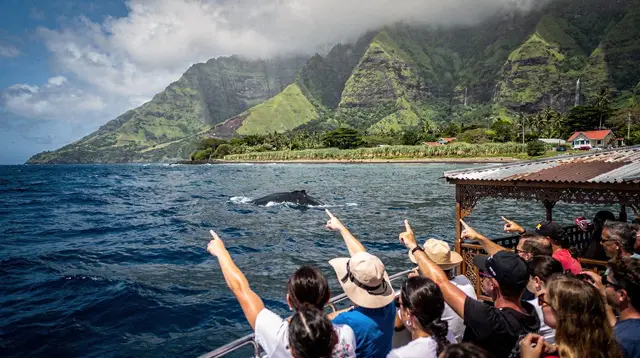
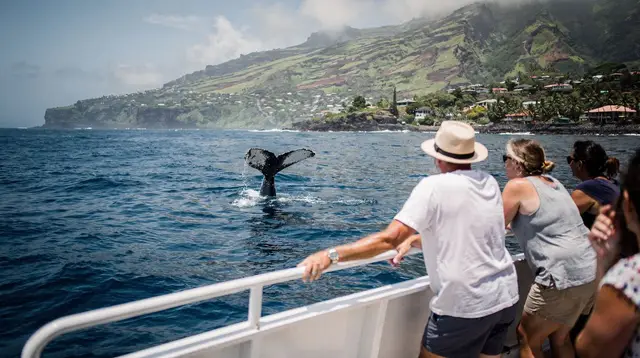
The Saint-Gilles marina is also the departure point for whale and dolphin watching in the bay. Humpback whales pass along this coast roughly from June-July to October; dolphins, mostly spinner dolphins, are seen more consistently through the year but are still wild animals on their own schedule. A dolphin and whale-watching trip from Saint-Gilles-les-Bains runs under an approach charter that sets minimum distances from the animals, which means no boat, however good, can promise a close encounter or a sighting at all. Treat it as a real possibility on a good day, not a guarantee written into the price.
Some visitors ask about combining a dive with a whale-watching trip on the same morning. It sometimes works, but the two are usually run as separate boats by separate operators, so check directly with the centre rather than assume one booking covers both.
Certified divers, first-timers, and what to bring
- Never dived before: book an introductory dive with a certified instructor. No licence needed, but expect a short briefing and a shallow, one-on-one dive rather than a full exploration.
- Open Water or higher: bring your certification card and logbook (a paper or digital record of recent dives). Most centres ask for proof if it’s been a while since your last dive.
- Gear: wetsuit, tank, and regulator are supplied by the centre; a mask you know fits well is worth bringing from home if you have one.
- Health: a recent dive medical or a signed questionnaire is standard practice at Réunion Island centres, same as most French-flagged operators.
- Timing: morning boats generally see calmer seas than afternoon ones, especially outside the winter months.
Prices and what’s included
| Option | Typical price | Who it’s for |
|---|---|---|
| Introductory dive (baptême) | €55-€75 | First-time divers, no certification |
| Single dive, certified diver, gear included | €45-€70 | Open Water and above |
| Seabed observation cruise (no diving) | €35-€55 | Non-divers, families with young kids |
| Whale/dolphin watching boat trip | €40-€65 | Anyone hoping to see cetaceans, no guarantee |
Prices vary by centre, season, and group size; treat these as planning ranges and check the current figure on the booking page rather than this table.
When to go: season, sea conditions, and the whale window
Réunion Island runs on southern-hemisphere seasons, the reverse of Europe’s. The austral winter (May to October) brings drier weather, generally calmer seas on the west coast, and the best window for spotting humpback whales. The austral summer (November to April) is warmer and wetter and overlaps with the cyclone season, when swell and wind can cancel boat trips with little notice, particularly from January to March. None of this means diving is off the table outside winter — the west coast is the sheltered “leeward” side of the island — but flexibility around your booking date matters more in summer.
Whatever the season, a dive centre in Saint-Gilles will call off a trip if conditions aren’t safe. That’s a sign the operator is doing its job, not a reason to look for one that says yes regardless.
Réunion Island’s climate runs on southern-hemisphere logic month by month as much as it does season by season, and diving plans benefit from that level of detail rather than just “winter or summer.” The Réunion Island weather by month guide breaks down what each month tends to bring on both coasts, which is useful if you’re choosing dive dates around a wider trip rather than a diving-only visit. If a cyclone warning is issued during your stay, expect all boat trips, diving included, to stop until it passes — the cyclone season guide explains how that works in practice and what it means for a fixed itinerary.
What to bring for a day of diving
Beyond a mask that fits, a few items make a diving day at Saint-Gilles easier. Reef-safe sunscreen, applied well before you reach the marina rather than on the boat, protects both you and the reserve. A change of clothes and a dry bag matter more here than at a beach day, since you’ll be wet, salty, and possibly still damp when you head to your next stop. Cash or a card for parking near the marina in high season is worth having on hand, since spaces fill early on peak mornings. For the rest of a Réunion Island packing list — clothing for the cooler cirques, footwear for hiking, and what the climate actually calls for month to month — the what to pack for Réunion Island guide covers the wider trip, not just the marina.
Booking, safety, and what can cancel a dive
Book with a centre based at or working out of the Saint-Gilles marina, and book a few days ahead in peak months (July-October, and around French school holidays). Centres check swell forecasts and visibility each morning and will move, shorten, or cancel a dive if the sea isn’t cooperating — most offer a rebooking or refund in that case, so ask about the policy when you pay. If your trip has a single day set aside for diving, it’s worth not scheduling anything that depends on that exact day going ahead.
Getting to the Saint-Gilles harbour
Saint-Gilles sits on the west coast, reachable by car from Saint-Denis in about 30-40 minutes on the coastal road outside peak traffic, and from Saint-Pierre in around 45-60 minutes depending on the route. A rental car is the practical way to get here; Car Jaune buses run along the coast but on a slower schedule than most dive check-in times allow for. Parking near the marina fills up in high season, so arriving with a margin before your check-in time is worth it.
Saint-Gilles or Saint-Leu for diving?
Both are on the west coast and both have real dive scenes, but they’re not interchangeable. Saint-Gilles centres on the marina, boat dives to the reef edge, and whale and dolphin watching in the bay. Saint-Leu, roughly 20-25 minutes further south, is better known for paragliding over the lagoon and for Kélonia, the sea turtle observatory, alongside its own diving operators. If you’re choosing a base, comparing Saint-Gilles and Saint-Leu directly is more useful than picking on reputation alone.
Other things to do around the Saint-Gilles marina
Diving is one reason to be at the marina, not the only one. The same harbour is the departure point for catamaran and sunset cruises, and the wider things to do in Saint-Gilles page covers the beach, the lagoon, and the town itself. If your trip includes both coasts, the Saint-Leu snorkeling and surfing guide and the things to do in Saint-Leu page are the ones to read next. For overall trip timing, best time to visit Réunion Island and the cyclone season guide explain how the seasons affect the whole island, not just diving. Anyone weighing up a short coastal stay can also check a weekend in Réunion Island itinerary that includes this stretch of coast.
Fitting diving into a first Réunion Island trip
If this is your first visit to the island, diving in Saint-Gilles is easy to slot alongside the rest of a West Coast stay rather than treat as a separate excursion — the marina, the beach, and most Saint-Gilles accommodation sit within walking distance of each other. The Réunion Island for first-time visitors guide covers the practical basics — money, language, driving on the right — that apply to a dive day as much as any other. And if you’re still deciding how long to stay, how many days in Réunion Island is worth reading before you lock in a return flight, since a buffer day for weather is worth building in whether you’re diving, hiking, or both.
Frequently asked questions about scuba diving in Saint-Gilles
Do I need to be certified to scuba dive in Saint-Gilles?
No. Dive centres in Saint-Gilles run introductory dives (baptême) for complete beginners, one-on-one with an instructor in shallow water. Certified divers show a valid card and logbook to access deeper reef and drop-off sites.
Is the Saint-Gilles lagoon good for diving, or only snorkeling?
The shallow lagoon between Saint-Gilles and L’Hermitage is mainly a snorkeling and swimming area. Scuba dives head just outside the reef, by boat from the marina, to deeper sites along the drop-off.
When is the best time to see whales or dolphins from Saint-Gilles?
Humpback whales are present roughly from June-July to October, with dolphins possible year-round in the bay. Sightings are never guaranteed and depend on the day and the animals’ movements.
Is it safe to swim or dive around Saint-Gilles because of sharks?
Swimming and water sports outside the lagoon and outside supervised or protected zones are banned by prefectural order because of shark risk. Diving trips are run by approved centres that know which zones are authorised, so this is not a do-it-yourself decision.
How much does a dive in Saint-Gilles cost?
Expect roughly €55-€75 for an introductory dive and €45-€70 per dive for certified divers with gear included, though prices vary by centre and season. Check the current rate on the booking page before confirming.
What’s the difference between diving in Saint-Gilles and Saint-Leu?
Saint-Gilles is built around the marina, boat dives, and whale and dolphin watching in the bay. Saint-Leu, further south, is Réunion Island’s main paragliding spot and home to Kélonia, with its own separate diving scene.
Can I combine diving with a whale-watching trip on the same day?
Some operators run separate boats for diving and for whale and dolphin watching, so check with the centre when booking rather than assuming one trip covers both. Combining them on the same morning is sometimes possible but not standard.
What happens if the sea is too rough on the day of my dive?
Centres postpone or cancel dives when swell, wind, or visibility make it unsafe, usually with a refund or a rebooking option. Build a buffer day into your itinerary if diving matters to your trip.
Scuba diving off Réunion's coast on GetYourGuide
Verified deep-linked GetYourGuide tours. Book through these links and we earn a small commission at no cost to you.
GetYourGuide does not provide a product photo for this activity — the image shows the meeting point, photographed by us.