Saint-Gilles catamaran and sunset cruises
What is a catamaran cruise from Saint-Gilles like?
Most trips leave the marina at Saint-Gilles-les-Bains for 2 to 3 hours along the sheltered west coast, with a swim stop inside the lagoon on calmer sailings. Sunset departures run later in the day and focus on the light over the water rather than a swim break; both are leisure cruises, not dedicated whale or dolphin tours.
A slow afternoon on the water, not a wildlife hunt
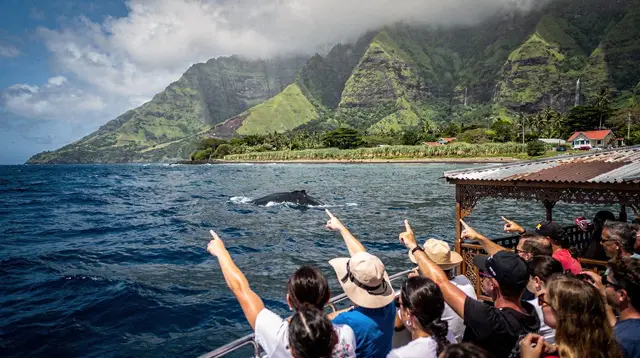
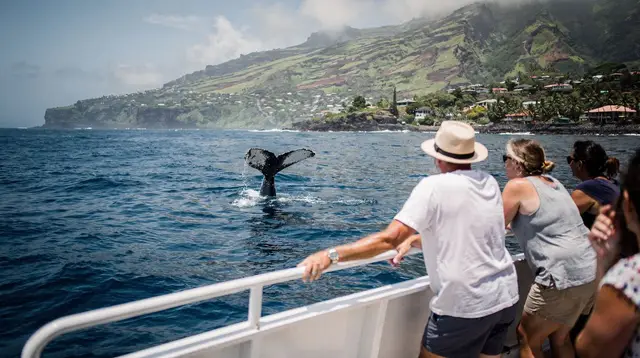
The marina at Saint-Gilles is the departure point for most of the west coast’s leisure boat trips, and catamarans are the easiest of them: no diving certification, no early alarm, just a few hours on deck with the reef under the hull and the coastline of Réunion Island sliding past. Some sailings add a swim stop inside the lagoon; sunset departures skip the swim in favour of timing the return to the light. Either way, this is a relaxed cruise, and it’s worth being upfront about what it is not: a dedicated whale or dolphin trip. Boats do sometimes cross paths with spinner dolphins, or with humpback whales during the season roughly from June-July to October, but sightings are incidental here. If marine life is the reason you’re booking, go to our whale and dolphin watching guide for Saint-Gilles, which covers the approach charter, the calendar, and the distances boats are required to keep.
These cruises suit almost any traveller who wants an easy few hours on the water without technical requirements: no snorkeling test, no minimum swim ability beyond the lagoon dip, and boarding is usually a short step down from a floating pontoon rather than a ladder. That said, boats aren’t fully wheelchair accessible in most cases — ask the operator directly if mobility is a concern, and see our accessible Réunion Island guide for wider planning notes. Families travelling with young children tend to prefer the lounge or relaxing cruises over the sunset sailings, simply because the earlier departure fits better around nap times and dinner; our Réunion Island with kids guide has more on timing a West Coast day around a family’s rhythm.
What a typical cruise includes
Operators vary, but most catamaran trips from Saint-Gilles-les-Bains fall into two shapes.
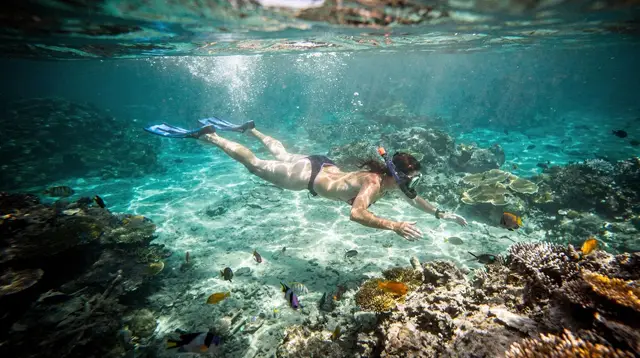
Lounge or relaxing cruises run 2 to 3 hours along the sheltered stretch of coast between Saint-Gilles, l’Hermitage and La Saline-les-Bains. Expect a swim and snorkel stop in a calm section of the lagoon, shade under a sail or bimini, and drinking water; some include a light snack or rum punch. Boats are typically 10 to 15 metres, carrying anywhere from a dozen to several dozen passengers depending on the operator.
Sunset sea tours are shorter, usually 1.5 to 2 hours, and are built around timing rather than swimming. You board in the late afternoon, sail out along the coast, and the skipper positions the boat to watch the sun go down over the ocean — a different mood from the daytime trips, with fewer families and more couples aboard. Some sunset sailings include a drink, but check the listing rather than assuming.
A few operators also run seabed observation boats with a glass viewing area below deck, useful if swimming isn’t your priority but you still want a look at the reef.
| Cruise type | Typical duration | Swim stop | Best for |
|---|---|---|---|
| Lounge catamaran cruise | 2–3 hours | Usually yes, in the lagoon | Families, first-time visitors |
| Relaxing catamaran cruise | 2–3 hours | Often yes | A slower pace, fewer stops |
| Sunset sea tour | 1.5–2 hours | Rarely | Couples, photographers |
| Seabed observation cruise | 1.5–2 hours | No | Non-swimmers, reef viewing |
If you’d rather sit at the front of a boat and want dolphins or whales specifically named on the itinerary, that’s a separate booking — see the whale and dolphin watching guide rather than assuming a lounge cruise will deliver it.
For an easy, family-friendly afternoon out, the lounge catamaran cruise from Saint-Gilles-les-Bains is the most straightforward option, with a lagoon swim stop built into the itinerary. Travellers who want the golden-hour version instead can look at the sunset sea tour departing at sunset.
Swimming: in the lagoon, never at large
Réunion Island enforces a prefectural ban on swimming and water sports outside the lagoon and designated, supervised zones, because of shark risk along the open coast. On a catamaran cruise, that means the crew chooses a swim stop inside the protected water between the reef and the shore — typically somewhere along the Saint-Gilles to La Saline-les-Bains stretch — and passengers don’t swim once the boat is back in open water. If your cruise doesn’t list a swim stop, assume there isn’t one and plan a separate lagoon swim at l’Hermitage or La Saline-les-Bains instead; both sit on the same stretch of coast and are covered in our best beaches guide.
The ban isn’t specific to catamaran passengers — it applies island-wide outside the lagoon and designated zones, and it’s a direct response to shark risk that’s been documented and taken seriously for years; our guide to swimming safety around sharks and beaches explains where the restriction applies and why lagoon swim stops are structured the way they are.
If a catamaran isn’t quite what you’re after
A catamaran cruise is a good fit if you want to sit back and let someone else handle the boat, but it isn’t the only way to spend time on this stretch of lagoon. Snorkellers who’d rather get in the water for longer than a single stop can paddle and snorkel independently at l’Hermitage, where kayak and paddleboard rental sit alongside guided snorkeling right off the beach. Divers who want to go below the surface properly — rather than glance through a glass hull on a seabed observation cruise — should look at scuba diving in Saint-Gilles, which reaches sites a catamaran never gets close to.
Further south, Saint-Leu adds surfing and paragliding to the same coastline; see things to do in Saint-Leu or, if snorkeling and surfing both interest you there, our dedicated Saint-Leu snorkeling and surfing guide. And if the main draw is actually humpback whales or spinner dolphins rather than a general afternoon on the water, book the dedicated whale and dolphin watching trip instead of hoping a lounge cruise delivers a sighting.
None of this makes a catamaran cruise the wrong choice — it’s still one of the simplest ways to cover a lot of coastline with the least effort — but it’s worth knowing what else sits on the same stretch of water before committing a half-day to one specific format.
The reef is fragile — a few rules that matter
The lagoon here sits inside the Réunion Island Marine Nature Reserve, created in 2007 to protect a reef that’s already under pressure from warming water and coastal runoff. During a swim stop:
- Don’t stand on coral, even to steady yourself — a moment’s contact can kill decades of growth.
- Don’t touch or collect shells, coral fragments or marine life.
- Use reef-safe sunscreen (mineral-based, without oxybenzone or octinoxate); apply it well before boarding so it has time to absorb rather than washing off in the first few minutes.
- Follow the skipper’s line into the water — they know which patches are sand and which are live coral.
These aren’t formalities. A large share of the lagoon’s remaining healthy coral is concentrated in a few sheltered zones, and cruise operators who repeatedly bring groups through the same patch have a direct incentive to protect it — which is also your incentive as a visitor who’d like the reef to still be there next time.
Booking and timing
Prices run roughly €40 to €90 per adult, scaling with cruise length, whether food or drinks are included, and boat size; private charters cost more. Children’s rates are common but not universal — check the individual listing.
Season: cruises run year-round, but sea conditions are calmer and more reliable during the austral winter (May to October), Réunion’s dry season and also the best window for visibility in the lagoon. During the austral summer (November to April), which is also cyclone season, operators may cancel or reschedule sailings on short notice if the swell picks up; build a spare day into your itinerary if a cruise matters to your trip, and see our cyclone season guide for what a red alert actually means for bookings.
For budgeting a cruise alongside the rest of a West Coast day — lunch, parking, maybe a second activity — our Réunion Island trip cost guide breaks down typical spending, and money and payments in Réunion Island covers whether operators take cards or expect cash on the day.
Booking ahead: in July, August and around the December–January holidays, popular sunset departures can sell out a few days in advance. Outside those windows, 24 to 48 hours’ notice is usually enough. Confirm the check-in point — some operators meet at the marina pontoon, others at a kiosk a short walk away — and arrive with time to spare; boats leave on schedule.
What to bring: swimsuit under your clothes if a swim stop is included, a light cover-up for the breeze once underway (it’s noticeably cooler on open water than on the beach), a hat, sunglasses with a strap, reef-safe sunscreen applied in advance, and a dry bag or sealed pouch for your phone and camera. Snorkeling gear and drinking water are usually supplied; a full meal generally is not unless the listing says so.
If you want to see more of the lagoon on your own schedule rather than a group sailing, the relaxing catamaran cruise around Réunion Island runs at a slower pace with fewer stops, and travellers who’d rather stay dry and look through a glass hull can consider the seabed observation cruise in Saint-Gilles.
Getting to the marina
The marina sits in Saint-Gilles-les-Bains on the west coast, about 30 to 40 minutes by car from Roland-Garros airport near Saint-Denis in light traffic, longer at peak hours on the coastal road. There’s no dedicated shuttle for most cruise operators, so a rental car or taxi is the practical option; see our guide on driving in Réunion Island if you’re renting for the first time. Parking near the marina fills up on weekends and during school holidays, so allow extra time.
Travellers based further south along the coast, in Saint-Leu or beyond, will have a longer drive to the Saint-Gilles marina, so factor that into a day that also includes other activities; our where to stay in Réunion Island guide and the Saint-Gilles vs Saint-Leu comparison both cover how a base location affects how much driving a West Coast itinerary involves.
Planning the rest of your Saint-Gilles day
A catamaran cruise pairs easily with a half-day on land. Many visitors combine a morning or lounge cruise with an afternoon at l’Hermitage or La Saline-les-Bains, or save the sunset sailing for the end of a day spent exploring things to do in Saint-Gilles. If you’re building a full West Coast itinerary, our best time to visit guide covers how the dry and wet seasons shift not just hiking conditions but also sea state and cruise reliability along this coast.
FAQ: Catamaran and sunset cruises from Saint-Gilles
Where do catamaran cruises from Saint-Gilles leave from?
From the marina at Saint-Gilles-les-Bains, on the west coast of Réunion Island. Most operators ask you to check in 20 to 30 minutes before departure at the pontoon or a nearby kiosk.
Can I swim during the cruise?
On cruises that include a swim stop, yes, but only inside the lagoon in a sheltered spot the skipper chooses, never in open water outside the reef. Sunset sailings are usually timed for the light and don’t always include a swim break.
Will I see dolphins or whales on a catamaran cruise?
It’s possible but not guaranteed and not the point of these trips. Boats sometimes cross paths with spinner dolphins or, from June to October, humpback whales, but if that sighting is your main goal, book a dedicated wildlife-watching tour instead.
How long does a catamaran cruise last?
Lounge and relaxing cruises typically run 2 to 3 hours. Sunset sea tours are usually shorter, around 1.5 to 2 hours, timed to end as the sun goes down over the Indian Ocean.
Is it safe to touch the coral during the swim stop?
No. The lagoon sits inside the Réunion Island Marine Nature Reserve and the reef is fragile. Keep hands and fins off the coral and use a reef-safe sunscreen; standing on coral or breaking pieces off damages a reef that takes decades to recover.
What should I bring on a catamaran cruise?
A swimsuit under your clothes if a swim stop is included, a light layer for the breeze once the boat is moving, reef-safe sunscreen, a hat, and a dry bag or waterproof pouch for your phone. Most boats provide snorkeling gear and drinking water; check the listing for specifics.
How much does a catamaran cruise from Saint-Gilles cost?
Budget roughly €40 to €90 per adult depending on the length of the cruise, whether drinks or a meal are included, and the boat’s size. Sunset cruises with catering or a private charter option sit at the higher end.
Do I need to book in advance?
In high season (Réunion’s austral winter, May to October, and around the December to January holidays), yes — boats fill up, especially for sunset departures with limited seats. In quieter months a day or two ahead is usually enough.
Catamaran and boat cruises on GetYourGuide
Verified deep-linked GetYourGuide tours. Book through these links and we earn a small commission at no cost to you.
GetYourGuide does not provide a product photo for this activity — the image shows the meeting point, photographed by us.